

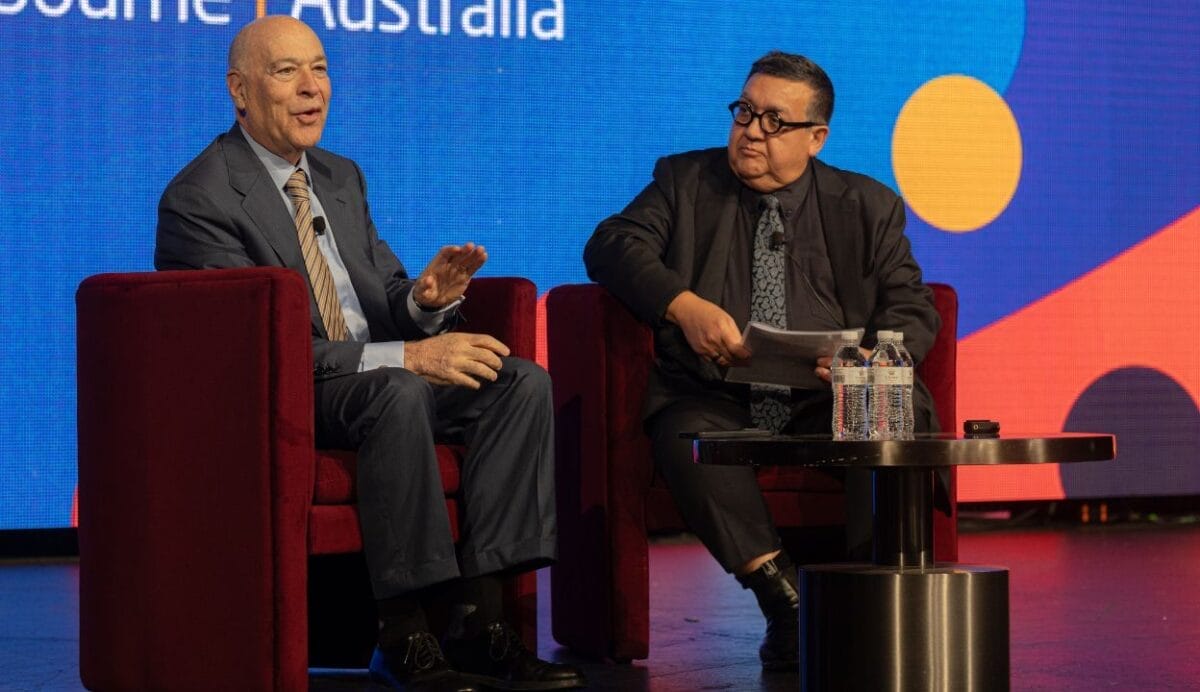
The London-based Paul Woolley Centre for Capital Market Dysfunctionality held a workshop in Sydney last month, at the affiliated University of Technology Sydney (UTS), which discussed a range of new research initiatives, including a proposed study about why investors continue to employ active managers. GREG BRIGHT reports.
Given the massive fall in the value of most stocks on listed markets in the past 18 months, the age-old debate about whether institutional investors should use active or passive management has come to the fore once again. Australian Super, a fund which others like to emulate, made headlines last month with its decision to significantly reduce its active manager line-up and index half its Australian equities allocation. If you believe that the recovery is just around the corner, then most of the gains from investments in the next year or so will be broad market gains – so you may as well index.
There’s not much point in paying high fees to chase a few percentage points of alpha if the broad market rebounds with double-digit returns. However, at the same time, active managers are saying that we are currently in a stock-picker’s paradise. Credit spreads are still close to the widest they have ever been and a lot of companies are teetering on the edge of bankruptcy. For the astute manager, this is a buyer’s market. Against that backdrop, the Paul Woolley Centre for Capital Market Dysfunctionality has commenced a research project in Australia to see why people prefer active management to the extent that they do.
The project is being undertaken by professor Ron Bird, of UTS, and adjunct professor Jack Gray, of Brookvine, both of whom are affiliated with the Centre. The Centre is based in the London School of Economics and supports two affiliated schools, at the University of Toulouse and UTS. Bird, Gray and the Centre’s founder and benefactor, Paul Woolley, are all former executives of funds manager GMO. Gray said at a workshop held at UTS last month that the Centre had already sent one questionnaire to a “general population” of non-professionals with mixed results.
This survey showed that 8 per cent of respondents believed active management failed, 29 per cent believed passive “failed” and 45 per cent believed passive meant “average”. Those respondents who were either poor, had some knowledge of shares or had read something “financial’ in the press recently were more likely to believe in active management. The Centre planned to conduct surveys of investment professionals at pension funds across Australia and New Zealand – with some in the US – later last month, followed by a survey of asset consultants in June.








Leave a Comment
You must be logged in to post a comment.