

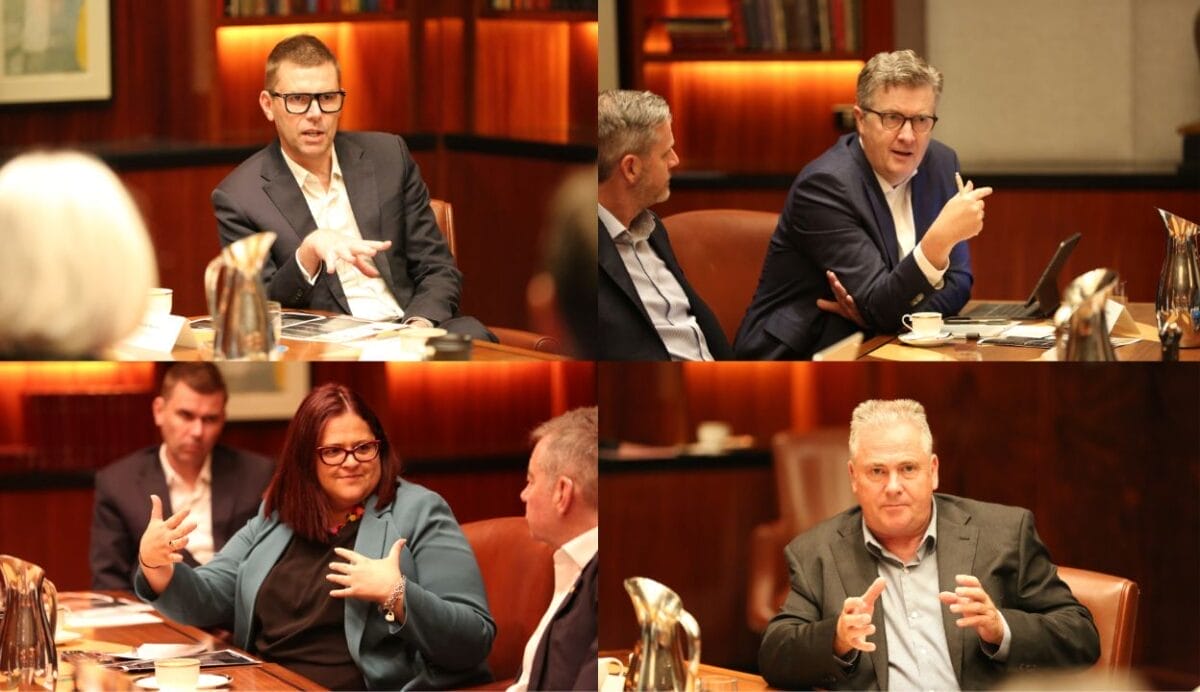
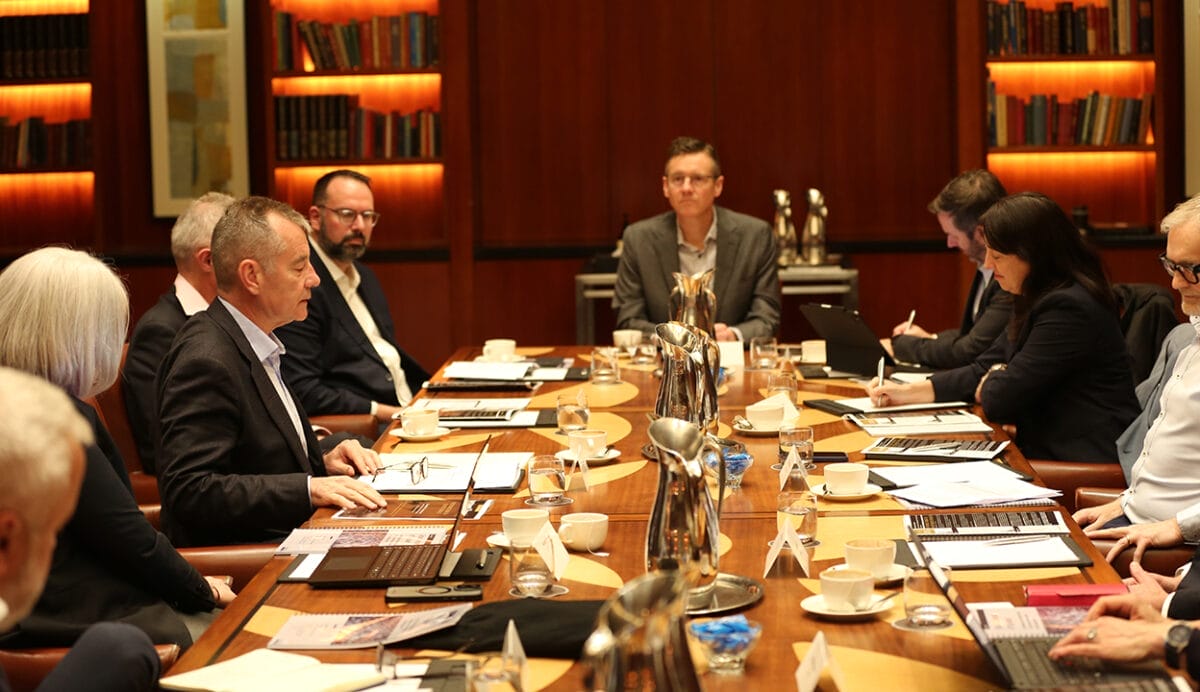
But in bringing the product to Australia or Asia – each country is quite small individually, and they all have either their own language or interests, here its capital gains tax. So how do you get that scale? Bryan Gray: You could lobby the government to try to simplify the tax environment we find ourselves in, because to me it would make a whole lot of sense if you could do something even on a regional basis, time zone-dependent, and support a huge customer base into Asia. You could actually make it work. But the problem is, we’re so different in the Australian market with the tax environment that we’re in, that no-one can make that work. Warwick Angus: It’s so different when you’re out there talking to clients who don’t have legacy issues. The path they take, versus the path taken by people who’ve got a legacy book. When you’re unencumbered, you take a path which is probably more reflective of the logical thing to do.
Bryan Gray: You’re absolutely right. There are those kind of industry issues that crop up. The last one was Y2K, where people said,’ We’ve got these systems; all of a sudden they’re going to be obsolete we believe, and we’re going to have to spend a whole lot of money to make them work’. Same thing at the moment we’re finding with introduction of TOFA and that sort of stuff, and that’s having an impact on people with accounting platforms, saying, ‘Do we really want to spend that money, or is this now the tech catalyst for us to find someone to do it for us?’ Warwick Angus: Is there an implied question there that there has to be an event to make this occur, or there’s sufficient pain and agony now that people will rally and finally get to an outcome? Mark Pratt: To be frank, if the consumer and government pressure that’s coming right at the moment isn’t enough, then I don’t really know what is.
I’m still not certain that straightthrough processing will come in my lifetime. Regardless of unit registry, the industry at the moment is struggling to find a consistent way to do the most basic function in the most efficient way – which is transfer funds instructions. We’ve had SwimEC, hub, we’ve got Swiftnet, you know, they’re the only three I know about and I’m sure there’s about four or five others. Yet if everybody was on one of those as a basic thing, then to be frank, I’m not certain whether your registry provider would be as much of an issue, because applications, redemptions, and moving money would be standardised. Greg Bright: I’m always concerned when people talk, as Bryan was earlier, about bundle pricing, because as the great John Bowers used to say, when he was running Russell, “The history of all of mankind is moving towards specialisation”. So when you look at bundling and you say you’ve got the low-margin business, maybe core custody, the no-margin business which is unit registry, and they’re being subsided by something else – I always think, well, that can’t be a permanent thing. You’ve got to make every component stand on its own. Bryan Gray: Yeah, I would agree with you.








Leave a Comment
You must be logged in to post a comment.