
While some investors fret that the outlook for renewables in the United States is threatened by conservative backlash, Australian Retirement Trust’s (ART) investment in Pattern Energy, signed in November and closed in June, represents a significant expansion of the fund’s sustainable energy portfolio and one that it’s keen to grow even further.
“We think the management team is strong and has the ability to expand the business and look at new opportunities,” Michael Weaver, ART general manager for mid-risk assets and the UK, tells Investment Magazine.
“The US is a huge market – it’s more than ten times the size of Australia – and there’s a huge number of opportunities there.”
Pattern has exposure to both wind power generation and transmission, and Weaver says that makes it more resilient against some of the challenges in the US market right now. It’s been a “busy six months” in the US since ART signed, and renewable power and sustainability at large often seem to be in the crosshairs of both the federal and state governments. But Weaver cautions against paying too much attention to the noise.
“While there’s a lot of talk in relation to lack of demand or questions around renewables, you’d be surprised; Texas has had huge increase in renewables, even though they obviously love oil and gas,” Weaver said.
“The reality is that they just love energy, and in terms of population it’s the fastest growing state. It continues to get more and more demand for energy. Lots of data centre operators are building in Texas and lots of businesses are moving there as well. It’s a nuanced debate in the US – while there might be federal noise, it’s really the state and local authorities that lead the demand for electricity, as it is here. You do get that mix of policies.
“I think people mistake some of the conversations in the US as anti-renewable; what they actually are is pro-power. People want more power full stop, and the fact that there were a lot of people who didn’t want to invest in oil and gas was part of the problem.”
ART has kicked the tires at a “huge number” of renewable energy investments in the past, but found it difficult to get comfortable with their valuations. Pattern is the first large renewables platform it’s owned a stake in.
“You do need to take a view on long-term merchant power pricing, and that was harder in the past than it is now given the electrification of everything; the demand from data centres and AI are two strong thematics that will continue to underpin the need to continue to invest into energy,” Weaver said.
“What you had a few years ago was just the demand from people who had a net zero ambition; that was stopping people from wanting to build the next coal-fired power plant. You now have these other tailwinds.”
Pattern had another feature that ART increasingly needs in its big infrastructure investments: the ability to grow with the fund. After all, it’s expected that ART will be at $500 billion in funds under management by 2030, and, where possible, it’s more efficient to build on investments already in the portfolio.
“It’s a good platform today, and there’s adjacencies that they can continue to invest into that will create even more value tomorrow,” Weaver said.
“(That consideration) is more than a nice to have, and it can kill an investment. We’ve looked at various public-private partnerships, but unfortunately there’s a lot of work upfront and then they tail off and you need to find another one. They might be great investments, but with a growing portfolio they’re harder to justify because you need to do more and more of them. It’s a want to have but not a need to have.”
Australia is still growing, from both an economic and population perspective – something that some investors underrate – and many domestic assets, like airports and power generation and transmission, will continue to expand.
But the ability of an asset to grow in step with a fund that itself grows at a rate of billions of dollars every month is one that is increasingly being found overseas, a trend which has underpinned increased headcount in ART’s London office and more money flowing offshore than ever before.
“We see long-term growth in Australia and will continue to invest a significant portion of our investments in Australia,” Weaver said. “We love investing in Australia; we have over $170 billion, probably more, that’s in Australia.
“Offshore assets are just an enhancement from a diversification perspective, and sometimes you can access areas that aren’t as developed as they are in Australia or where you might not have had the opportunity.
For example, build-to-rent. In Australia, it’s “becoming a sector”; in the US, it’s been a sector for over 30 years, and there’s more money invested in multi-family residential than there is in the whole domestic real estate market.
“That’s how big it is,” Weaver said.
“It’s that opportunity set that we think is a little bit unique overseas… Scale is important, so when you look at operators overseas the sheer scale they have – there would be five or ten operators in the US where each one of them had more than the whole market in Australia. The operational efficiencies of that is one of the reasons it really works as a sector. You need to have an operator where you trust they’ll be able to grow that investment.”

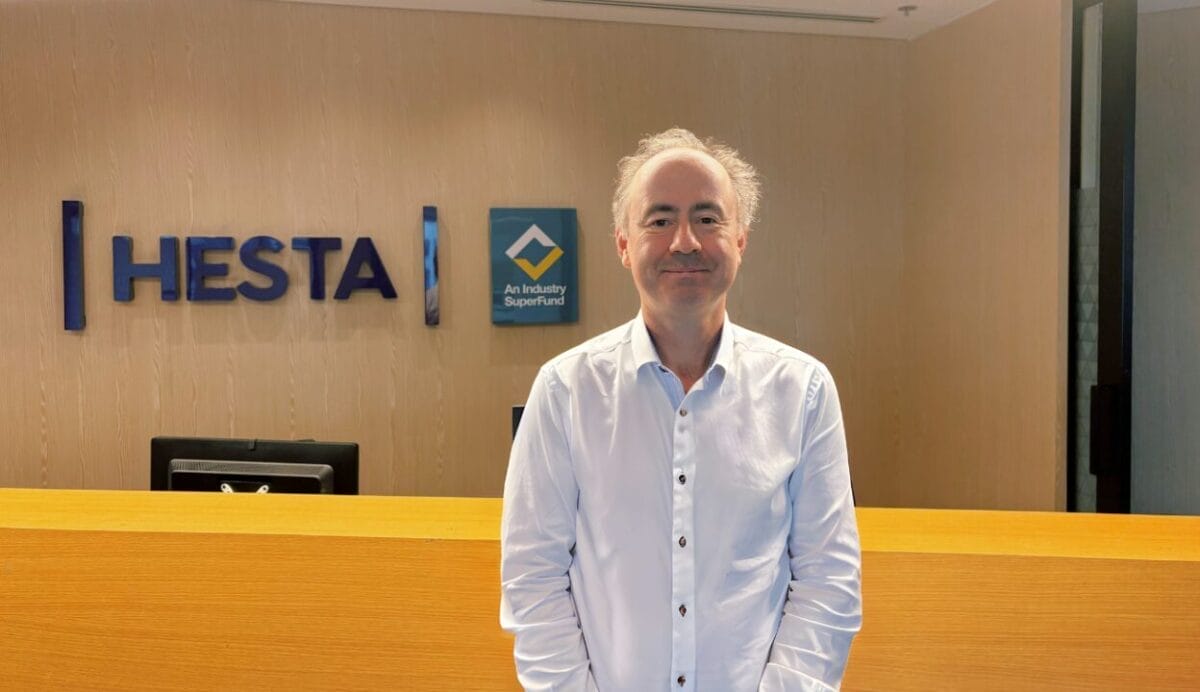
ART general manager of mid risk assets and UK Michael Weaver

11/07/2025
Australian Retirement Trust, Pattern Energy

Investments
Australia’s sovereign wealth fund has added an active equity strategy from a local boutique manager to its emerging markets allocation and dropped one of its existing providers after signaling it had identified "inefficiencies" in the space.





Leave a Comment
You must be logged in to post a comment.