


APRA says reforms to the Your Future Your Super (YFYS) performance test should be made if the downsides of the test no longer outweigh its benefits to members.
Speaking at the launch of the regulator’s 2025-26 corporate plan yesterday, APRA chair John Lonsdale said “there have been some great things about the performance test”.
“But our view is, like any piece of regulation, you’ve got to be continually looking at it and continually assessing its worth,” he said.
Lonsdale said the performance test was “a live issue” at the Treasurer’s Investor Roundtable earlier this month.
Lonsdale said he told the roundtable that “since its inception the performance test has done a very good job in improving member outcomes, and I think that is demonstrable”.
“You can see that particularly through the MySuper test, and we’re working now on the trustee-directed products [and] I think that’s a really important point not to lose sight of,” he said.
“But the second point I made and [have] written to the Treasurer on this, is that the performance test, like any piece of regulation, has benefits, it has costs, and you’ve got to continually be looking at it and asking, well, do the benefits continue to outweigh the costs?”
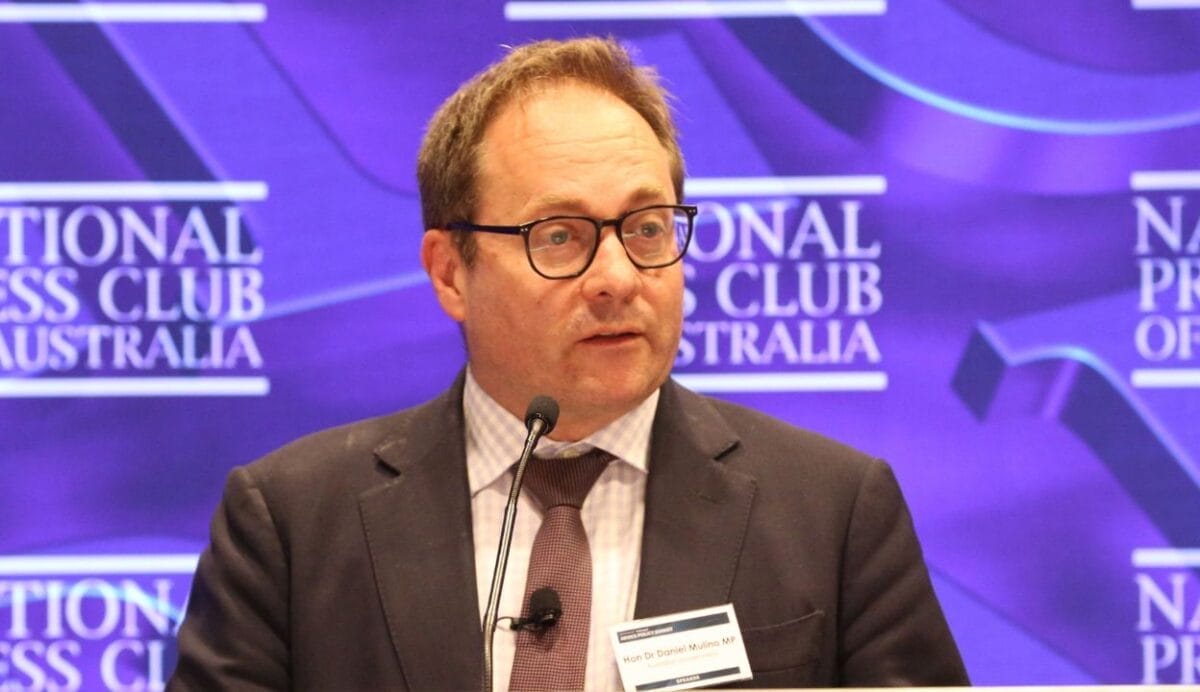
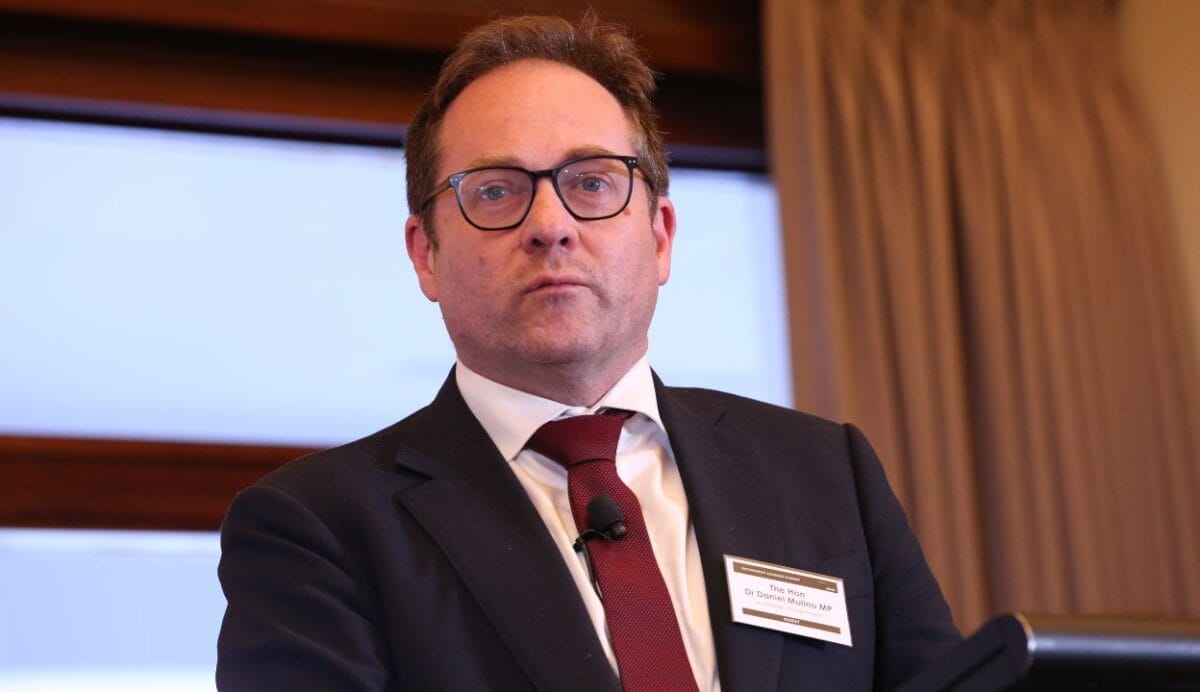
Minister for Financial Services Daniel Mulino told the Retirement Leaders Summit, a joint initiative of the Conexus Institute and Conexus Financial, the publisher of Investment Magazine, in Canberra on 13 August that misallocation of assets and index hugging were two of the outcomes of the test that potentially produce adverse outcomes for fund members.
Mulino said that superannuation is one of the “great capital allocation mechanisms” in the Australian economy and that the government wants to make sure that it’s “operating as efficiently as possible”.
Lonsdale said that as a regulatory principle “we should be very open to ways to improve value for members”, but there are mixed views on the effectiveness of the performance test.
“There are some people who say it’s great, and there are other people who say there needs to be reform.It’s a very contested issue. From our end, just to recap, it is ultimately a matter for government, but we think we should be continually looking at the cost and the benefit equation.”
Strikes a balance
Lonsdale noted that an aim of the corporate plan is to ensure the regulator strikes a balance between ensuring safety and stability in the financial system without strangling businesses in red tape.
“We’re a safety regulator. We’ve got a strong and resilient financial system, but it’s not safety at all costs,” he said. “We’re now at a point where what we’re doing is maintaining that strength, and we’re looking for ways that we can improve the efficiency of regulation.”
Lonsdale said APRA collects data for the performance test and that “we’ve got views on maybe how we could make that more efficient”.
APRA’s corporate plan notes its mandate requires it to “balance our financial safety and stability objectives with competition and efficiency considerations”.
“We take this obligation seriously. APRA has a long-established framework to minimise any undue cost of regulation for industry,” it says.
“By design, our prudential standards avoid overly prescriptive requirements which would otherwise stimy [sic] innovation and increase compliance costs.”
Lonsdale said technological innovations have “delivered enormous efficiency in service benefits, including in terms of customer convenience, but they’ve also created vulnerabilities that we need to be very alive to”.
At the Retirement Leaders Summit APRA deputy chair Margaret Cole said the regulator was open to “regulatory sandbox” projects to help promote innovation in financial services, especially on retirement income solutions. Cole said she believed “that’s what businesses are supposed to do”.
“There are parameters for that, and regulations are very important, but sometimes there is a hugely conservative ‘can’t-do’ approach when a ‘can-do’ approach with businesses is better and might not incur the scary problems that people sometimes hide behind.”
Move ahead more quickly
Lonsdale said the regulator expected all funds to move ahead more quickly in meeting their Retirement Income Covenant obligations and he dismissed the idea that some could de-prioritise their obligations just because a relatively smaller proportion of their members are in or nearing retirement.
“It’s an incredibly important issue, the retirement income phase of the superannuation system,” he said.
“We will be working on a pulse check report to make sure that the covenant is being implemented. It’s a longstanding issue that we wish we would have had more progress on… than we’ve got.
“It’s an issue that we want to push into here, and we would expect all trustees to have this as a key priority in making sure that members’ best interests are at heart. At the end of the day, a key purpose for the superannuation system is retirement income, so we see it as a key priority.”
The APRA corporate plan said the regulator would release the findings of its inaugural system stress test in the second half of 2025-26. Lonsdale said it was “most of the way through” that work.
“I can’t talk at this stage about what we’re seeing, other than to say it’s been an incredibly useful process in better understanding the linkages between two major parts of our financial system: super, that soon will be the biggest; and banking,” he said.
The work will give APRA “a much better picture of how risks can cascade through the Australian financial system”.
“Ultimately, if something does happen, we’ve got to make sure that we’re as prepared as we possibly can and we’ve got crisis resolution where it needs to be,” he said.
“So there’s a big body of work happening among [Council of Financial Regulators] agencies to improve our resilience on it.”
‘Big, deep dive’
Lonsdale said APRA is also preparing to release the results of a “big, deep dive” into the governance of superannuation platforms in the wake of the collapse of the Shield and First Guardian managed investment schemes.
While APRA is not the front-line regulator of managed investment schemes, it has identified some “very concerning” issues in some circumstances where schemes appear on super platforms.
He said APRA is supporting ASIC in its investigation into the Shield and First Guardian collapses, and that APRA’s review will include the role of researchers in determining how products are added to and removed from platforms.
Lonsdale said ASIC is “looking very closely at those sets of issues, and they’re very concerning sets of issues; where they show up for us is on superannuation trustee platforms”.
“We have a body of work happening there,” he said. “We flagged… when we did the performance [test] review… in 2023 that we had some concerns with platforms. We’ve done a big, deep dive on that, and we will come out with some results soon.
“But we’ve had a particular focus across nine trustees. I think it’s 95 per cent of the products [on platforms], it’s a big suite of products. We focused particularly on how these products get on the platforms and importantly, how they get off; and secondly, what is the role of third-party reviewers in this whole process.”





Leave a Comment
You must be logged in to post a comment.