


Produced in partnership with Allianz Retire+
Superannuation fund members trust their funds. That’s because the funds have done a great job of growing members’ savings, and keeping fees low. When a member retires, they want their retirement income to be provided by the fund that they know and trust. That, and access to the Age Pension if they are eligible.
Super funds now have a legal obligation, in the form of the Retirement Income Covenant (RIC), to support members in retirement, but not all funds are equally advanced in their thinking, or in their delivery.
At the Conexus Financial Retirement Leaders Summit in Canberra on 13 August, APRA deputy chair Margaret Cole noted that the RIC should have acted as “a clarion call for trustees”, but that “some trustees may have heard it more clearly and with more responsiveness than others”.
ASIC commissioner Simone Constant told the summit that an emerging gap between the best and worst responses to the RIC is – from the perspective of a regulator charged with fostering confidence and participation in financial markets – “a real problem”.
Creating and maintaining trust and confidence is central to a member enjoying their best possible retirement, but while funds retain responsibility for delivering on their RIC obligations, they can’t be expected to do everything themselves.
Giving members confidence to spend money in retirement and to live their best life relies on funds focusing on what they do best, and on finding the right partners to do the things they can’t do so well themselves, to deliver a seamless, member-focused solution.
Allianz Retire+ chief distribution and marketing officer Lucy Foster says an effective partnership “starts with the super fund and its members”, and any solutions that emerge from that partnership must be member-led, and focus on outcomes.
“It’s not a product-led discussion, and that’s important because different super funds have different member bases with different balances and different needs,” Foster says. In many ways, the solution that emerges is “actually the least important part of the equation, it’s the outcome for members that matters” she says.
“A critical part of the equation is the member experience that guides them to the solution, depending on whether that member is advised, is self-directed or wants their fund to provide them with guidance. Ultimately, this member experience drives the adoption of any solution and allows for a level of increased confidence in spending, because at the end of the day, that’s what this is all about,” Foster says.
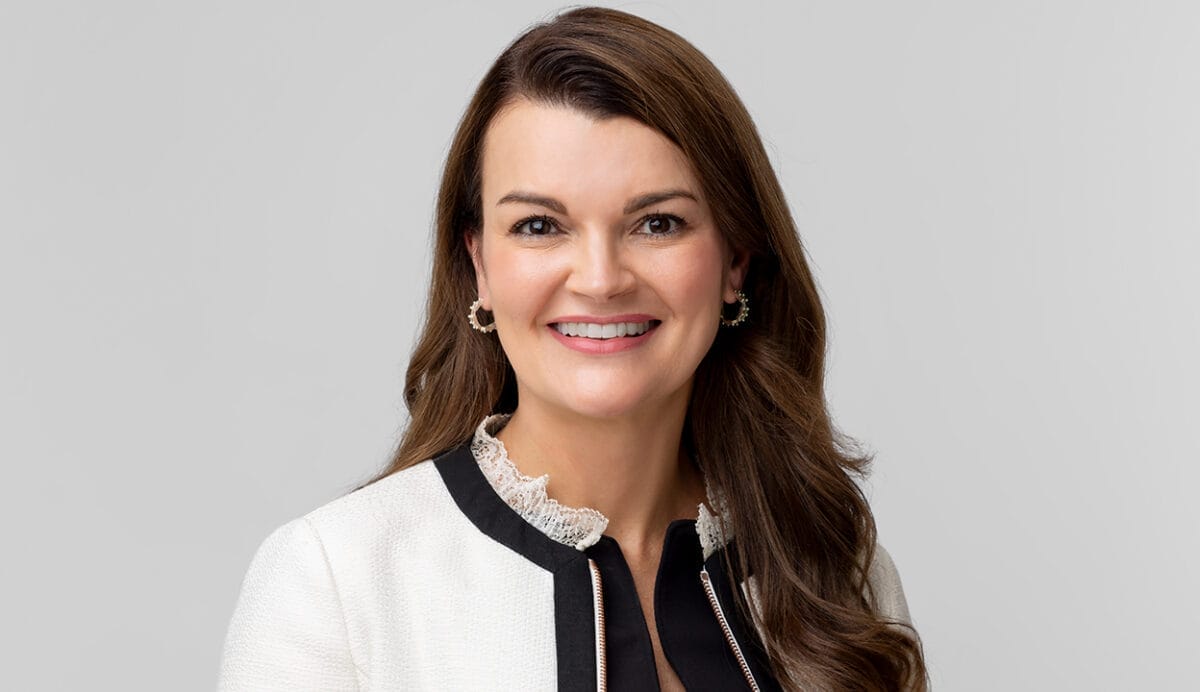
“Depending on the fund, we have built our capability to integrate seamlessly into their existing member experience. We’re quite deliberate on that. Members are familiar with their super funds, and they trust them, so they want to roll into their retirement with a similar experience. They don’t want to get friction burns from being moved out of the ecosystem they’re familiar with, there is already enough of that in the transition from their working life into retirement.”
Ultimate responsibility
Fund trustees bear responsibility for meeting their members’ best financial interests, whether that’s during accumulation or when the member moves into retirement. While the quality of the solution is critically important, there’s always a firm eye on costs and value for money.
“There’s obviously got to be a significant value proposition to the fund,” Foster says.
“We take this seriously, we’ve got to view this through the lens of members’ best financial interest and be shown to deliver better member outcomes for the majority of members. But we’ve also got to show that the fund is able to deliver solutions faster and cheaper, because that supports the trustee business case, which is a really critical part of retirement solution design.”
Allianz Retire+ chief distribution and marketing officer Catherine van der Veen says that to manufacture and launch a retirement income solution, and then develop it to scale, is potentially costly to a fund “especially when it involves guaranteed componentry”.
“This is where partnerships can really help speed you up and reduce costs,” she says.
“You want to rely on someone who’s walked this path and can assist you with the build, because if these solutions don’t scale, they’re not going to make their business case for the trustee.”
Van der Veen says the task facing the superannuation industry is to “simplify as much as possible, the options that we put to members when making a choice about retirement”.

“Defaulting in retirement is not yet legally available to trustees, and so there always is an element of member choice,” she says.
“But where we’re seeing progress…where maybe two or three options are presented to a member, and we’re calling this ‘trustee soft default’. We probably need to agree on some common industry language here. It’s an endorsement or a recommendation, and through the clever use of data, digital tools and potentially intra-fund advice teams, members will be guided down a lane that largely suits them, and the right guard-rails to protect them from unintended consequences.”
A high level of confidence
Van der Veen says if trustees are going to go down the path of offering a limited or simplified range of retirement options, “you want to have a high level of confidence that you have a high-calibre solution in place, and that the risks are adequately managed”.
“And this is where we think having a partner just adds that extra layer of security for the for the trustee, as well as the member,” she says.
Foster says that at the end of the day all super funds are trying to achieve a deceptively simple objective: to give members confidence to spend and to give members confidence that they will have enough to live on for the rest of their lives. Presented in the right way, there is considerable member demand for solutions that do exactly that.
“We know from research that there is a demand from members for retirement income solutions,” she says.
“And when they see them, and they’re presented in a simple manner and members are given optionality, they are able to make a decision, and they feel confident with their decision.
“The paradox we have in Australia is that we seem to have the demand from the members’ side…but the challenge is that the solutions aren’t being offered yet at scale, institutionally.”
Van der Veen says that, despite the superannuation industry’s history, regulation and focus on accumulation, it will eventually reach a point where cost-effective and flexible retirement income solutions are delivered, and taken up, at scale.
“What you’re starting to see is a pivot towards the industry starting to reduce the burden of complexity for members, and to reveal the choices in terms of member outcomes, not in terms of a description of product features,” she says.
“If you say to a member, you can spend $50,000 a year with confidence and it will not run out and will not be affected by market shocks, try to find me someone who doesn’t want that proposition.”







Leave a Comment
You must be logged in to post a comment.