


Superannuation industry investment leaders have warned that herding mentality caused by the Your Future Your Super performance test is distracting funds from focusing on long-term returns and may be creating unintended risks to managing members’ money.
An Investment Magazine roundtable, hosted in partnership with Northern Trust, heard that as funds grow and assume greater prominence in the overall financial system, they potentially pose a heightened risk to the system and will inevitably come under greater scrutiny from regulators and agencies here and overseas.
The Reserve Bank of Australia and the International Monetary Fund have already begun raising questions about potential financial system impact of major super funds running into trouble. But the roundtable heard super funds have a vested interest in maintaining system-wide stability.
“I think the point the RBA was making was not that super funds are a risk to financial stability, rather that banks are increasingly reliant on funding from superannuation funds and that concentration is becoming a growing risk for those banks,” Andrew Fisher, general manager of total portfolio management and resilience at Australian Retirement Trust, told the roundtable – the first in a series of four devoted to systemic risk in super scheduled to take place over the next six months.
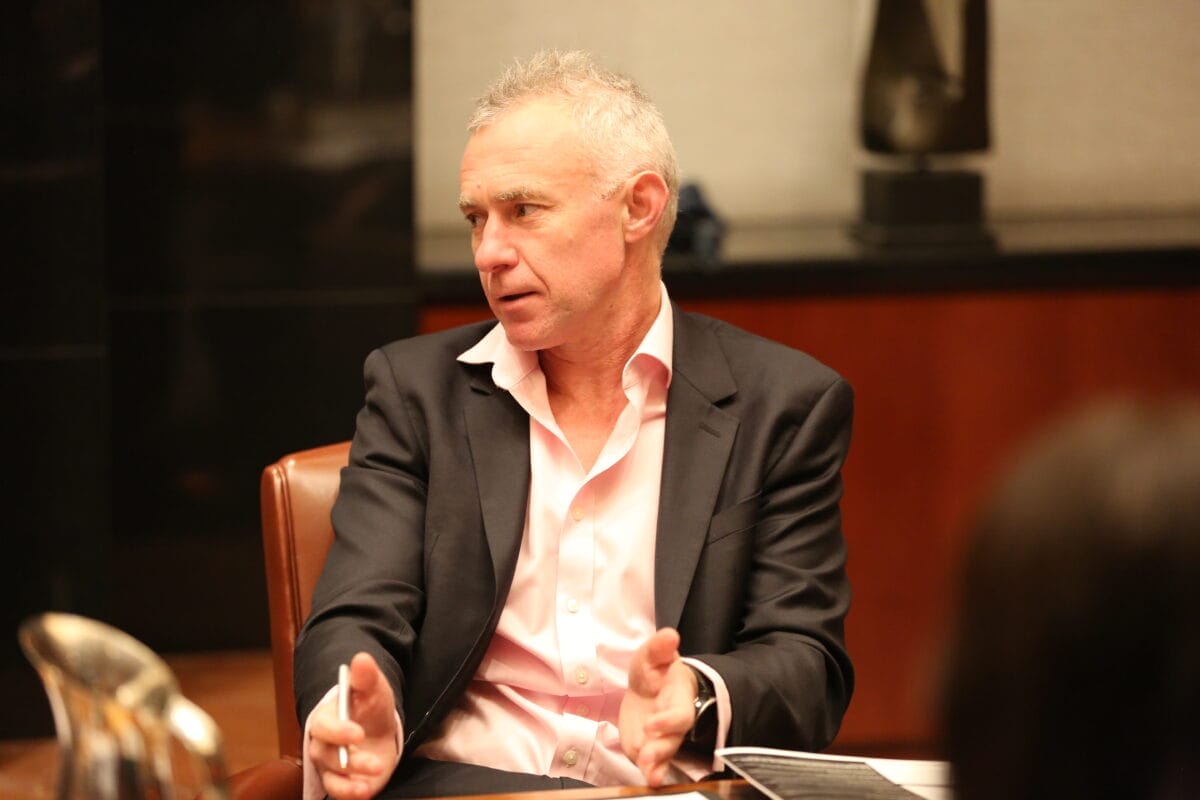
“We have an incredibly important role to play ensuring stability in the financial system, and being large equity owners of those four banks means we have a lot of skin in the game wanting to make sure they are stable.”
Held in the lead-up to the Albanese government signalling its willingness to review the performance test, the roundtable heard there’s a risk the test can drive a sameness in how funds invest and a lack of willingness, or courage, to stand out from the pack.
A further consequence of this herding mentality is that many funds may be exposed to the same set of risk factors at the same time – so when it goes wrong for one it could go wrong for many.
MLC Super chief investment officer Dan Farmer said “the danger for the whole system is that everyone’s aligned to the same benchmark, [say] the MSCI World, and everyone’s hedging it the same way”.
“That creates systemic risk when the tide goes out,” Farmer said.
Mercer Super chief investment officer Graeme Miller said “a subtle and not always understood implication of the YFYS test is that your neutral currency position is always the MSCI World basket of currencies”.
“Effectively it’s forcing you to hold the foreign currency exposure, which is dominated by US dollars,” Miller said.
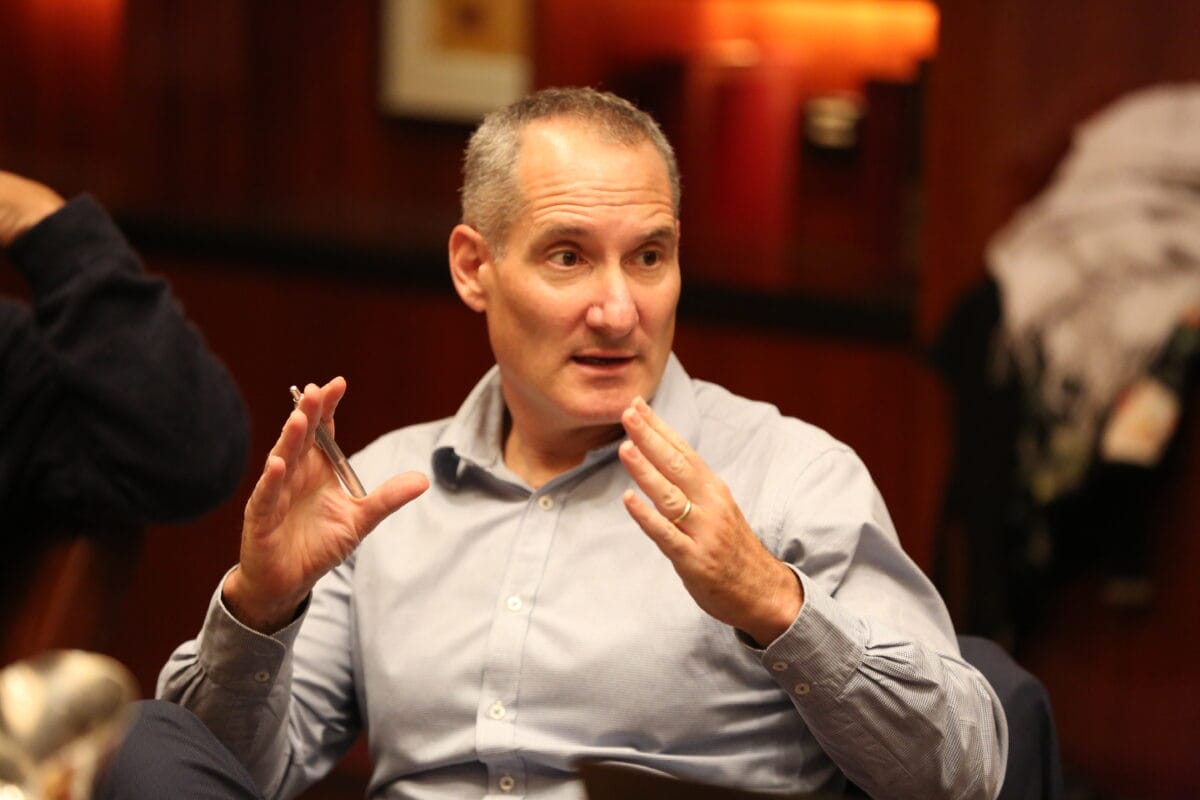
“And in fact, in the work that we did on this is at [a prior organisation] we discovered, much to our surprise that the second-largest source of tracking-error risk that we were running relative to YFYS benchmark was simply the fact that we were hedging our actual currency exposures.”
Farmer said herding behaviour might be driven by an unspoken desire to not stand out from peers, but it’s also sometimes an explicit target.
“Our trustees have peer group as a tertiary objective,” he said. “We’re actually told to be aware of it, because it’s important for a whole bunch of perceptions out in the market. So, there’s that peer group that binds us.”
Struggling to keep pace
The roundtable heard that trustees often struggle to keep pace with changes to the investment landscape, but ART’s Fisher said trustees are “entirely rational” in holding investment teams accountable by comparing returns of equivalent options elsewhere.
“We all do the same thing when we compare external manager returns and even internal management teams to benchmarks and peer universes,” Fisher said.

“One of the best ways to assess if an investment strategy is working is to compare it to equivalent alternative options. We should all be able to explain the difference — good or bad.
“We get paid to add value and we shouldn’t forget that our members are police officers and nurses and teachers. They all get held to incredibly high performance standards every day and they should expect the same of us.”
Raelene Seales, chief executive of Prime Super, said the fund is addressing “ingrained thinking around this topic with our directors”.
“Investment risk cannot be considered in isolation of other obligations directors and management have,” she said.
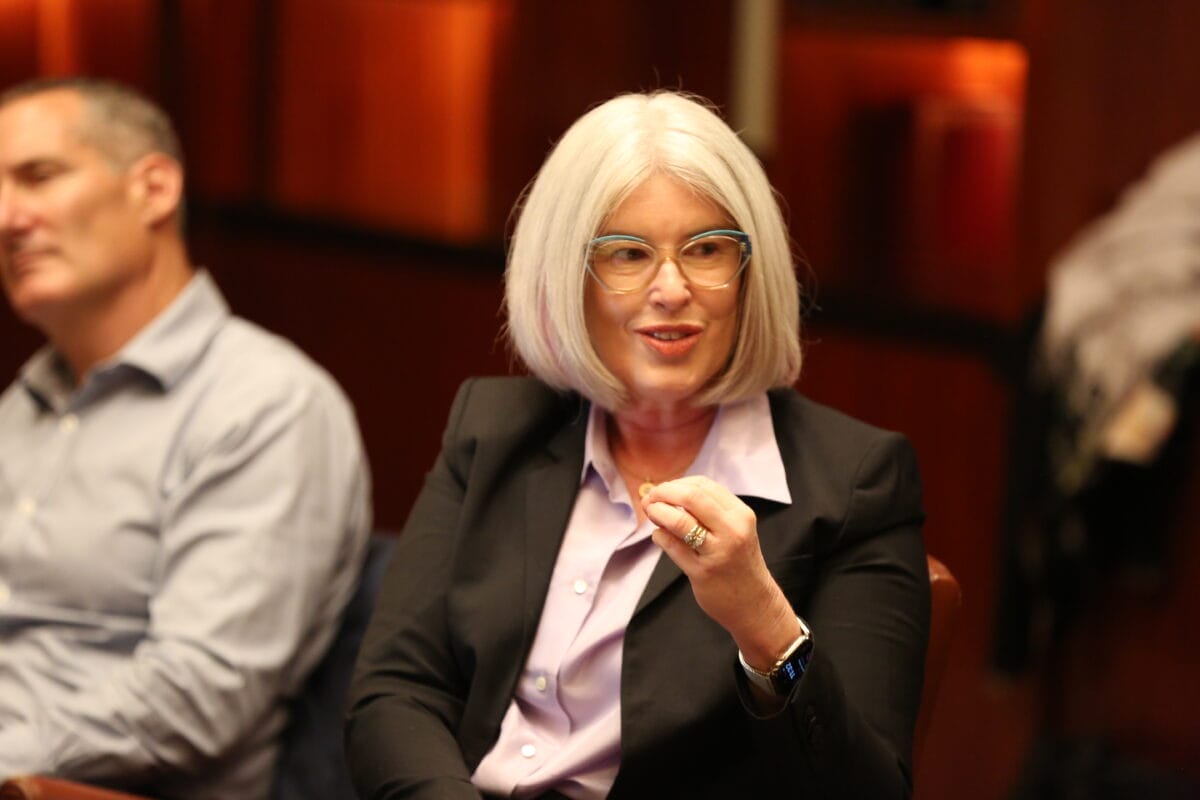
“There continues to be a tension between achieving above median investment performance with other obligations trustees have. No longer are superior investment returns king. The pace of change for directors and management needs to be congruent as we balance strong investment returns with fee levels that are fair and equitable for all members as well as member servicing and support. None of these aspects are mutually exclusive.”
AMP group executive for superannuation and investments Melinda Howes said another impact of the YFYS performance is heightened volatility in fund flows.
“Don’t forget, it’s not employers, it’s not awards, it’s individuals now making all the decisions, and the money is getting more mobile,” Howes said.
“Switching is up. So if you’re not delivering those short-term returns – which, pleasingly, we are – you live or die based on your most recent results, peer-relative, and it’s all being reported in the first week of July.”
Sign of a healthy industry
Leon Stavrou, Northern Trust head of Australia and New Zealand, said the Australian superannuation system is currently the fourth-largest pool of retirement savings in the world and that it is on-track to become the second largest. Even though it’s increasingly dominated by big funds, Stavrou said “a sign of a healthy industry is having a mix of small, medium and large funds that can play in different parts of the market”.
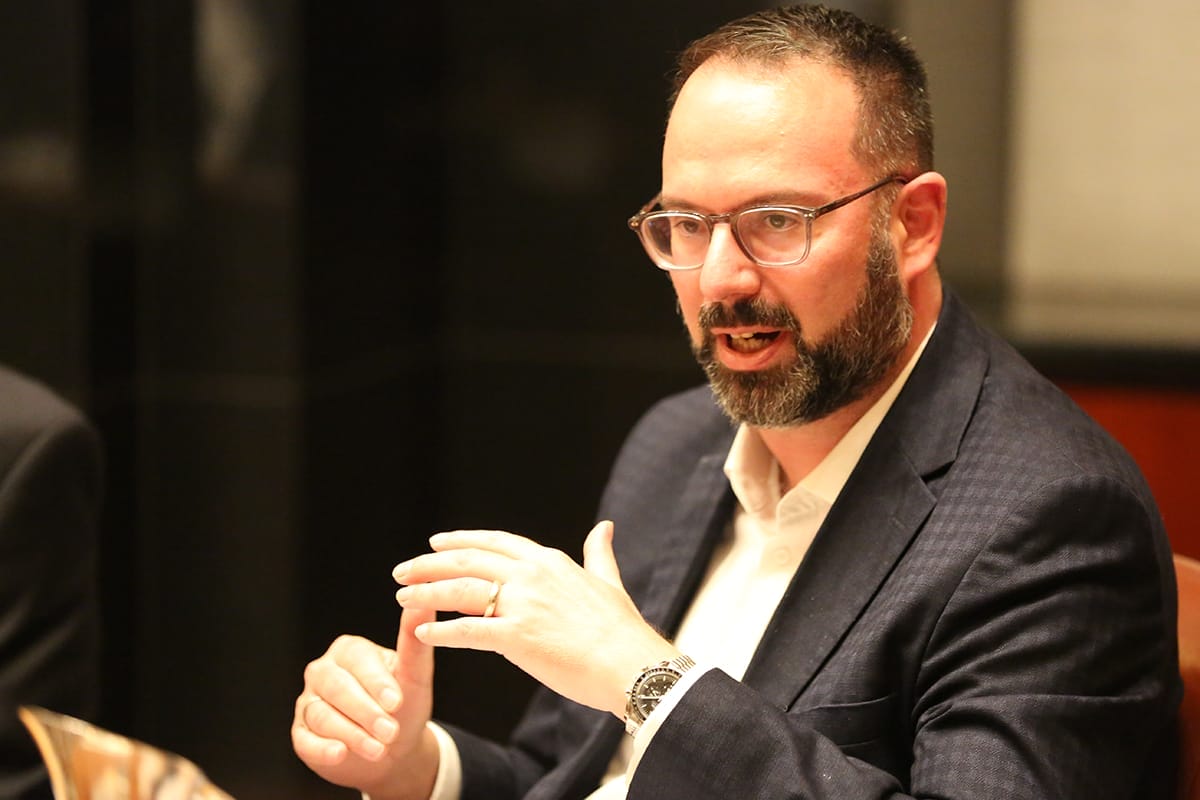
“If we only had four mega funds that will probably be a systemic problem,” he said.
Investment consultant and UTS Business School fellow Rob Prugue noted how, as funds grow in asset size, the risk they pose to the system naturally changes.
“The concern isn’t just the size of an individual fund,” he said.
“In the tight concentration of funds within super, when one fund represents a meaningful portion of total super, the systemic risk within super shifts significantly.”
Miller suggested that the issues of size and scale are sometimes confused, but the key issue is that the system is competitive.
“Scale obviously does matter, but I’d suggest size probably doesn’t,” Miller said.
“If you look at the structure of pretty much any industry within Australia… we have gravitated to the model where we’ve got a small number, between two and five, very large players, and then we’ve got… myriad creative, successful organisations beneath that.
“We’ve got a competitive superannuation system, in other words, where members are free to choose and free to change their superannuation [and] a competitive system will generate competitive behaviours amongst the players.”
The roundtable heard that the growth of the system might give what could be described as an illusion of instability. As individual funds become larger, the amount they invest in individual assets, asset classes and sectors is also going to grow. That’s going to give rise to some chunky headline numbers – on the upside as well as the downside – and members need to understand what they really mean.
The roundtable heard that a $1 trillion fund could easily have $1 billion write-offs in any given year.
But, if very big funds are not making very big single investments at a time, “the biggest risk, as you get bigger, is over-diversification, not under-diversification”, said Leigh Gavin, chief investment officer of Cbus.
“So, you’re going to have billion-dollar losses, and members should expect [that].”
But the absolute size of losses does not mean the system is inherently unstable, nor that it is any riskier than it is now – just that the numbers involved will necessarily be larger.
Quality of asset stewardship
The Conexus Institute* executive director David Bell said that system-wide shocks would likely be mitigated by the quality of super fund stewardship of assets, and by the fact that it is unlikely that regulators will not act to prevent contagion or financial system detriment, or event detriment to members of a specific fund.
Bell said the institute’s research suggests that the super system is unlikely to be a significant source of systemic risk. Individual funds may strike trouble, but the research suggests the probability of “a systemic liquidity event is overplayed” and there are several stage gates that must be passed – and several points at which regulators would have to choose not to act – for such an event to occur.
In any case, Prugue said that while “some have suggested that a fund failure won’t be bailed out, history shows the contrary”.
“Governments have stepped in to support crises involving less visible, standalone failures,” he said. “It’s hard to imagine a fund with 100,000 members being left on its own, particularly since some of these risks are the result of new politicisation within super.”

Seales said there should also be discussion about the “third- and fourth-party systemic risks and the role these parties play”.
“The ‘system’ of risk outside of super funds and our reliance on third parties is something that we really need to think about over the next four to five years,” she said.
“Consolidation continues to occur in many third parties, including custodians and administration providers, where in some cases, you are down to very few players. Funds will increasingly look to these third parties to keep up with the pace and change in regulation. This is an emerging risk that we should be discussing as an industry. The insource/outsource model, and costs of both models, needs to consider the risks of either model as well.”
The roundtable heard that hedge books of some funds now exceed $100 billion, raising liquidity issues, especially during crises such as the Covid-19 pandemic, and that some funds were collateralising currency hedge daily during that period.
The risk in such a situation is that all funds go to the same banks at the same time with the same cash demands, the roundtable heard.
Another concern for regulators is an ability to control how private market investments – for example, private credit – affect the real economy, compared to banks.
Private markets, and in particular infrastructure and private credit, offer long-term returns and diversification but at the cost of opacity, valuation uncertainty and liquidity mismatches. ASIC, the RBA and the IMF have each expressed concerns about whether daily unit pricing can be maintained when large portions of portfolios are illiquid.
Investment: In or out?
Decisions around internalisation of investment management and outsourcing of other functions potentially raise both operational and reputational risks, quite distinct issues from the traditional focus on investment risk, but no less significant. Internalisation can reduce costs and build expertise, but brings cultural, governance and agency risks.
Prugue said that as a former internal manager at a large super fund, he could sympathise with why and how some funds focus on better resourcing internal capabilities.
“Yet, as also a former external fund manager, I’ve equally seen manufacturers underinvest in back office and admin, as these are seen as cost centres yet are often the root cause of most collapses of other fund managers,” he said.
Howes said that after AMP sold its asset management arm, AMP Capital, “there was a big rethink” of its approach.

“We’d been underperforming, and we really had to look at where we could add value and what the new strategy was,” she said.
“We got a new CIO, Anna Shelley, who completely transformed the way we’re thinking about it. And we all know where we add most value is in the strategic asset allocation. That is the expertise we’ve built or retained and built-up in-house.
“Then we’ve got decisions around active and passive, and we went more passive, because we’re trying to get our costs down, and that’s all outsourced.
“Then we look at active: where can we select the best managers, but also then what strategies can we put around it, where can we generate alpha for lower risk, or where can we diversify our risk away? And because we are smaller, we can make plays into areas that we can generate alpha for very low risk that would be too little for the mega funds to even bother with. So that’s really what we’ve focused on and it gives us a real competitive edge. It has started to play out.”
MLC’s Farmer said that one of the key benefits of internal management is that “it should be a fixed-cost business” but added that “getting the talent and holding it, particularly as you grow, if they are very successful, how do you make that a sustainable, long-term structure inside the business?”.
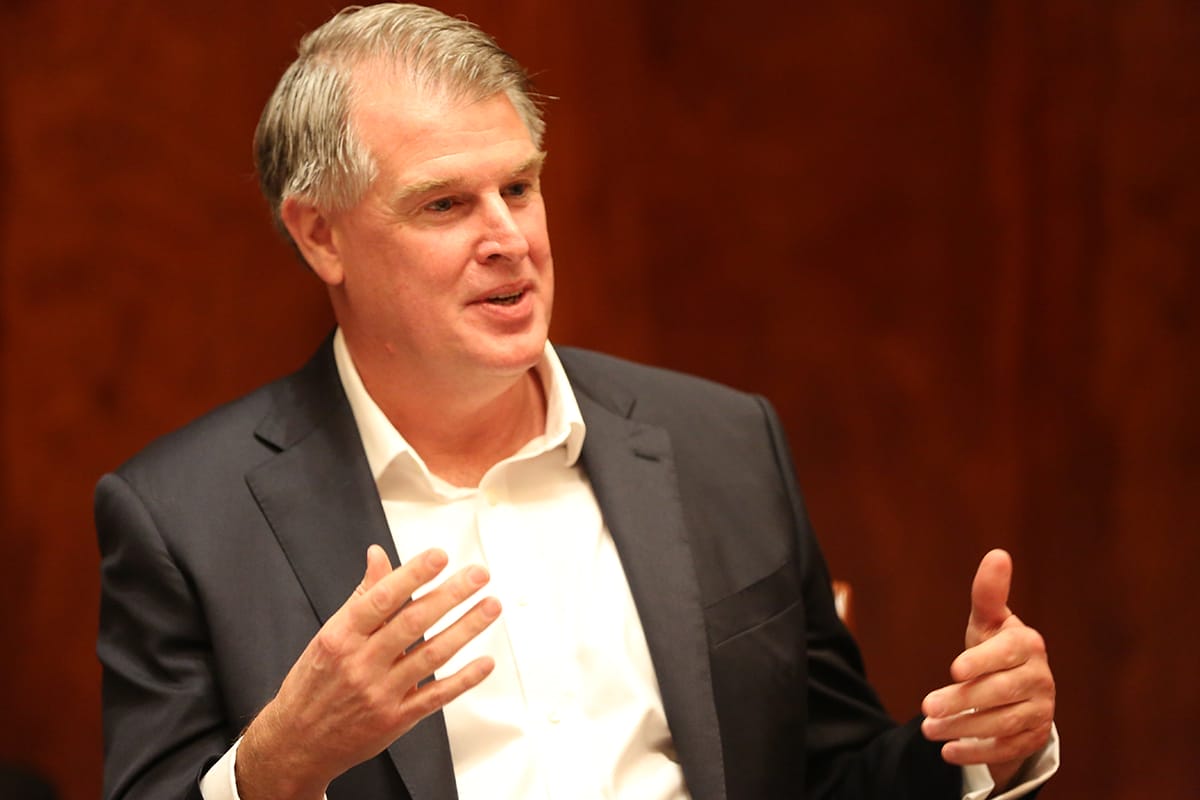
“The benefit of internal is far more direct control,” he said. “But I think as you get bigger… you get a wider set, a wider degree of diversification through using different managers.
“If you’re doing real assets, you’re probably going to have a bit more of a concentrated portfolio, potentially with two or three external managers, something like that.”
Alignment with structure, members
The roundtable heard that a fund’s choice between internal and external investment, and between active and passive management, must align with each fund’s structure, capability and member profile, and risk may emerge unexpectedly where there’s a mismatch.
Gerard Walsh, head of Northern Trust’s global banking and markets client solutions group, said outsourcing arrangements work best when the outsourcer understands not just the ‘what’ of what’s being outsourced, but also the ‘why’.
“The ‘what’ is only about 10 per cent of the decision; the ‘why’ is 90 per cent of it.
“You’ve got to understand why you’re outsourcing something and to what end. And that comes back to asking yourself a question: what am I in business to do, and what is the best combination of fixed costs inside my organisation and variable costs without my organisation to deliver the outcome I’ve promised to my investors? That context changes all of the time.
“Outsourcing has been in this industry for, by my count, 50 to 60, years. Outsourcing is a value driver, as long as you’ve done the work internally to understand and answer the question ‘why?’.”
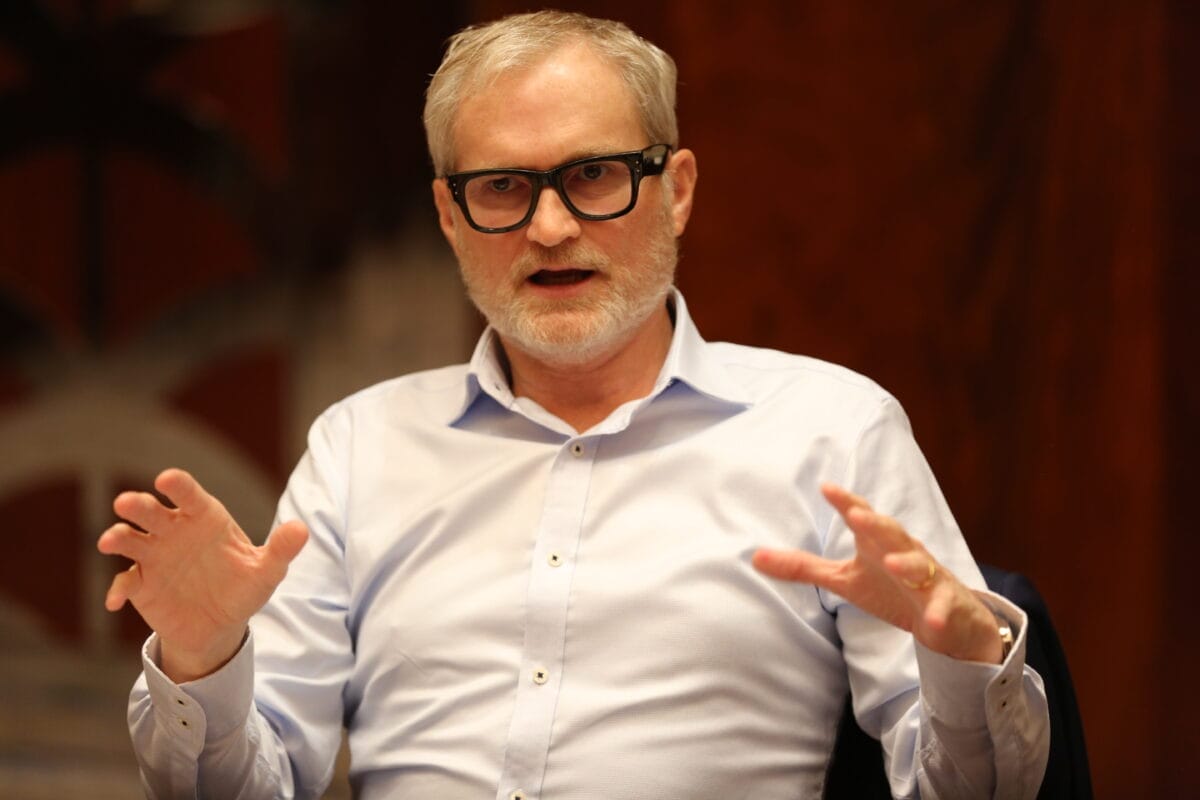
Walsh said it is natural and healthy that key players in the system continue to question how it works, the risks it both faces and poses, and its regulatory settings.
Despite – or perhaps in part because of – that ongoing inquiry, and the sense that it is never quite good enough, the Australian system remains a gold standard globally. Focusing on its shortcomings “is such an Aussie tall-poppy thing to do”, Walsh said.
“You’re still the gold medallists”, he said. “To the rest of the world, the Australian superannuation system is the world’s best.”
* The Conexus Institute is a not-for-profit think-tank philanthropically funded by Conexus Financial, publisher of Investment Magazine.








Leave a Comment
You must be logged in to post a comment.