


Figuring out whether an image displayed on a computer monitor is a piece of aircraft debris or a pigeon – or, say, a ferret – on an airport runway is unlikely inspiration for the application of AI to super fund operations.
But a presentation by Changi Airport at a conference in Singapore last year revealed the potential of AI to drive radical transformation of how a fund keeps critical information up to date.
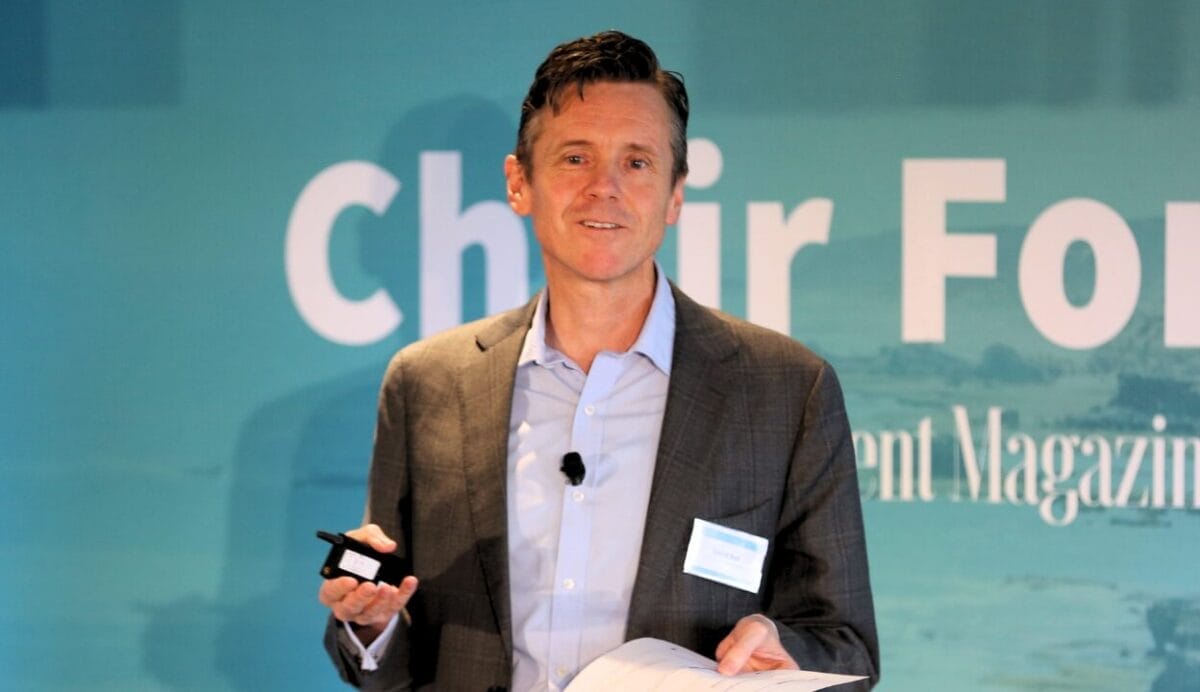
UniSuper head of digital and customer experience Brendan Donoghue, who was at the Singapore conference, says a presentation outlined how Changi Airport processes about a thousand flights a day, and used to employ people to watch screens to detect runway debris. It was a mundane job, but a bad call could have catastrophic consequences.
“If you have something suck up into a jet engine, two things happen,” Donoghue says.
“Number one, your passengers are suddenly at very high risk of an accident. And number two, the runway gets shut down.
“All these people used to sit at their computer screens, and they would scan their monitors, and look for something and then try to guess is it a pigeon; is it a piece of tire that’s fallen off; or is it just a reflection in the light bouncing off the camera? And they’d send teams out to go and clean the runway.”
The detection task has now been fully automated by an AI system called iFerret and it is reportedly significantly more accurate than it used to be. Crucially, it removes the potential for human error, fatigue and burnout.
“At a distance of 450 meters they can identify and classify a bee sitting on the runway versus a nail,” Donoghue says. “And they don’t have to use people in what must have been quite a mind-numbing job.
“But I was obsessed with this idea, because I was like, hang on, I have all these digital assets that we constantly have to review and to test [to see] are they still correct.
“I’ve got about 113,000 digital assets, and that might be videos, podcasts, individual frames in a video showing an image. I used to have people dedicated to going through and attesting these at regular intervals, and to go through our digital assets is a year’s worth of work.”
Donoghue says the task tied up people who otherwise could be employed doing far more creative and productive tasks.
“It’s tying up content people, it’s tying up product people, and it’s tying up my legal people,” he says. “All of these highly paid, highly trained individuals are literally going through a page, clicking on links, and then coming back and saying, yes, this is still compliant.”
All in a matter of seconds
About a year ago UniSuper implemented an AI tool, and Donoghue says it is now at the point of development that the entirety of the fund’s digital assets can be scanned and attested, or flagged for modification, in a matter of seconds.
“Then, of course, because it scanned them in seconds, it can scan them again and again and again,” Donaghue says.
“When we make a change to our PDFs, or where we see regulatory change, we retrain the model, and then we’re able to immediately identify where’s the area that we need to focus on, or the updates we need to make.”
Donoghue says the best applications of AI are not always what an organisation assumes they will be, nor are they necessarily what everyone else is doing.
“That’s the idea of AI,” he says.
“You can find these incredible ways to implement it within your organisation that make fundamental and meaningful change, even though it might not be the chatbot that everyone thinks is the logical implementation.”
Properly trained AI systems can become highly adept at recognising patterns in data and, by extension, also recognising anomalies. This facility lends itself to other applications, such as fraud detection and improving security, Donoghue says.
And these are issues all funds should be seriously working through as they increasingly interact with members online and in digital form.
“As you increase digital uptake and digital engagement, you actually grow the attack vector then for a nefarious party to attack you, because you’ve got more and more members can do more and more things online,” Donoghue says.
“So, in lockstep with the program that we’ve done around increasing digitisation, we’ve also been uplifting our capability around [what we call] our online or digital fraud shield.
“That is effectively a combination of what I do digitally, my partners over in information security, and my partners in [financial] crime, and the three of us own all the decisions in relation to the improvements we’re making.”
AI enables organisations to spot anomalies in how a “member” is interacting with it – it could be an odd geographical location, a strange time of day, or they might follow an unusual series of links to get to a particular page. All of these can be flagged and used to drop in additional security checks and measures, just to make sure.
Deliberate friction
Donoghue says there is a belief in some quarters that “really good security comes at the cost of ease of use or engagement, [and] if you dial it up too much then people won’t log in, and then they won’t be connected with their super and that’s a bad outcome”.
“I could not disagree with that more,” he says. If there is no “friction” in the interaction, trust tends to decline. So some friction needs deliberately to be built in.
“And what we’ve actually found is engagement with those experiences stays at an all-time high because members feel safe when they’re doing it,” he says.
“We keep these moments of intentional friction in the journey, because then not only are we very confident [we know] we’re dealing with the right person, but also people trust what they’re doing online.”
The impact of AI can be transformational. Donoghue says member application processes that used to take days or weeks now take around 13 seconds, and the target is to get that down to three or four seconds. And just as significantly, since it launched the capability earlier this year, more than 15,500 non-lapsing binding death benefit nominations have been completed online.
“Across the business, we’re using AI for those sorts of purposes,” Donoghue says.
“We’re using it as we’re talking to members so we can actually, live, transpose and quantify what are the types of calls we’re getting into the call centres, so we can identify really quickly is there an emerging trend, or is there something we need to action, or is there a change that’s happened in one of our systems, and we need to jump on that straight away.
“They all tie together, so you start to get an online experience that is compliant and safe. You’ve got something which is working really well from a [multi-factor authentication] standpoint. You’ve got pattern recognition. You can determine whether or not the member’s actually exhibiting behaviour which is safe, and then you know that it’s actually a really good experience as well.”
Donoghue says that when planning engagement strategies funds should not assume that older members will not be receptive to the changes technology supports, but the technology should never define the member experience.
“Of all of my cohorts, my most digitally engaged cohort is actually my members 60 and over,” he says.
“Our members have been pushing us down this journey for quite a long time – to be able to self-service, to be able to access whenever and wherever [they] are. But they don’t talk about the technology, they talk about the experience. They’re really explicit on what they want to do, and we know what we want to offer them, and then we look for the right technical solution or the right technology partner to enable that.”








Leave a Comment
You must be logged in to post a comment.