


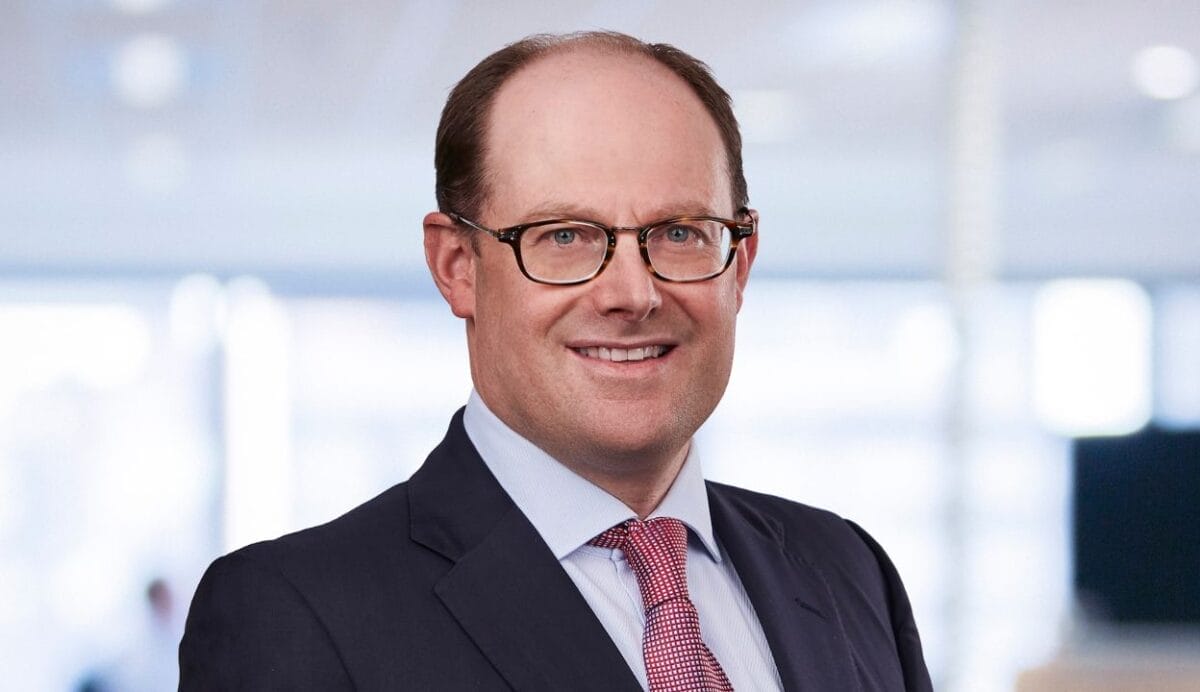
While Insignia is enjoying strong tailwinds in its master trust business, with net flows improving on FY24 as a result of uplift in its advised channel, it still has a long way to go to “nail organic growth”, chief executive Scott Hartley tells Investment Magazine.
“Our master trust business is way behind the eight ball in terms of its capabilities relative to leading competitors,” Harley says.
“The largest churn market in super funds is members making a choice themselves. Having a digital direct capability where you’re presenting yourself as a good fund with a strong brand and good performance, and where it’s easy to join the fund, is absolutely critical. And we don’t have that today – we don’t have a digital front door.”
Hartley says joining MLC as an individual member is still “quite an effort” that requires “resilience and persistence”. Insignia is currently building that capability, and expects to have it in market in the second half of this financial year.
“The only way we currently participate in [that market] is handing our members over to different funds. We don’t have the ability to attract members to ourselves,” he says.
Insignia is also behind on engaging with those members when does have them, where its approach is “circa 2000”: members divided into cohorts to receive campaign messaging via email.
“Leveraging digital and AI and doing that properly – looking at members as a segment of one, what their individual situation is, what their needs are, what is the best action they should take – is something we don’t have today. That will have a huge uplift in retention; if you’re getting customers in the door and improving retention of existing customers, that’s going to be a big benefit.”
Hartley makes the comments in a call to discuss Insignia’s full year results, where it recorded an underlying net profit after tax of $255 million – up 18 per cent on the prior corresponding period, and driven by a reduction in operating expenses and the business’ ongoing simplification program.
And Hartley says that Insignia intends to put more money behind boosting the MLC brand to deliver further growth.
“We have a strong brand in MLC – it has 68 per cent prompted awareness, which is pretty strong given we haven’t invested in it for the past five years,” Hartley says.
“We did a little bit of investment in the last half of last financial year, and the brand responded very well to that reinvestment. We know the brand is strong and we plan to invest in it significantly this financial year.”
Hartley also weighed in on the proposal for a “soft default” retirement product made by Australian Retirement Trust prior to the Economic Reform Roundtable, saying that as long as the product was “opt-in” it would be acceptable, but cautioned against cutting advice out of the process entirely.
“I would say that there is a level of risk in that approach, because if members of super funds don’t get advice before they take an action before they opt-in, they could be doing themselves a disservice,” Hartley says.
“That’s maybe a situation where they’re not maximising their retirement outcomes, because advice at that point of retirement is critical to getting that right. I think it’s better than an opt-out, but even a soft opt-in has risks attached to it – unless there’s a strong advice proposition as part of the opt-in: perhaps opt-in, but speak to an adviser before doing so.”
Adviser profitability
Insignia is also working on improving adviser efficiency and profitability, with the advice business delivering an increasing in underlying net profit after tax of 73.1 per cent compared to the prior period and revenue per adviser improving by 14 per cent.
“We dealt last year with some low-hanging fruit, so there was a big jump in [adviser profitability],” Hartley said.
“But we have more work to do, and that will perhaps be harder to get to because it goes to technology transformation, but also particularly a focus on growing the client numbers. Shadforth has been doing quite well over recent years and we’re getting that effect at Bridges, which had a good year and good client growth.
“In the advice businesses you’re obviously dealing with older people and some do stop being clients at the end of their lives. You have to grow a lot to replace clients.”
That technology transformation includes using generative AI to remove inefficiencies in the advice and advice review process. MLC Expand is using AI to “improve the life of advisers”, which Shadforth and Bridges have both been beneficiaries of, but implementing AI across those businesses will also “have a big impact”.
“We’re looking at the advice tech stack we currently use and working out how we can make that overall much more efficient, and while AI is a key part of that there’s more than that [coming],” Hartley said.
“One key element of the advice stack is Wealth Central, which we acquired a few years ago. We are very focused on retaining and enhancing that, which will benefit the advisers that use it – Shadforth and Bridges, but also Rhombus Advisers and for that matter other advisers in the market that use Wealth Central.”
Hartley said that while that is “very good front-end customer tech”, he believe is can be “a lot, lot better”.
“Using AI and improving that tech is going to be a big uplift for advice efficiency and engagement with customers,” he says.
In August Insignia sold its self-licensed adviser services business IOOF Alliances to Entireti, where it was merged with Jigsaw Advice Solutions to create Entireti Alliances.
Hartley says that IOOF Alliances – which contributed about $1.5 million in revenue – wasn’t core to Insignia’s business.
“Those businesses need to benefit from scale; they need to feed off the scale of the overall licensee,” he says.
“Because we separated Rhombus, we lost a lot of scale benefits. The vendor pricing, the things we can negotiate on behalf of IOOF Alliances, wasn’t as strong as what it was in the past when we had Rhombus as part of our business.
“It didn’t make sense for us to continue to own it and we weren’t the best owners of that service – it wasn’t a business, it was a service to self-licenced advisers. Akumin do have the scale and size they can leverage to bring the benefits to those self-employed advisers. We did sound out the customers of that service and they supported the move to Akumin.”









Leave a Comment
You must be logged in to post a comment.