


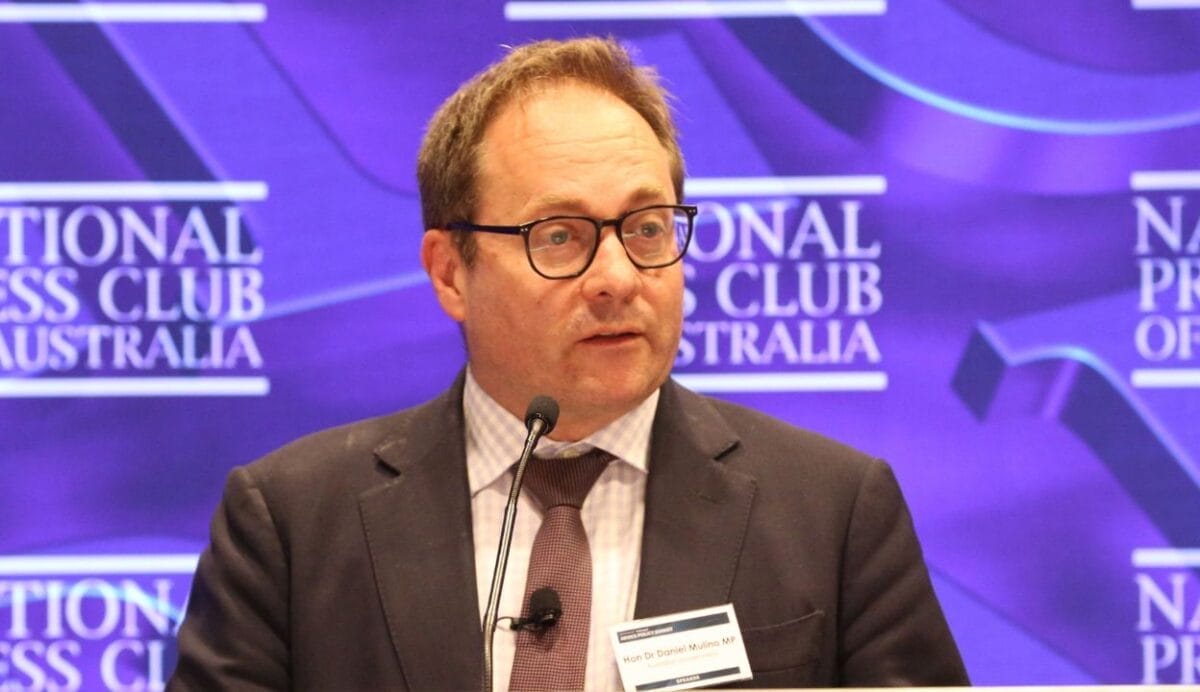
New Minister for Financial Services Daniel Mulino says failures like Shield and First Guardian means additional guardrails may be needed even as he re-committed to winding back financial advice red tape.
Mulino told the Conexus Retirement Leaders Summit that the Delivering Better Financial Outcomes reforms was a “time sensitive” priority and discussed the importance of getting the contentious parts of the bill right to avoid any potential regulatory gaps.
“What we are seeing at the moment, at the same time that we are dealing with DBFO, we are seeing First Guardian and Shield and some of the challenges there and what are the additional guardrails we might have to think about,” Mulino told the summit, held by Conexus Financial and its philanthropically-funded think-tank The Conexus Institute.
The minister previously told Investment Magazine sister publication Professional Planner that the Shield and First Guardian failures hasn’t softened his desire to complete the DBFO reforms.
Mulino brought up Shield and First Guardian voluntarily during a question that raised concerns over a potential comeback of vertically integrated business models by super funds with the introduction of the new class of adviser via the DBFO.
The advice sector received a minor concession in former Minister for Financial Services Stephen Jones’ announcement of the new class of adviser, which would allow any AFSL to hire them, but only to advise on APRA-regulated products.
Mulino said vertical integration is “a consideration, I wouldn’t necessarily say it’s a concern”, adding there are “clear possible gains” from the introduction of the new class of adviser.
“Clear gains would be that there are a lot of people… the bulk of people around the median income who, if they were provided with a bit of guidance within appropriate guardrails, many of those people could get a better outcome,” Mulino said.
“I guess I’m trying to flag that part of the complexity – you’re alluding to that vertical integration piece – but I think there’s a number of interrelated pieces where creating a new class of adviser has to be done with a mind to all these other things that are happening.”
Mulino said that designing the reforms with security in mind isn’t straightforward because there are always new and emerging threats on Australia’s $4 trillion retirement system.
“What do we have to think about in creating a new class of adviser in the context where we’ve got these situations arising through business practices that are highly concerning but where there’s not a straightforward lever to pull to clamp down on them,” Mulino said.
“There is a change in terms of some of the threats that arising from the fact that there are a lot of people with big balances getting near retirement. In one sense, it shouldn’t be surprising that people are thinking up business models to take advantage of that. That is something that has to be borne in mind. All of that of course is related to the CSLR [Compensation Scheme of Last Resort].”
It’s not currently known the full impact Shield and First Guardian will have on the CSLR, but the scheme has already blown out past the $20 million subsector cap in the FY26 levy collection period.
FY26 will be $67 million in total, with FY27 estimated to be over $123 million. This is largely based on Dixon Advisory and United Global Capital, with other failures like Brite Advisors expected to impact the scheme.
The failures of the Shield and First Guardian master funds have put over $1 billion of retirement savings from 11,000 clients in limbo.
ASIC revealed in early July that more resources have been dedicated to its ongoing investigation into the failures of Shield and First Guardian.
The regulator commenced action into the scheme after concerns telemarketing firms were using high-pressure sales tactics to pressure people to invest in the Shield and First Guardian funds via an adviser, despite the products being not high risk and client best interests not being considered.







Leave a Comment
You must be logged in to post a comment.