


The government has said that the Your Future Your Super (YFYS) performance test will be subject to “further examination” as it tries to lift productivity.
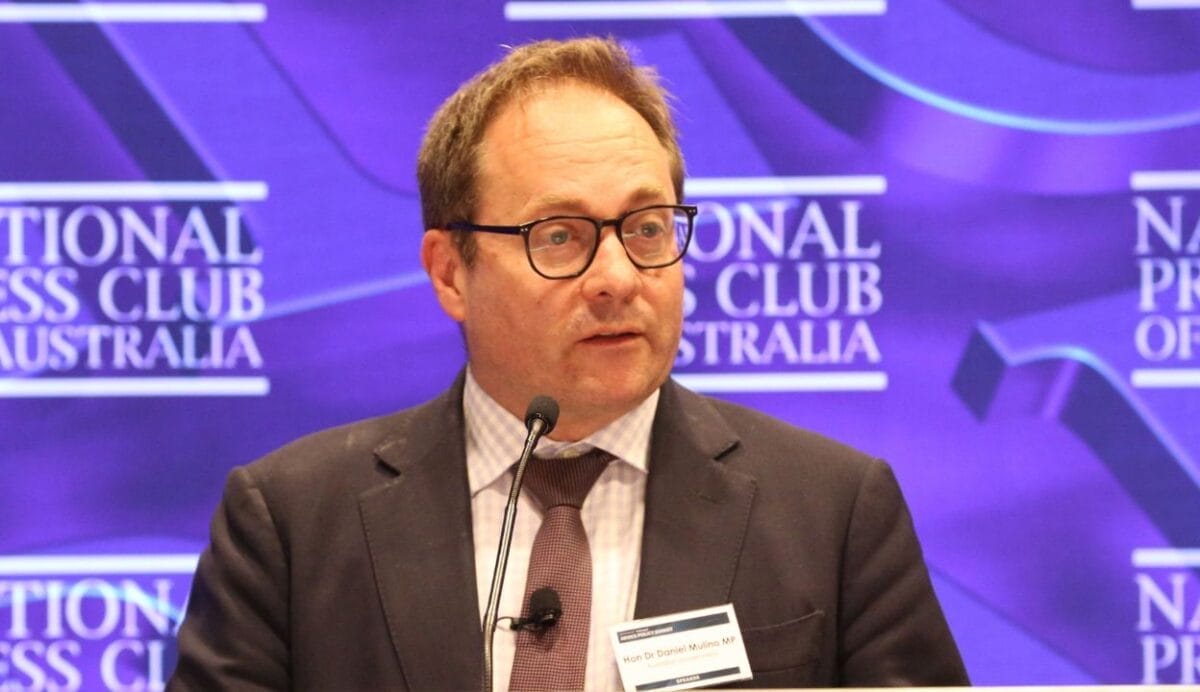
Speaking at the Conexus Retirement Leaders Summit on Wednesday, Minister for Financial Services Daniel Mulino said that superannuation was one of the “great capital allocation mechanisms” in the Australian economy and that the government wants to make sure that it’s “operating as efficiently as possible”.
In his remarks, Mulino acknowledged key criticisms that have been levelled against the test since it was introduced without notice by the Morrison Government during its pandemic budget in 2020.
“There’s been a lot of discussion about – as worthwhile as the performance test is in terms of protecting people from badly performing funds – how it can lead to misallocation and index hugging and all the points you know too well,” Mulino said.
“These are issues that we need to examine and a lot of these issues go into productivity in terms of the allocation of capital across our economy.
“A couple of the issues that were raised at [last week’s] Investor Roundtable were the performance test and RG97. There’s already been some public facing work on both of those, and I expect that both of those would be the subject of further examination.”
Mulino’s comments follow a report in Investment Magazine last week that a review of the YFYS performance test is likely to be held within the next six to 12 months. Super industry leaders have recently ratcheted up lobbying efforts against the test in private with government officials. At last week’s Investor Roundtable, which was hosted by Treasurer Jim Chalmers, almost all of the asset manager and asset owner representatives in attendance raised the test as inhibiting the economic potential of the $4 trillion sector, according to sources familiar with the proceedings.
ASIC announced yesterday that it would review the requirement for super funds to disclose stamp duty payments under RG97 after fund executives raised concerns at the Investor Roundtable that the disclosure impacts performance test results and discourages investment in property.
“This is exactly the sort of actionable idea to address regulatory issues ASIC is open to testing,” ASIC chair Joe Longo said in a statement.
“If the review finds appropriate changes will deliver benefits without undermining disclosures, then ASIC will act. We want to ensure red tape isn’t unnecessarily holding back investments.”
While many in the superannuation sector have learned to live with the constraints of the performance test and some are beginning to make forays back into higher-tracking error strategies as they build up a performance buffer, others still want it re-jigged to better cater to investments in energy transition, decarbonisation, affordable housing and other emerging local industries.
But reviewing the YFYS performance test is just one of many ideas to get Australia’s superannuation savings pool working harder to support national productivity. The $350 billion Australian Retirement Trust (ART) floated a number of proposals ahead of next week’s Economic Reform Roundtable, including the creation of a public development fund that would see “critical infrastructure investment tasks accelerated and supported by private capital investment” and the introduction of so-called ‘soft default’ options for members in the retirement phase.
Soft default options would unlock billions of dollars of economic productivity, according to ART executive general manager for advocacy and impact Anne Fuchs.
“There are millions of Australians around the country that aren’t taking up an income stream in retirement, and that’s a squandered economic opportunity for the country because it’s just tied up in savings – it’s just sitting there in an accumulation environment,” Fuchs told Investment Magazine this week.
“If more members were drawing an income stream in retirement, rather than just sitting there dormant in a superannuation savings account, it would stimulate economic productivity because people would be going to their local footy club for lunch or checking out a discovery park at the beach. That would be money circulating in our economy that’s not circulating at the moment – that’s just tied up in savings in super funds.”







Leave a Comment
You must be logged in to post a comment.