


The Albanese government is expected to consider amending the Your Future Your Super (YFYS) performance test.
A review of the test – which was introduced without notice by the previous Morrison government as part of its pandemic budget in October 2020 – is likely to be held within the next 6 to 12 months, according to senior government sources.
The prospect of amendments to the test will be welcomed by the many funds and commentators who believe it has created perverse outcomes in the system, including herding behaviour. But it falls short of requests for the review to be expedited as part of the government’s productivity agenda heading into the Economic Reform Roundtable later this month.
Super industry leaders had ratcheted up lobbying efforts against the test in private with government officials over the past week or so. At an Investor Roundtable hosted by Treasurer Jim Chalmers on 7 August, almost all of the asset manager and asset owner representatives in attendance raised the test as inhibiting the economic potential of the $4 trillion sector, according to sources familiar with the proceedings.
Colin Tate, founder and managing director of Conexus Financial, publisher of Investment Magazine, criticised the test publicly at a forum of business and political leaders in Sydney on Thursday.
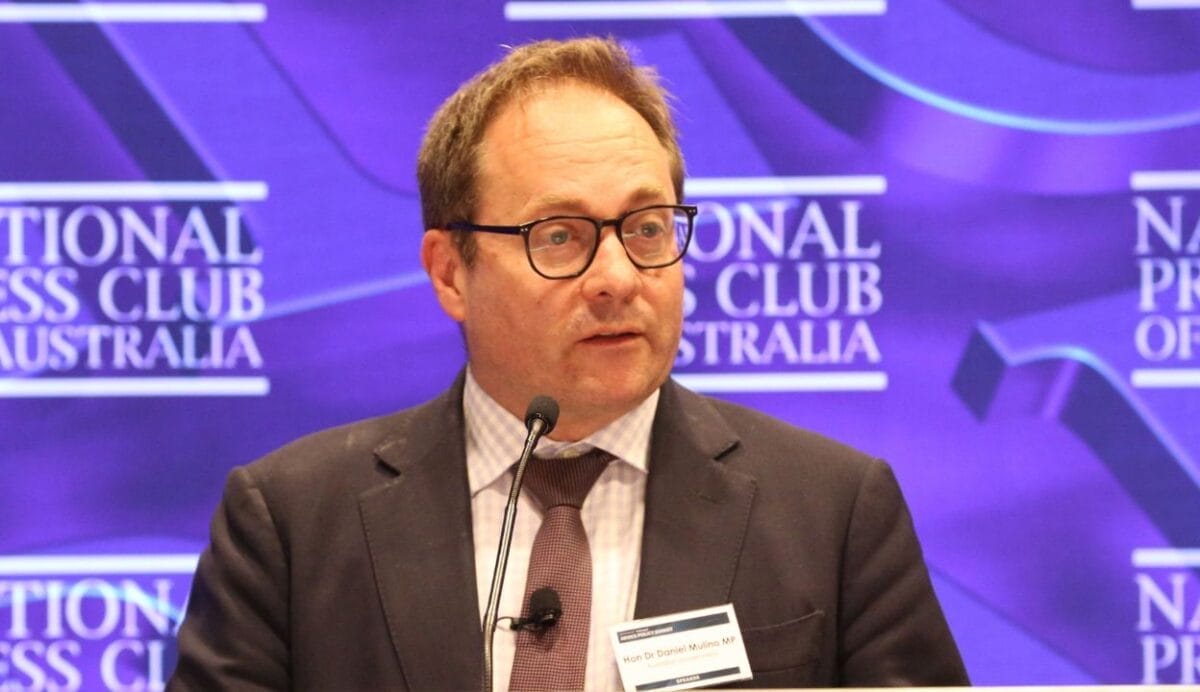
“The performance test for superannuation funds introduced by the former Coalition government was arguably needed. However, I’d assert its job is now done,” Tate told the event, which was attended by Prime Minister Anthony Albanese, Deputy Prime Minister Richard Marles and Financial Services Minister Daniel Mulino among other Cabinet ministers.
“Our super funds now represent incredible soft power for Australia on the global stage, but are inhibited in their ability to invest in their members’ best interests by this policy. Improvements could be made while still protecting consumers.”
Reform agenda
The YFYS regulations were last updated in 2023 to allow for more granular measurement of different asset classes and to increase the lookback period from eight years to 10. But while many in the superannuation sector have learned to live with the constraints of the performance test – such that no fund is expected to fail it into the future – and some are beginning to make forays back into higher-tracking error strategies as they build up a performance buffer, others, like Rest, still want it re-jigged to better cater to investments in energy transition, decarbonisation, affordable housing and “possibly other emerging local industries”.
But potential carve-outs for ESG and sustainable investments, or other assets that don’t easily fit into the performance benchmarks, have long been a point of contention for the superannuation industry and its observers. The Grattan Institute, in a 2024 policy submission titled “The superannuation performance test is performing– let’s keep it that way” said that calls for carve-outs “do not appear to be based on compelling evidence” and that any changes risked “weakening the test for little or no gain”.
But 2022 research by The Conexus Institute* holds that super funds are not able to create investment portfolios that align with the Paris Agreement goals for limiting global temperature rise to 1.5 degrees Celsius – or make small, dedicated investments to greenfield opportunities in private equity and infrastructure – without taking on an “untenable” level of YFYS performance risk.
“Trustees face a difficult challenge: they have multiple portfolio objectives but a limited budget of performance test tracking error to implement these with,” reads the paper, titled “Your Future Your Super performance test: Constraint on ESG, sustainability and carbon transition activities”.
“These objectives include return enhancement, risk management, diversification, and accounting for ESG, sustainability and climate transition.
“Trustees are faced with a difficult decision between living with a heightened likelihood of failing the YFYS performance test at some point or having to pare back the degree to which these activities are implemented, which may be inconsistent with investing in accordance with the long-term financial interests of members, and/or with members’ sustainability preferences.”
Better off overall
But think-tank The Grattan Institute believes that the test has been fundamentally good for members, writing in the same policy submission that a “leaner system with fewer, lower-fee, and better-performing funds means higher balances at retirement”.
Others are less convinced, saying that the performance benchmarks have encouraged herding in equities and resulted in risk management being pushed to the side, creating the potential for superannuation funds – and their members – to be hit by a synchronised sell-off, according to the Thinking Ahead Institute’s (TAI) original 2020 submission to Treasury on the YFYS reforms.
“One of the implicit aims of the reforms is to compress the range of investment outcomes – by cutting off the underperforming tail,” the Thinking Ahead Institute submission says.
“If that was the only effect on the range of investment returns then we would have no problem. However, the career risk point makes it reasonable to assert that this is unlikely to be the only effect.
“We believe is it likely that herding behaviour will increase and further narrow the range of achieved investment returns. This, in turn, increases the correlation of member outcomes, meaning that when the DC system fails to deliver the expected, or hoped-for, returns, it fails to deliver them for all members at the same time.
The YFYS reforms have long been seen by the industry funds’ political cadres as a means to weaken their influence at a time when they were pulling substantially ahead of their retail brethren in the wake of the royal commission.
Meanwhile, the Albanese government’s long-percolating idea for superannuation funds to invest in “nation building” – an idea that has now been woven into the Future Fund’s mandate by pushing it to consider areas of “national priority”, including the energy transition and affordable housing – is generally considered unworkable without loosening of investment benchmarks to accomodate the longer payback periods or J-curve return profiles that funds might take on when they commit to developing nation building infrastructure.
* The Conexus Institute is an independent, not-for-profit think-tank philanthropically funded by Conexus Financial, the publisher of Investment Magazine









Leave a Comment
You must be logged in to post a comment.