


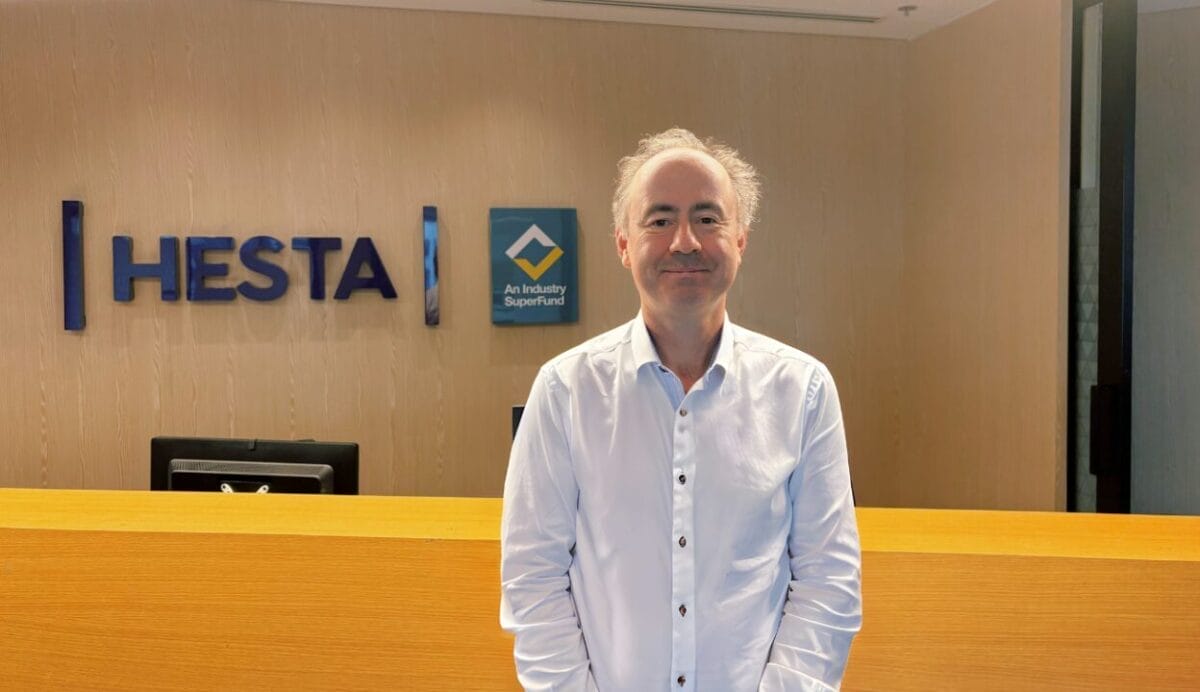
AI has the potential – as yet mostly unrealised – to disrupt hundreds of different industries, companies and business models. The question for Ben Lam, head of equities at Colonial First State, is how fund managers navigate that disruption – not just to what they invest in, but how they invest in it.
“One of the fascinating bits is the question of whether it benefits smaller, more nimble managers by allowing them to do more with smaller groups… or larger with access to more resources and, potentially, IT spend, means they can do some very interesting and different things. It’s about working out, is there a winner and loser from the asset manager perspective?” Lam says.
One manager is using AI as an investment “contrarian”. Working closely together, their human staff tend to be aligned on questions of what to invest in. But AI picks up on themes and risks that they might not have thought of. Other managers are using AI to collate their proprietary research to generate insights from it and examine their own biases.
“The reality is that everybody, whether it’s a portfolio manager or analyst, has some inherent biases; we have seen some use cases of AI that identify persistent biases that you can then correct or consider within your research,” Lam says.
One of the most widespread uses of AI has been sentiment analysis of company earnings calls; quants have been doing it for years with machine-learning, but it’s become significantly cheaper and easier with the proliferation of large language models like ChatGPT. But that also means that the alpha that can be derived from an undifferentiated approach to earnings call analysis has also rapidly decayed, while companies have also joined the AI arms race.
“The other side of this is management using AI to then manage the message,” Lam says.
“They still have to state facts, and you can’t hide that, but the type of language – because LLMs are trying to pick up the sentiment and nuance of what you’re saying – you’ve heard a few examples of that being gamed.”
But on both sides, that might be resulting in more speed but not more sophistication. Whatever then comes out of those calls – or any company announcements – is more rapidly reflected in the share price, but that doesn’t necessarily mean the process of price discovery has really changed.
“[In the past] everybody’s had the same management reports and forecasts; everybody had the same access to the same information,” Lam says.
“But there were different approaches: value, growth, so on. All of that remains, but the big challenge is how quickly information gets reflected in price. That’s turbo-charged at the moment, and we’ve seen that in results recently. The pace at which things are reflected in share prices is extremely fast, and getting faster.”
So the trick, when everybody is doing the same thing and doing it faster, is to try and do it differently.
“If everybody gets the same signal, can you still use it in a different way?” Lam asks.
“That’s one of the nuances managers are trying to think through – using [AI-generated signals] in a way where they’re more persistent and less likely to be arbitraged because the obvious use case is how the data provider or AI provider is selling the data.”
And there’s a natural limit to what AI can do [for now]. It might be good at pattern recognition, but it’s not great at forecasting. And humans are still asking all the questions.
“If you strip out all the humans, you don’t have a Q&A going on – unless we get to a stage where management and corporations are willing to take questions from AI bots,” Lam says.
“That would be fascinating, but I don’t think we’re quite there yet. The humans still play that role.
“Taking it to an extreme, if it’s lots of AI bots training against each other, what does that actually mean? With investment markets there’s always a human element that creates mispricing. Even quants are trying to exploit that.”
When it comes to grappling with AI as investment thematic, the research process is also beginning to change.
“The interesting bit is trying to step away from the standard research process – ‘I need to spend time with the CEO, CFO, chairman’,” Lam says.
“But to spend time with the chief technology officers – the people who’re there to navigate and understand how quickly the AI landscape is changing and what it means from a corporate perspective.
“We want to ensure that there is expertise and that it is being shared around. That’s one of the areas where the larger managers might enjoy some benefits; you have more resources and analysts and you get more insights in terms of companies and analysts. At the same time, it’s not clear-cut that the winners are the big managers.”







Leave a Comment
You must be logged in to post a comment.