


In the next five years around one in seven Australians who retire will be a member of Aware Super. With about 700,000 people expected to retire and around 100,000 of them being Aware members, the business case for the fund developing a comprehensive retirement income strategy could hardly be more compelling.
About 18 months ago Aware launched a service to help members maximise accumulation. In August this year it soft-launched a new service to help members optimise retirement income. The service will be rolled out across the entire Aware membership in coming weeks.
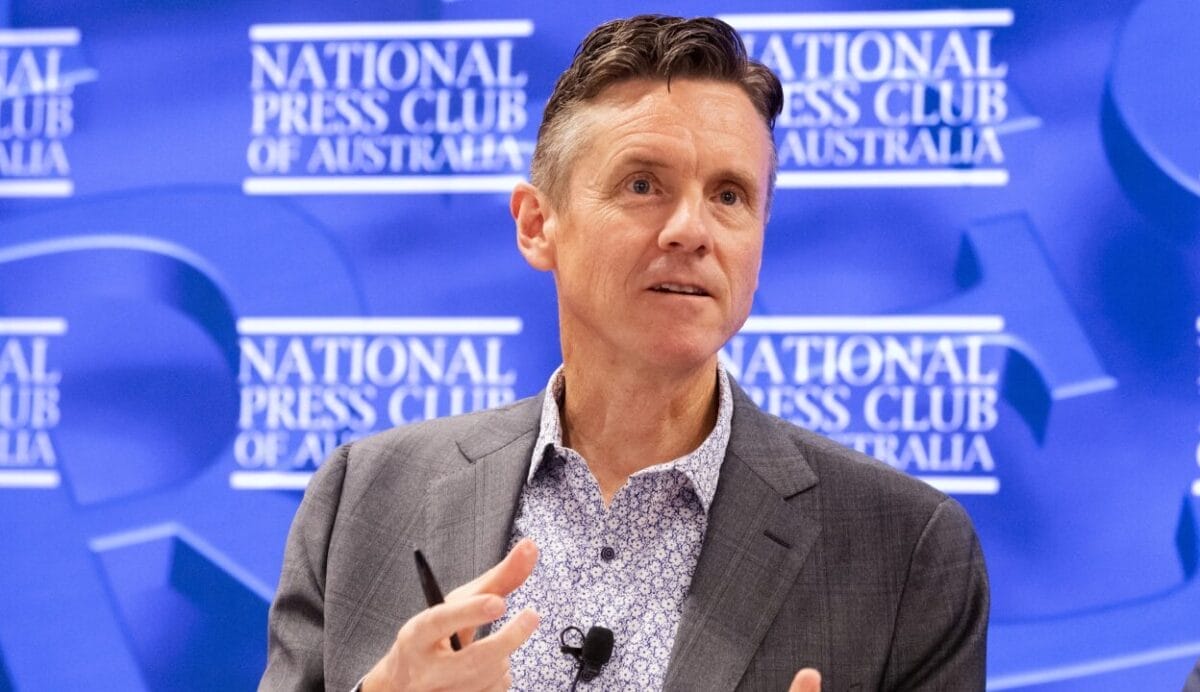
Steve Travis, Aware group executive, member growth, says the fund’s internal research found that around 50 per cent of members in retirement were drawing down the bare minimum amount from their account-based pensions, and as much as 25 per cent of their account balances remained untouched when they died.
At the same time, he says, it’s clear that individuals who receive advice tend to make better decisions and enjoy better retirement outcomes, so Aware had two issues to address: first, how to get more advice to more members; and second, how to help members draw down more in retirement with the confidence that their income will last their lifetime.
“The retirement problem, solving this, is clear and present in our mind, given our age demographics,” Travis says.
“When we think about that… putting on more comprehensive planners is not going to solve it, so we started a program of investing in digital advice. The first advice tool we called My Retirement Planner, which is really targeting people in their late 40s through to their 60s. That really solves the question of, how much do I need, what do I need to do to give me confidence that I’m going to have the right amount when I retire?”
Travis says the new tool, Retirement Manager, is “a complimentary tool that really starts from the age of 60”. Working out “how much income can I confidently take and how long will it last, [are] different questions [from accumulation] – this tool is far more sophisticated”.
The tool allows a member to consider multiple sources of income in retirement, including the Age Pension and investments held outside super, in determining a draw-down level. And it takes a member’s partner’s circumstances into account.
“It’s only super funds and our legislation that says ‘think accounts’. Members think ‘household’. And so our tool has been designed at the household level,” Travis says.
“It’s to help members go through the point of retirement, to help them think through what are the income sources, both inside super and outside super, including the Age Pension, what are the tax benefits, how much income can I draw, where should I draw that from, which are the investment options should I draw it from; how long will it last?”
Emotional validation
Retirement Manager is a digital tool, built in conjunction with fintech firm Bravura Solutions, but Travis says that at any point a member can opt to speak to a human adviser for emotional validation or to explore issues in more detail.
“Retirement is so personal and such a critical moment, they worry they might get it wrong, and so sometimes a 30-minute conversation with a human to validate yes, the inputs are right, yes, what it’s telling you is right, yes, you can have confidence to move forward – that’s the value of the human in the loop,” he says.
“But you can go through this without talking to a human.”
Critically, Travis says, all of this can be achieved independently of and without need for Tranche 2 of the Delivering Better Financial Outcomes (DBFO) legislation being passed. When or if that happens, and the so-called “new class of adviser” comes into being, it “will help us maybe lower the cost of the humans in the loop – they will be qualified to provide high-quality but simple advice”.
“But we’ve built this today under the current legislation,” he says.
Travis says that while the obligations of the Retirement Income Covenant apply to all funds, those that have not prioritised developing retirement income strategies – those funds characterised by regulators as “laggards” – have different strategic priorities. But while large funds may enjoy some advantages in scale and spreading development costs across more members, size alone should not be an excuse for a fund not developing a high-quality solution.
“We’re merging with TelstraSuper. TelstraSuper is a small fund at $28 billion, and it’s built some pretty good digital advice tools as well,” Travis says.
“It looked at its membership and said, ‘This is what our membership needs’. You might find other funds… with a younger membership will make a different strategic choice.”
Since Aware introduced My Retirement Planner last year it’s had more than 300,000 interactions by 130,000 unique users and has produced 97,000 Statements of Advice.
It’s early days but Travis says the pilot Retirement Manager program rolled out in August is showing promising results. At the outset, Aware set increasing the proportion of retirees who draw down the minimum ABP amount from 50 per cent as a measure of success.
“Of those that have gone through it in the pilot phase, 92 per cent [have] chosen more than the minimum-level draw-down from the allocated pension,” he says.
“About half of our members [currently] choose a minimum drawdown. This tool is suggesting that we can get members way higher than that. Small sample size, I get it, but the sample size is big enough to give us confidence that it’s going to achieve its objective of giving members confidence to take more income through their retirement.”





Leave a Comment
You must be logged in to post a comment.