


Like negotiating with terrorists, the federal government must think carefully before using the apparatus of state to compensate victims of the Shield and/or First Guardian collapses. And this column is ordinarily sceptical of calls for taxpayer-funded solutions to market failures.
But requests for the federal government to intervene in order to make whole the 12,000 victims of this scandal are not as ridiculous as they may seem – even those from some of the well-heeled companies embroiled in this terrible incident.
Netwealth has applied for federal government assistance under a clause in the Superannuation Industry Supervision (SIS) Act. Equity Trustees, which will face ASIC in court over the matter, intends to follow suit, as will Diversa Trustees.
As Jeremy Cooper, chair of The Conexus Institute advisory board and a former ASIC deputy chair points out, the mechanism would more likely involve a government-mandated levy on all superannuation trustees rather than a raid on the public purse, despite widespread reportage to the contrary.
Nonetheless, there is a risk that state intervention could legitimise the evil motives behind investment misconduct and incentivise further attacks on the super system. Indeed, the Act itself places a cap of 90 per cent on financial assistance in order to “reduce moral hazard risks”.
These applications have raised eyebrows. Netwealth, which is one of the most well-capitalised and successful companies in our industry – with its founders and majority owners, the Heine family, a mainstay on the annual rich lists – has also faced opprobrium.
The back page of the AFR was quick to point out the ridiculousness of billionaires seeking government aid, which likely aligns with how much of the general public may respond in a cultural climate of “eat the rich” populism.
Payout precedent
But putting culture wars aside, and despite the obvious moral hazard, the suggestion that government should step in is not totally without merit – or precedent. It is understood large industry super funds relied on it to seek compensation for the fraud associated with the collapses of Trio Capital and Astarra more than a decade ago.
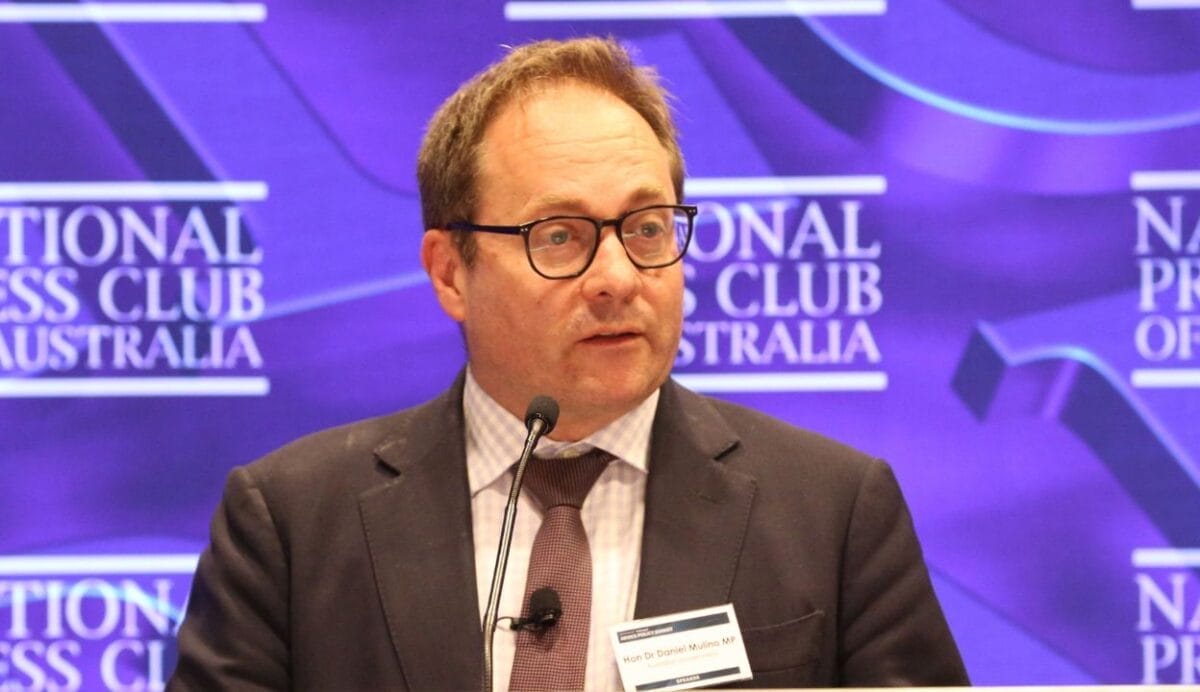
Then-financial services minister Bill Shorten – who was advised by the job’s current occupant Daniel Mulino at the time – famously granted the request but stopped short of extending support to self-managed super funds and their financial advisers.
Perhaps the unique business model and structure of industry funds makes the case for government involvement stronger, but retail funds with a for-profit owner should not necessarily be excluded, given they are subject to the same trustee laws.
Unlike Macquarie, the other three trustees singled out in this saga have not yet admitted any kind of culpability. Instead, they maintain they were victims of fraud, especially in the case of First Guardian.
APRA deputy chair Margaret Cole gave this line of defence some credence on Thursday, telling the AFR Super and Wealth Summit that the whole sorry saga reminded her of the pension fraud in the UK in the early 1990s related to entities controlled by media baron Robert Maxwell – a case she worked on as a young lawyer at the time. Admittedly, Cole went on to declare she was not stating Shield or First Guardian were indeed cases of fraud and that that still “needs to be proven”.
Choosing to compensate victims – as Macquarie already has – may be the morally right thing to do, and refusing to do so may result in significant reputational harm for these entities, as we are already seeing.
But it logically follows that they would not be willing to compensate investors when their position is that they too were victims of this misconduct. It’s moot anyway, as most of the companies involved would more likely be bankrupted than be able to sustain the compensation. Even the Rich Lister-owned Netwealth had just $149 million in cash reserves on the balance sheet as at June 2025, with a $100 million-plus exposure to First Guardian losses.
CSLR for super
Canberra is not just an innocent bystander in this debacle. The federal Parliament is ultimately responsible for the ludicrous and arguably dangerous situation in which prospective managed investment schemes are barely scrutinised before being registered by the regulator.
That is a problem going back decades and therefore multiple governments are complicit. But the Albanese government deserves particular scrutiny over its decision to review the MIS regime in 2023 but never release the findings, in what shadow minister Pat Conaghan has called an act of “brazen burying”.
And the government’s (admittedly independent) agency in ASIC has serious questions to answer about the timeliness and competence of its response to problems with the Shield and First Guardian schemes when alerted.
As for the question of moral hazard, both sides of politics in the wake of the Hayne royal commission seemingly had no issue with professional advisers paying for the misconduct of their peers under the Compensation Scheme of Last Resort.
Arguably, that has not been good public policy. But if the government is willing to collectively punish one financial sector for the mistakes of a few, why not other sectors?
The other solution open to the government, of course, is to adopt a laissez faire approach that might conclude victims take personal responsibility for their own investment decisions.
That might pass the pub test in a discretionary investment environment, or even for SMSF investors, who have by definition chosen a more free and less secure path.
But Australia’s default superannuation sector is not a free market. It is a paternalistic creation of the welfare state – and therefore an economically rational but harsh free market approach is not appropriate either.
The vast majority of Australians over the last 30 years are better off thanks to being defaulted into superannuation savings. But with that compulsion and state intervention comes a public responsibility to the small minority that would have been better off without it.






Leave a Comment
You must be logged in to post a comment.