
Despite experiencing significant growth in economic output and sophistication over the last decade, the emerging markets have been an unrewarding experience for many asset owners that have invested there.
But for some of them, the problem might be one of approach; instead of tipping billions into a broad based opportunity set and hoping for the best, the Victorian Funds Management Corporation (VFMC) wants to take a “targeted approach” by investing in specific opportunities and with skilled managers, according to Mark Aarons, its head of asset classes.
“It’s a lot of work, and it is bandwidth expensive to wrap your head around a very diverse set of countries,” Aarons told the Investment Magazine Fiduciary Investors Symposium in Healesville, Victoria.
“So we zeroed in on a country where we thought that if we do that work it’s at least scalable, and we might be able to deploy more capital over time.”
That country was India, and VFMC’s approach was “top down and bottom up combined”. The macroeconomic story is compelling – India has 1.4 billion people and is projected to become the world’s third largest economy by the mid-2030s, and has brought its current account deficit under control – while corporate governance has also been lifted through legislative reform. Still, Aarons said, VFMC is “learning as it goes”.
“We were fortunate, after many years of due diligence, to find that manager. How repeatable is that playbook? That’s something we’re still exploring in other asset classes in India and potentially some other geographies, but it’s a start that gives us some cautious optimism.
“Does it mean we can rapidly scale the whole portfolio into Indian private credit? Of course not. Are US equities still the engine room of growth? Yes it is.”
But, Aarons said, “watch points” around the US mean it’s good to have options up your sleeve. The $350 billion Australian Retirement Trust (ART) has made the US a focus of its research, and while it will continue to invest there – and believes that the headwinds blow harder than the tailwinds for US equities and bonds – there are “reasons to be a little more circumspect” about the prospect of its currency as a safe haven asset, according to Zoe McHugh, senior portfolio manager – head of portfolio strategy and resilience at ART.
“We thought about all the factors contributing to US exceptionalism since the end of World War Two and the beginning of Bretton Woods, and we classified about 25 of those factors into whether they were weakening, strengthening or staying neutral.
“And that was a sea of change in terms of going towards more weakening, particularly when markets like bonds and the US dollar don’t behave during risk off periods much like we’d experienced in the last 20-30 years.”
There is also a question around how useful the phrase “emerging markets” actually is in terms of communicating the investment opportunity, according to Luis Fernando Lopes, partner, chief economist and strategist at Patria, who said that investors “have to go specific”.
“What region are we talking about? What asset class? People who invested in corporate debt in Latin America for the past 25 years made a lot of money. They didn’t lose money, there was no major corporate default… So depending on the asset class, there was no frustration. But if you were just to talk about listed equity returns then the United States was the best place to be over the past20-25 years.
“But then infrastructure in Latin America has been a very good play, especially over the past 10 years in which inflation became an issue. Why? Not because we’re smarter – but because in Latin America you can index your revenue lines to inflation. You have long-term concessions, toll roads, power generation – and then you can index to inflation every year. So depending on the asset class, the frustration was not there.”
But one of the biggest questions for investors in emerging markets remains how to treat China, according to Chris Trevillyan, director of investment strategy at Frontier.
“There are clear sovereign risks in investing in China. And so I think taking a strategic allocation, set and forget, into China is quite a difficult position to take.”
At the same time, some of the risks that have long deterred investors from tipping their money into China are now showing up in the United States.
“[In China] it is a very high hurdle to be invested in unlisted assets with difficulty of removing that capital at short notice… But, for example, renewable investments in the US – it has clearly changed there, and we are aware of investments now that are no longer possible and are being prevented, so long-term, unlisted investments there become more difficult there.”

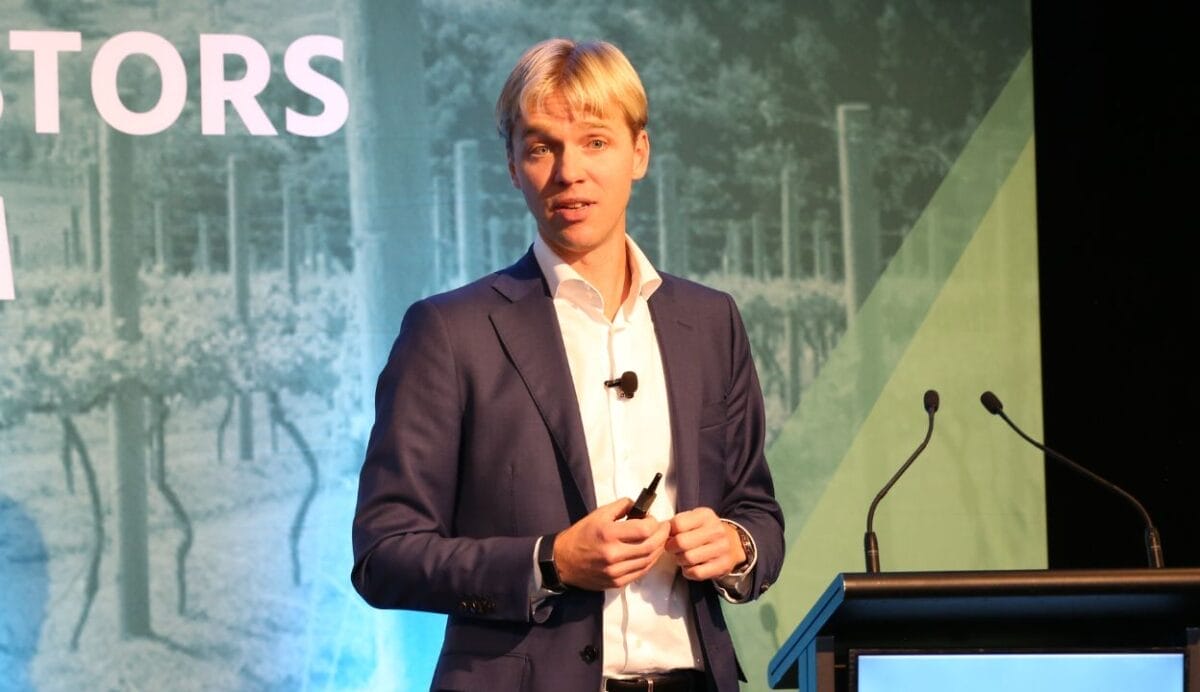
(L-R) Chris Trevillyan, Zoe McHugh, Luis Fernando Lopes, Mark Aarons. Phot: Brendan Swift.

23/10/2025
art, Frontier Advisors, Patria, VFMC




2025 Fiduciary Investors Symposium VIC
Climate investing is here to stay, Robeco says – but while the direction remains the same, “the pace is changing”. Asset owners want decarbonisation, but they want alpha too.





Leave a Comment
You must be logged in to post a comment.