


Work is underway to reform the Your Super Your Future performance test but will be guided by three principles to make sure that member outcomes aren’t watered down by any changes, Treasurer Jim Chalmers has told the ASFA conference on the Gold Coast.
“At our economic reform roundtable in August, we heard that there was more we could consider to improve the performance test, not to water it down, not to weaken it, but to refine and strengthen it to make sure it isn’t creating unnecessary obstacles to investment in key areas like housing and the energy transition,” Chalmers said.
To that end, Treasury has “stood up” a technical working group that will undertake targeted consultation with the industry, guided by “three main principles”.
“First, any change to the performance test must uphold member outcomes as the core purpose of the test. Secondly, changes must maintain an objective standard or benchmark for fund performance. And third, any changes must be enduring to set the test up for long-term stability.”
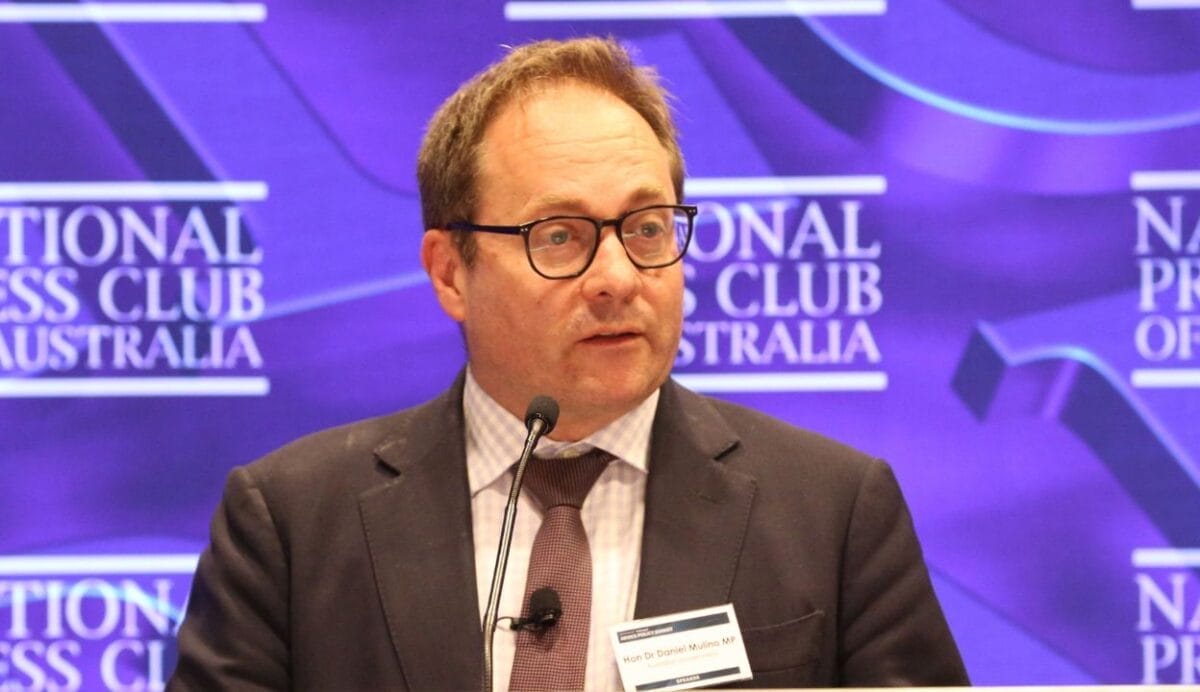
A review of the performance test was first flagged by Investment Magazine back in August and later confirmed by Minister for Financial Services Daniel Mulino, who said that the government wanted to make sure that superannuation was “operating as efficiently as possible”.
At the ASFA conference, Mulino also publicly acknowledged that the Shield and First Guardian collapse has stalled Treasury’s work on advice reform, saying that the Delivering Better Financial Outcomes reforms – which was already beset by drafting challenges – has become more complicated due to the $1.2 billion superannuation collapse.
“I would just flag it’s a set a reforms which, if anything, is now a little bit more nuanced given recent developments,” Mulino said.
Investment Magazine sister publication Professional Planner previously reported that the Shield and First Guardian collapses had worked their way up to the top of the Treasury team’s priorities and pushed down other reforms including DBFO, but this was the first public admission from the minister of the matter.
The first tranche of reforms passed in the middle of last year, with only some of the draft legislation for the second tranche released before the federal election in May.
Treasury continues to work on changes to the Best Interests Duty and safe harbour steps, along with the controversial introduction of the “new class of adviser”.
But Mulino reiterated that the government is committed to delivering advice reform so that those “who can’t afford or where it’s not appropriate for them to have full-fee advice” can receive guidance and advice.
“We are working intently on this issue and we are moving towards exposure draft legislation of the next set of legislation, but it is a complicated set of reforms,” Mulino said.
In August Mulino told the Retirement Leaders Summit, jointly hosted by Investment Magazine publisher Conexus Financial and its philanthropically-funded think tank The Conexus Institute, draft legislation would be out this year.
But the same event also heard that the Shield and First Guardian collapses may lead to additional regulatory reform.
The collapse of the two funds has left $1.2 billion of retirement savings of 12,000 people up in the air.
“Shield and First Guardian obviously very prominent at the moment in the public discourse and the media,” Mulino said on Wednesday.
“They’re not the only collapses, they’re not only instances of significant losses, they are the largest, but they do speak to some systemic issues that we all need to work through. I do acknowledge the losses that so many people have gone through.”
Mulino acknowledged the written communication he’s received from victims and has met some in person.
“I’ve read the transcripts of a number of instances where aggressive originators reach out to people either through social media or other means, but they’ve had very lengthy conversations with people to try to get them to do things that were not in their interests,” Mulino said.
The minister said it was “absolutely critical” to restore confidence in the superannuation system.
“It goes without saying that it’s important to explicitly say that we need to have a system where people can have confidence that in areas where there is strong government oversight and where there is government badging that people can feel confident there is appropriate oversight of the system,” Mulino said.









Leave a Comment
You must be logged in to post a comment.