
In its latest position paper, the $261 billion Future Fund says that portfolio “resilience” is vital to achieving its investment mandate in an environment where historical assumptions about everything from asset class returns to the behaviour of states and governments no longer hold true.
While different investors have different definitions of resilience, the Future Fund defines it as a “collection of exposures that achieve target returns through a wide range of future scenarios” and says that building it into portfolios has allowed the fund to “adapt to, and quickly transform from, negative shocks” while also harvesting returns in positive scenarios.
One of the ways the Future Fund achieves resilience is through scenario analysis – the development of plausible narratives about future economic and market conditions.
While the Future Fund has used scenario analysis to augment a traditional mean-variance optimisation method for portfolio construction since 2009, its scenario framework prior to 2021 was based around a single, long-term stable central case that informed its long-term capital market assumptions and risk appetite (though it did test the portfolio against multiple shorter-term scenarios).
But the beliefs it laid out in its “New Investment Order” position paper forced a rethink of that framework, with a world characterised by more conflict, more intervention and more inflation – among other sources of upheaval – less likely to be one navigable using a stable central case.
“As a result, the Future Fund recast its scenario framework to develop multiple secular scenarios, focusing on supply side driven forces, as well as retaining multiple three-year scenarios,” the paper says.
“This new scenario framework better captures the greater uncertainties associated with The New Investment Order, better meets the needs of our private market teams with associated long-term horizons, and better informs our public market teams seeking to always improve their understanding of key market drivers. Importantly it provides a common context to how we filter investment opportunities and make portfolio decisions.”
The scenarios include a “unipolar” world where the US retains its position as the world’s dominant superpower; “balanced multipolarity”, where power is broadly distributed between a number of blocs or states; “unbalanced multipolarity” where power is unevenly distributed and tensions run high; and a “bipolar world” where the US and China engage in strong geostrategic competition.
The Future Fund also holds that its governance and communication layers are a “key feature” of how it achieves resilience, and says that it has implemented two separate forums that report to its investment committee on portfolio priorities across three and 10 year horizons.
“The existence of these new forums allows for rich conversations amongst decision makers on the identified portfolio vulnerabilities, associated opportunities and the trade-offs required to build a resilient portfolio across clearly established time horizons,” the paper says.
“This enhances our overall decision making.”
In the position paper, the Future Fund says that its thinking around resilience helped it to anticipate and neutralise the effect on its portfolio of the inflation that appeared during the Covid-19 pandemic.
“[This work] highlighted that our portfolio was heavily biased to perform in a disinflationary environment but particularly vulnerable to rising inflation outcomes – the negative discount rate was expected to overwhelm revenue, even if for periods over the short to medium term.”
But the Future Fund also recognised that there was no “one single exposure or contract” that could protect against all inflation types or achieve the outcomes it wanted.
That meant seeking out exposures that had asymmetric payoff profiles in high inflation regimes; looking to minimise costs associated with inflation protection given inflation might not always eventuate; targeting situations where counterparties or market pricing appears not to value changes in inflation risk; and maintaining a bias towards domestic assets with inflation protection.
“By rethinking our approach to portfolio construction and how to better achieve our mandate, this focus on portfolio resilience ensures our investment portfolio stays aligned with our long-term investment goals,” the paper says.

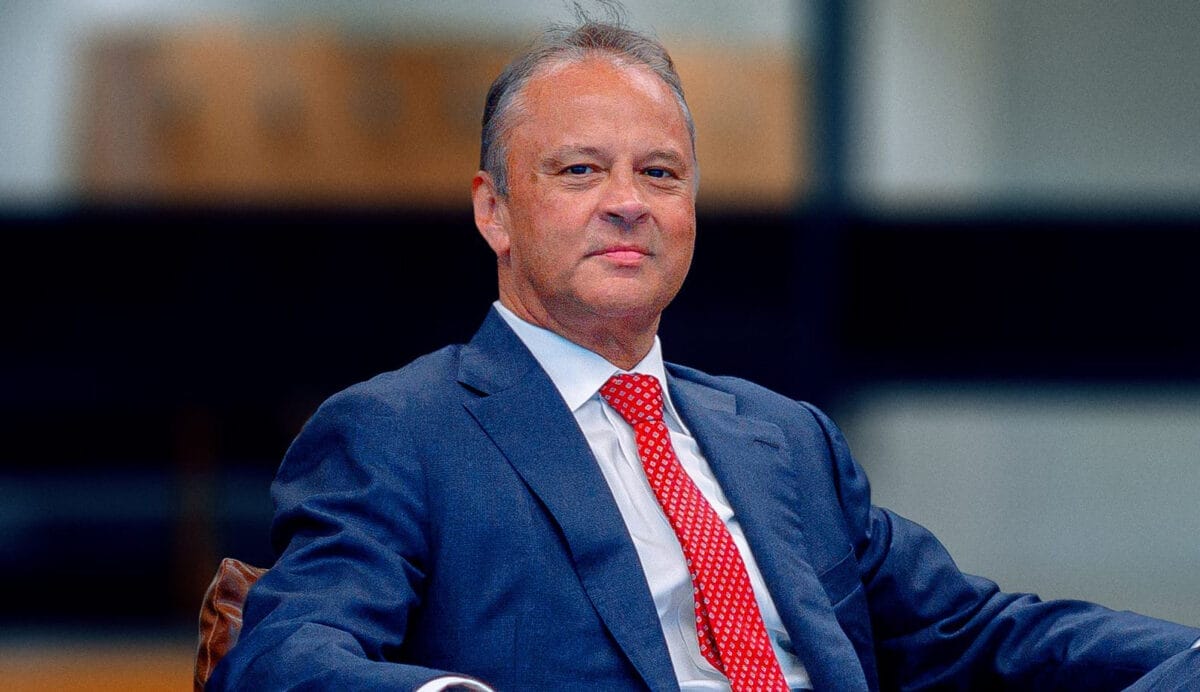
Future Fund CEO Raphael Arndt.

18/11/2025



Portfolio & risk management

Dynamic asset allocation has become increasingly popular among pension and sovereign wealth funds as a top-down tool to generate alpha and mitigate risk in the face of changing market conditions, though not every asset owner believes in the approach’s value-add. But HESTA’s general manager of dynamic assets Michael Blayney argues active asset allocation is just natural extension of the underlying logic in security selection.





Leave a Comment
You must be logged in to post a comment.