


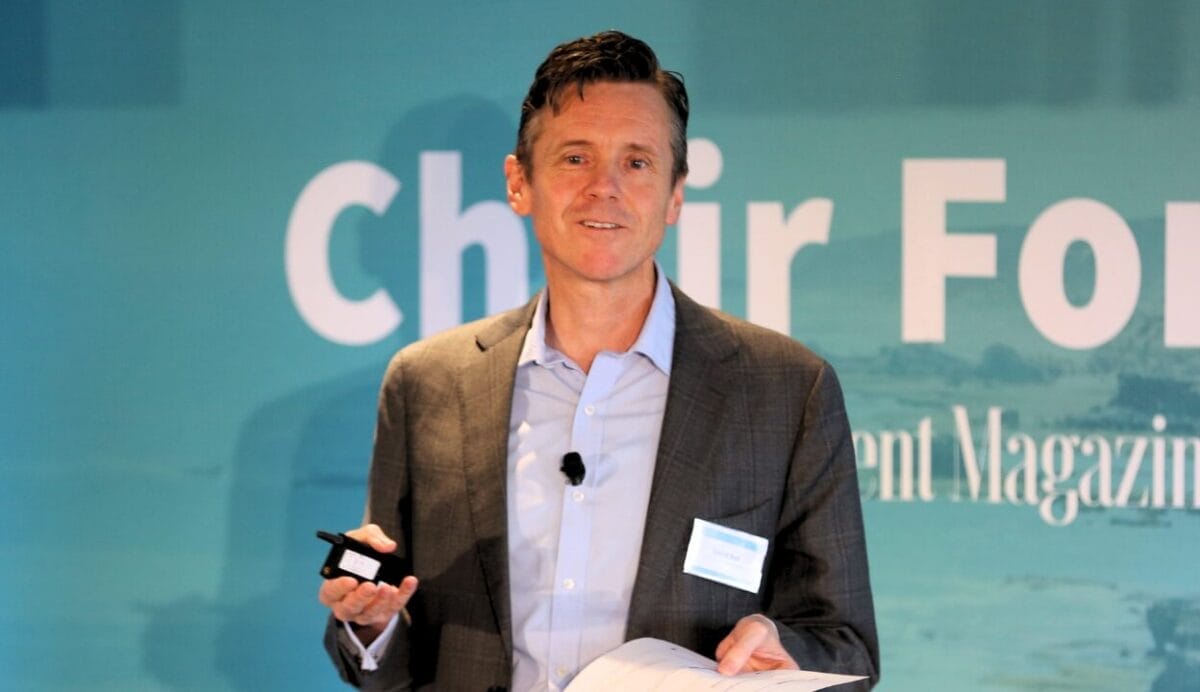
For Australian Retirement Trust chair Andrew Fraser, there are two attributes of Australian society that really underpin national sovereignty and economic stability: compulsory voting and compulsory superannuation.
“Geopolitical risk is high,” the former Queensland Labor treasurer told the ASIC Annual Forum in Melbourne on Thursday.
“And so, therefore, what is truly valuable to us as a community, as an economy, as a society, as a sovereign nation? I’m going to say it’s [these aforementioned] two things.
“We have to think about the future of this country in a different world. The answer to [this] challenge … is not just about defence assets. [It’s] about sports diplomacy, investment diplomacy, all of those things together.”
The capital flow into superannuation over time will continue to be a national strategic asset as institutional portfolios outgrow the domestic sharemarket, said Fraser, who will next week attend his final ART member AGM before handing the reins to former prudential regulator Helen Rowell and taking up the chairmanship of the ASX-listed Bank of Queensland.
He said the “presence of superannuation” could claim some credit for the Albanese government’s handling of the major disruption of global trade and security alliances and securing a “better relationship” with the volatile Trump White House.
A joint statement issued by the Australian and US federal governments last month to confirm the widely lauded critical minerals, defence and economic co-operation deal between the two allies referred to investment by superannuation funds in American assets worth US$1.44 trillion ($2.1 trillion) by 2035.
Despite some initial misreporting to the contrary, the figure was not indicative of funds being directed to allocate a larger portion of their portfolios to US shares or assets, but merely a projection of probable growth in exposure to the US, accounting for compounding and demand.
Analysts praised the Albanese government’s deft application of the projection in a way that would allow the transactional Trump Administration to spin the investment as an outcome of its negotiations.
The direct reference to super in the joint statement follows a high-powered delegation of sector leaders to Washington DC in February, which included Ambassador to the US Kevin Rudd, New York consul general and former AustralianSuper director Heather Ridout and senior representatives of industry super funds, IFM Investors, Macquarie Group, the Super Members Council and ASFA.
A similar delegation last month visited the UK at the Starmer Labour Government’s request to consider deploying super capital to British companies and assets.
Defending the sector from its detractors, Fraser said this increasingly ambassadorial role should factor more prominently in the discourse around super – alongside the systemic support it increasingly provides to the economy and sharemarket.
“The growth of superannuation and concomitant with that, the growth in private markets is a good news story for Australia,” he said. “The way that we talk about super in this country at times doesn’t reflect the fact that when you go offshore and you meet people in market, they look at our superannuation system with envy, not with an idea that it’s a massive part of the problem.”
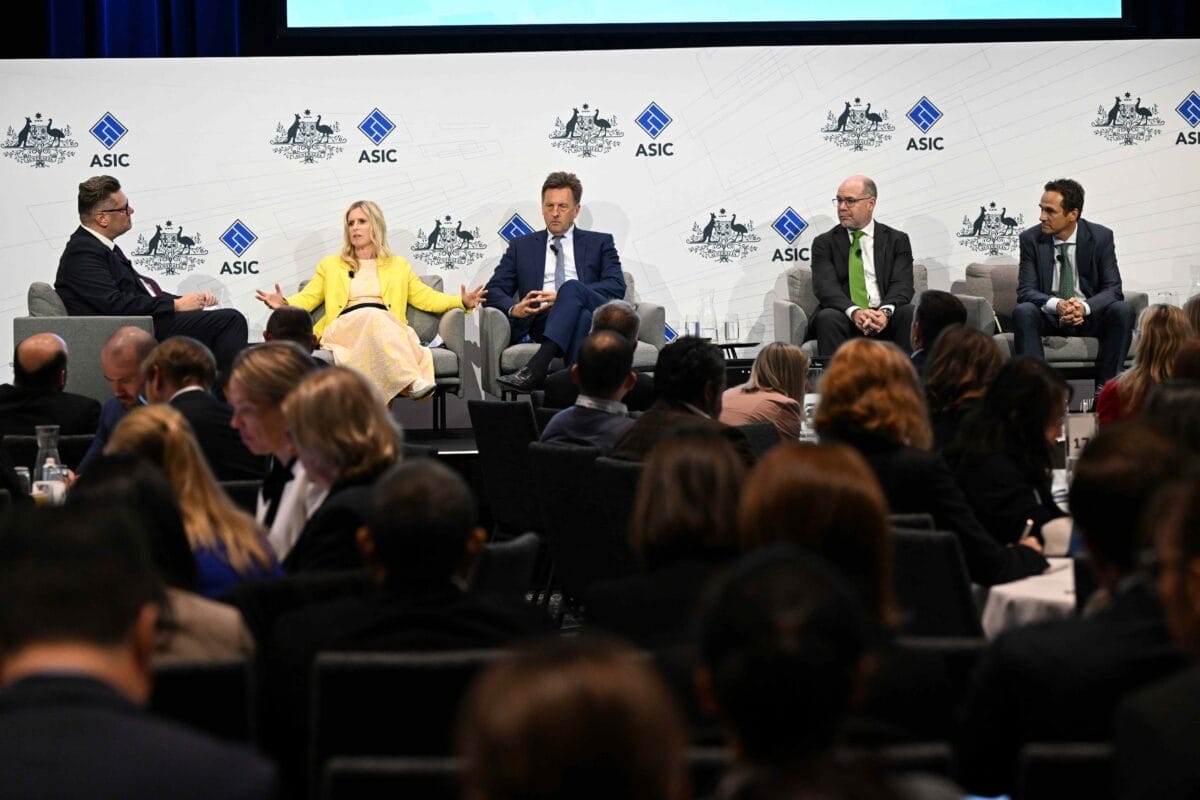
ASIC Commissioner Simone Constant concurred that super funds play an increasingly important structural role in Australian capital markets. However, she warned that funds’ operational infrastructure and member services must keep pace with super’s economic might.
“Super is a really positive force, and here to stay,” Constant told the forum.
“But you’d forgive an ASIC commissioner for also saying we’re also really focused on responsibilities of super funds to members … we are always conscious every day that the money is there for members, and those responsibilities for members and services need to be as paramount as responsibilities to the market.”
‘Count the gray hairs’
The panel, which also featured the Australian country heads of Wall Street institutions Goldman Sachs and BlackRock, debated the extent to which growing investor demand for private assets – especially private credit – presented a systemic risk, following a landmark ASIC report detailing the findings of surveillance of the booming sector.
Goldman Sachs Australia and New Zealand boss Simon Rothery acknowledged the regulator’s findings of “not so good practices”, including a lack of transparency around fees and valuations and “aggressive” marketing to unsuitable consumers.
“Every private credit fund manager in the country, wholesale and retail, need to conduct a benchmarking exercise against [ASIC’s] 10 principles,” he said. “We have certainly started that process for the private credit funds we operate in Australia.”
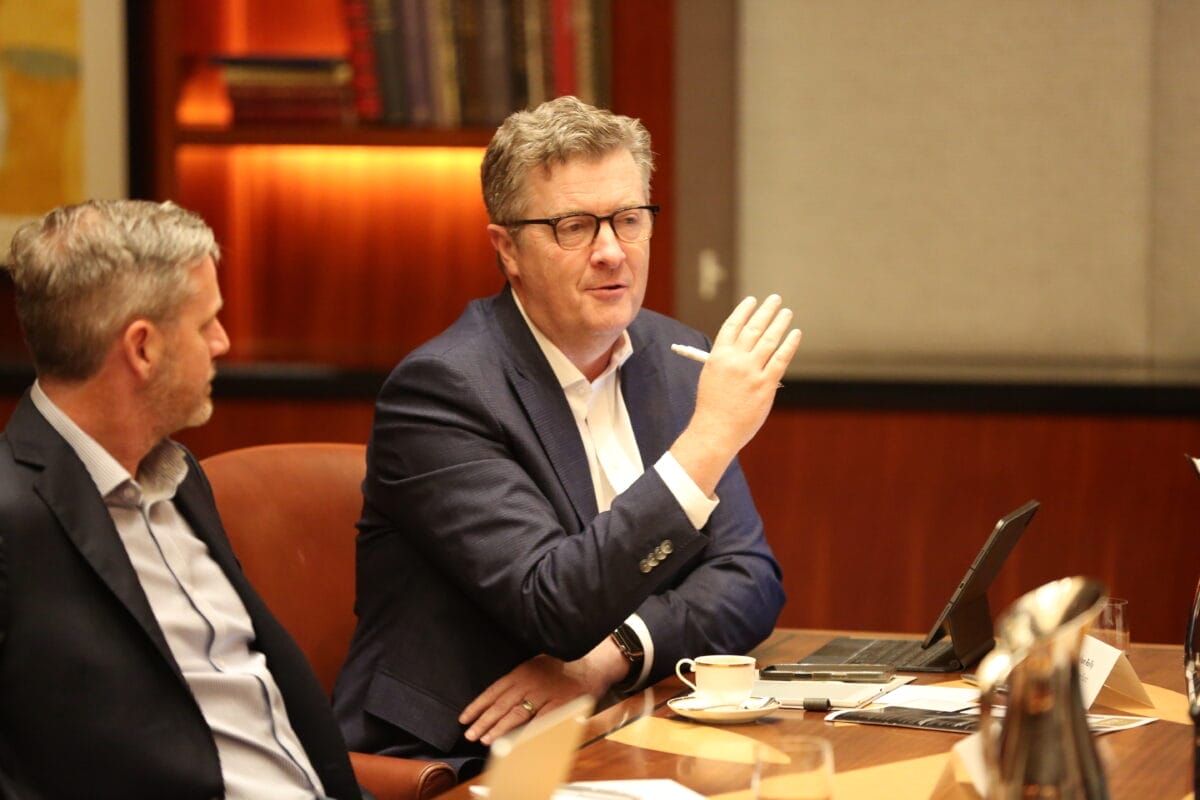
Jason Collins, head of Australia for BlackRock, said ASIC’s investigation into public and private markets had rightly detected an “asymmetry of information between fund managers, investors and regulators” when it comes to private markets. The world’s largest asset manager earlier this year acquired data provider Preqin in a blockbuster US$3.2 billion transaction partly in a bid to help solve what Collins described as opaque and “unstructured data” for investors in private markets.
However, he said the lack of visibility across unlisted assets and information asymmetry was “more pervasive in the wealth space than in the super space.”
Fraser agreed, saying he trusted ART’s investment team to not invest in any assets they did not feel they could adequately assess and value.
“I only provide them with one chair request overlay, which is: ‘count the gray hairs’,” he said.
“And the reason I say that is, if you think about the credit cycle in the last while, then the growth of private credit hasn’t matched the downturn in the credit cycle. It’s quite easy to lend the money out, but the trick is getting it back. So you want to understand the position of the fund, but you also want to understand the experience.”
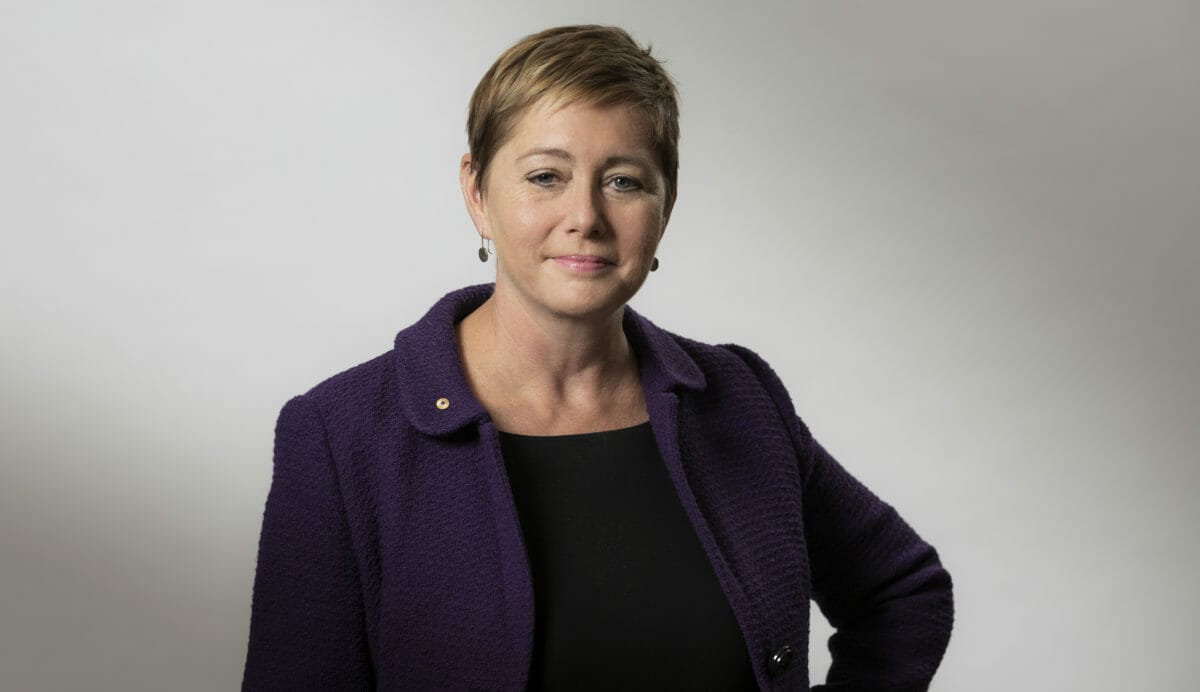
ART chair Helen Rowell will speak at the Investment Magazine Chair Forum 2026. For more information visit here







Leave a Comment
You must be logged in to post a comment.