


This article originally appeared in the print edition of Retirement Magazine Vol. 2
As thousands of Australians move their superannuation from the accumulation phase to pension phase, they are also looking to find a new life purpose in retirement. This follows decades of trusting their super fund to help grow their wealth and plan for their futures, whatever that “purpose” means to them.
We think about retirement as another phase of life, not the end. As life expectancies stretch into the mid-80s, and Australians stay healthier and more active for longer, the post-work phase becomes a time to focus attention on new things, and to find new meaning in life.
Having the time and options to find purpose is more achievable than ever in 2025, now that the super sector has served Australians well for 33 years. Now, our nation is entering a demographic shift, with 2.5 million Australians expected to retire in the next decade, according to Treasury, including the first cohort who have spent their entire careers accumulating under the Superannuation Guarantee.
While the accumulation phase is relatively straightforward for the super industry – keep fees low, keep returns high – actual retirement is not so straightforward. Every one of those 2.5 million retirees has a unique combination of health, wealth, lifestyle aspirations, caring and family obligations – the full spectrum of human complexity across generational cohorts.
One size will not fit all, and not everyone has the same purpose, in retirement. The findings of UniSuper’s Retire with Purpose report help paint this picture. Two in three people surveyed anticipate they will be caring for loved ones in retirement. One in five pre-retirees are interested in making a sea or tree change. More than 70 per cent say they want to travel, and 25per cent want to learn a new skill.
Working as part of retirement
Perhaps most importantly and curiously, more than 50 per cent of those surveyed see work as part of their retirement. They want to remain in the workforce, not just to top-up their retirement savings but as a means of maintaining their unique identity. This in itself could look different between individuals—casual and part time work, as well as side hustles, which 34 per cent of UniSuper members surveyed expect to pursue. More broadly, 61 per cent of pre-retirees say they will miss the workplace.
As part of the wealth of work that’s happened to make the Retire with Purpose report possible, I’ve particularly enjoyed learning about the incredible pursuits some of our UniSuper members are undertaking in retirement, shaping who they are. Seeing these inspiring lived experiences firsthand is the greatest possible reminder of why we come to work every day. It’s a reminder that every retirement does looks different, and that’s why it’s so critical to push towards delivering more personalised experiences.
Take Deirdre from New South Wales: she has returned to university to study a Bachelor of Laws, volunteers at OzHarvest, and is learning to play the piano. Then there’s Campbell, who plays in a band, and advises as a board member at a natural resources management council.
“The genesis for the Retire with Purpose research is to
understand Australians’ aspirations, ambitions and anxieties
– and what is driving them – to help us make more effective
decisions and provide more nuanced guidance and advice.”
The genesis for the Retire with Purpose research is to understand Australians’ aspirations, ambitions and anxieties – and what is driving them – to help us make more effective decisions and provide more nuanced guidance and advice. It also provides a baseline against which we can measure these drivers over time, which we hope can assist decision-making for our entire sector.
The research reinforces what we already know about quality financial advice: those who receive it are generally more confident about their retirement and often have a stronger financial base when they reach retirement. The research found that one in four participants are worried about retiring at their planned age, perhaps pointing to a level of unpreparedness that could be remedied by advice. After all, as the famous quote goes: knowledge is power.
That’s why it’s so important to make advice more accessible to the segment we call the “missing middle”, those who seek financial advice and would benefit from it, but face barriers in receiving it. Solving for this issue is one of UniSuper’s major focuses.
Dollars and cents only one aspect
As Deirdre, Campbell and our other members in focus have shown, dollars and cents are just one aspect of a purposeful retirement, which is dotted by new skills, current hobbies and overall meaningful pursuits – all things that contribute to one’s purpose. I was particularly struck by what Deirdre had to say about the importance of structure:
“I was wondering how I’d fill every day given there’s so much structure when you work five days a week for 40 years,” she said. “That was a concern, how was I going to have structure moving forward? Structure is terribly important to me.
“I enrolled in a degree to help give me some purpose. I allocated at least three days a week for study. In a way it was a transition to retirement, it gave me some structure, but I also had flexibility and independence. I wanted to wake up and have something to do each day.”
It truly is so important to build and maintain those social connections we all hold dear, and to “practice” retirement plans while still in the workforce, to boost confidence. That 40 per cent of retirees call out the importance of making friends versus only 27 per cent of pre-retirees suggests this concern may only begin to be realised in retirement.
UniSuper seeks to be the leader in retirement and the fund has taken a keen interest in the report’s results. We’ll use them to inform our future work, and the research which we aim to conduct alongside new and longstanding academic partners. I encourage our entire sector to review the findings of this report and consider their implications.
In addition, it was pleasing to see the results from this report validated in CoreData’s most recent Best Possible Retirement report, with UniSuper members topping the retirement readiness index. In addition, our members’ score on “Retirement Preparedness” has improved over the past three years.
This validates UniSuper’s dedication to preparing our members for retirement, and reflects our commitment to tailored retirement outcomes, underpinned by advice and guidance.
The Australian super industry is evolving. Collectively, we’ve done a great job of helping Australians build their retirement savings; we now need to extend our expertise to support and guide members so they can create a successful, purposeful life after work.
After all, providing great retirements is the business we’re in, so understanding more of what drives our members’ purpose is incumbent on us all.
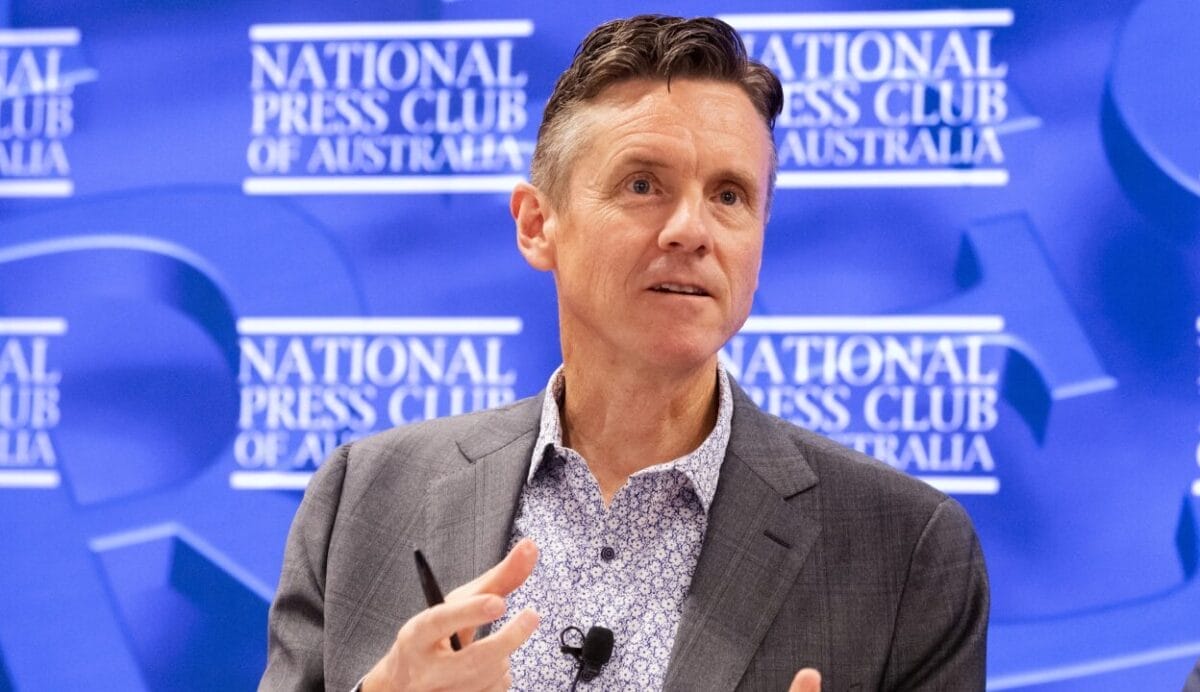
Peter Chun is chief executive officer of UniSuper.






Leave a Comment
You must be logged in to post a comment.