

AustralianSuper now has more money leaving than arriving as a result of member switching activity, according to APRA data analysed by The Conexus Institute for its upcoming 2026 State of Super report. In FY2025 AustralianSuper saw –$0.3b ($300 million) of outflows, placing it 29th in the ranking for competitive flows. It was previously first.
AustralianSuper continues to enjoy very strong natural flows – money contributed by members less the benefits it pays out – but has seen its competitive flows gradually diminish over the past four years, taking in $15.4 billion in 2022 but just $5.1 billion in FY2024.
Approached for comment, an AustralianSuper spokesperson said that the fund was making “a major investment to further enhance our advice offering, including digital, which will see AustralianSuper provide personalised guidance to more members than ever, helping them achieve their best financial position in retirement”.
“Superannuation is a highly competitive market, AustralianSuper is a growing fund and we have a strong track record of delivering for members over the long term,” the spokesperson said.
It can be difficult to determine what causes members to switch out of their fund, though the clearest industry trend is ongoing movement of members away from the established and dominant profit-to-member funds and towards retail platforms. In the 2025 State of Super report, the majority of the funds experiencing high net competitive inflow rates were platforms that service financial advisers.
Last year, HUB24 replaced AustralianSuper, which had previously held first place, as the leading fund in terms of competitive flows, a position it retained into FY2025. Netwealth and Macquarie are second and third, while UniSuper remains the only profit-to-member fund currently experiencing competitive inflows.
In recent years, the retail platforms, with their stronger links to financial advisers and boasting extensive menus of retirement products, have emerged as a significant threat to the profit-to-member funds, which have enjoyed strong competitive inflows since the Hayne royal commission. Still, retail platforms are now dealing with the fallout of the collapse of Shield and First Guardian, which has so far seen ASIC take legal action against Netwealth, Macquarie, Equity Trustees and Diversa.
Short-term fund underperformance and poor service levels – both of which AustralianSuper has been dealing with for the past few years – can push members to move their super. AustralianSuper has recently, underperformed its peers, with its MySuper option lagging the median growth fund by –1 per cent over the last year and -0.9 per cent over three years, while it has also been the subject of high-profile regulatory action by ASIC – along with significant media attention – for deficiencies in death benefit claims handling and its failure to address duplicate accounts.
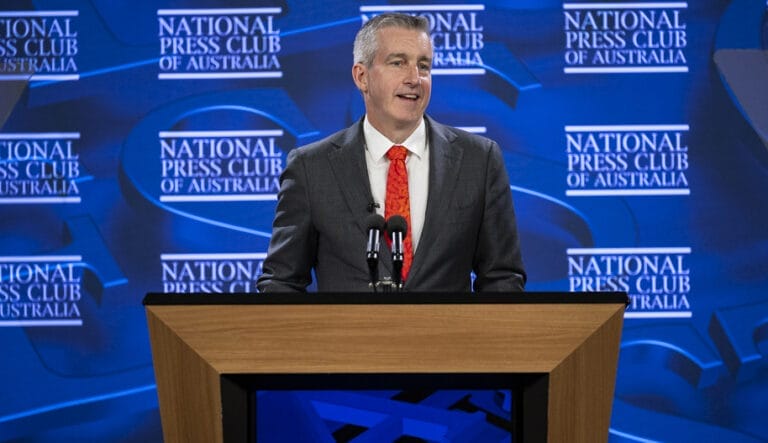
AustralianSuper chief investment officer Mark Delaney announced at the end of 2025 that he would be retiring from the position in June, with the fund now searching for a successor. It has also launched a restructure of its investment team that will see it manage more assets externally and has brought its claims handling process in-house.










Leave a Comment
You must be logged in to post a comment.