


Political debate around climate policy has never been more intense. As the COP30 climate talks in Brazil heard that the planet remains on track to reach temperature levels 2.6 degrees Celsius warmer than pre-industrial times by the end of the century, Australia’s largest institutional investors find themselves torn between ideology, hard investment objectives, and fiduciary responsibility.
The return of the so-called “climate wars” has placed the role of superannuation funds under renewed pressure from members, regulators and government to demonstrate that responsible investment objectives can co-exist with the overriding duty to deliver strong, risk-adjusted returns.
An Investment Magazine roundtable, held in partnership with PGIM, heard that navigating the intersection of climate risk, investment opportunity and political uncertainty requires investors to move beyond narrow, exclusion-based approaches and towards practical, flexible methods that align portfolios with real-world outcomes – and to prove that ESG integration need not come at the expense of performance.
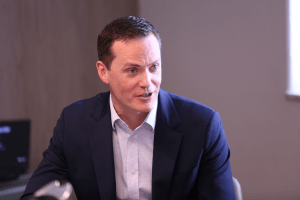
PGIM managing director in Australia and New Zealand Chris Briant said the challenge for investors is to “progress the conversation beyond what you can do in terms of exclusions”.
“We want to achieve real-world results and flexible outcomes for investors, whatever their sustainability goals are,” he said.
Fiduciary investors must move past traditional, exclusion-based portfolio construction to embrace more contemporary approaches, including quantitative factors, that produce the real-world ESG and sustainability results that fund members increasingly expect.
But as reliance on exclusions fades, shortcomings in a “stewardship” approach are also being revealed, leaving funds to consider more sophisticated tools and clearer alignment between climate ambition and portfolio construction.
George Kendall, a senior analyst in the investment team at Brighter Super, said that the fund chose to close its socially responsible investment option because it wasn’t particularly popular and because the team “felt that way of investing was a little bit old hat”.
“One of the things that we then looked at doing was to strengthen our integration across sustainability, but including climate – so, looking at onboarding quantitative solutions in our active equities bucket; and then also on our passive equities, seeing what we could do there,” Kendall said.
An issue with exclusion as a portfolio construction tool is that it’s a blunt instrument – it cannot accommodate changes that companies might be making or be about to make.
Guneet Rana, director of responsible investment for Colonial First State, said that BHP is a case in point. Some sustainable funds exclude BHP because there’s a perception among members that thermal coal is “bad”.

“They don’t differentiate between thermal coal and metallurgical coal,” Rana said. “BHP has a large exposure to metallurgical coal, predominantly.
“However, there’s some sustainable funds out there that do include BHP and they have the view that BHP is doing all the right things. They have a good climate action plan.”
Suzy Yoon, a senior consultant for sustainability at asset consultants JANA, said the firm recently worked with an asset owner to “integrate forward-looking elements” into its passive equity portfolio.
“We engaged with a variety of data providers and asset managers just on how can we focus on the forward-looking elements with these Your Future Your Super tracking error constraints?”
Yoon said the providers were “actually quite creative” in producing solutions asset owners could adopt that aligned with the New Zealand sustainability framework, which lets investors engage with high carbon emitters and work with them on mitigation strategies.
“And I think maybe that is sort of an avenue that you could look at in terms of real world focus.
“The NZ framework does say it’s not just the lower emitters that you want to focus on, you want to invest in the higher emitters as well and engage with those companies to support that alignment to net zero by 2050.”
Replacing exclusions
With an exclusion-based approach falling from favour, new approaches are emerging that bake sustainability into the portfolio construction process.
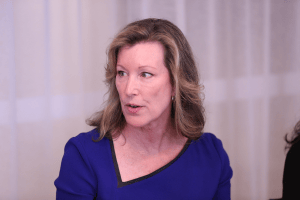
Agnes Hong, head of equities at Aware Super, said that genuine integration required a mentality of investment “ownership”, not just oversight.
“It shouldn’t just be driven top-down by the head of ESG,” Hong said.
“True integration has to come from investors. I’m responsible for performance, and our investment teams manage portfolios with climate-risk reduction targets embedded in their core options.”
Hong said that Aware’s board had taken “a courageous decision” to apply those targets across all its equity portfolios, not just sustainable options.
“We work closely with our board and investment committee – they represent members and endorse the climate targets,” Hong said.
“They’ve been clear that those are the board’s decisions. Our portfolio managers are evaluated against internal benchmarks that include climate considerations.” That alignment supports accountability, without penalising managers for policy decisions.
“Every time you reduce the universe, you reduce opportunity,” she said.
“So it’s only fair that portfolio managers are measured against the customised benchmark that reflects those decisions.”
Hong said “climate risk is investment risk” and said ESG has become “a fully integrated way” of investing across passive, quant and fundamental strategies
ESG integration is recasting sustainability as an investment driver, and techniques such as quantitative investing are beginning to demonstrate their value. Dr Gavin Smith, a managing director and head of equity research and sustainable investing for PGIM’s Quantitative Solutions team, said successful quant strategies combine discipline with flexibility.

“We look at the UN SDG framework – seven goals linked to climate change – and identify companies deriving significant revenue from products and services that support them,” Smith said.
“We also manage carbon emissions, not just reduction relative to benchmark but improvement over time, while capping total emissions.”
Smith said flexibility must be embedded in investment process design to ensure that asset owners “aren’t locked into one rigid approach”, and that portfolios can be designed around forward-looking measures such as Sustainable Development Goal-linked revenues.
“We can go back to a company, a product, the rationale for why that product is linked to the SDG, then and then you can see the percentage of revenue from that product that is linked to that SDG,” Smith said.
“You can get down to that level of granular reporting. If I had to, I could decompose that to which companies are driving that, which products are driving that, and generate a report around the rationale for why those companies are fulfilling that [SDG].”
Good companies, run well
Stacie Mintz, a managing director and head of quantitative equity for PGIM’s Quantitative Solutions team, said that an equally important dimension is to ensure that “good” climate companies are also well-run. An electric car company could be doing great things for the world, but it if it has poor labour or human rights practices, that’s “a risk we don’t want”.
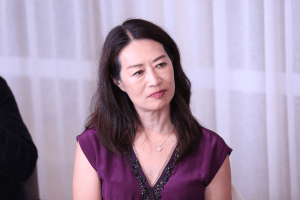
“We apply our proprietary ESG framework to make sure we’re focusing on well-managed companies, Mintz said, adding that PGIM’s quant capability has been developing climate-aware portfolios since 2006.
“Back then, it was all exclusion,” Mintz said.
“[Clients] would give us an exclusion list – take out all the fossil-fuel related companies – but then our objective was to still beat the S&P500, even though we had those exclusions.
“We did a lot of work-around portfolio construction to make sure we could meet those objectives.
“But as you can imagine, over time, you really needed a higher level of sophistication in dealing with climate risk in a portfolio.”
Mintz said that it’s more common today for clients to ask the manager to capitalise on climate change opportunities – inclusions, rather than exclusions.
“There are companies out there that are producing products and they have services that are really contributing positively to the world,” she said.
“The challenge that a European client had given us is, how can we manage the risks, but also get those opportunities while having reasonable tracking error and good returns. It sounds a little impossible, but we’re here to show you that it’s not impossible.”
Alexis Cheang, head of investment stewardship at TCorp, said TCorp relies on a three-tier benchmarking approach to reflect climate choices and avoid penalising managers when carbon intensive stocks rally.

“Our level-one benchmark is the widest universe possible, which is approved by our investment committee; level two reflects client or government exclusions like tobacco, and TCorp’s own view on the most appropriate exposures; and level three reflects TCorp’s own decisions about climate and other ESG risks,” she said.
Cheang said that without custom benchmarks, climate commitments can be punished if companies not in the benchmark perform strongly, which can create risk against performance tests even if a climate strategy is otherwise justified.
“We’re responsible for the performance outcomes, and our external managers are assessed against the custom benchmark,” Cheang said.
“When the low-carbon strategy outperforms, we get the credit; when it underperforms, we own that too.”
Cheang said domestic investors should go their own way when it comes to ESG and sustainable investing, and that while developments in this area in other jurisdictions, such as Europe, are interesting, they “maybe have less relevance here”.
“We have a lot of European managers come through Australia and present strategies to us that meet EU requirements around product labelling that don’t exist here,” she said.
Mintz said that every market requires a different balance between alpha and tolerance for tracking error.
“It’s a trade-off,” Mintz said. “Some clients are willing to sacrifice alpha for exposure; some are willing to take on more tracking error. Everybody wants something a little different.”
Alternative to exclusion
As an alternative to excluding or divesting from companies altogether, investors often take a stewardship approach, the idea being that as a long-term owner of a business the investor can encourage it to improve its ESG or sustainability credentials. But that can be a slow, long game.

Arti Prasad, head of sustainable investments at Mercer, said that when she started her career at New Zealand Super “stewardship was really important”; that was supplanted by an approach focused on exclusion and divestment for five or six years before the fund pivoted back to stewardship.
“But what I’m struggling with at the moment is that we do engage, and we engage hard… [But] I’m in these meetings, and sometimes I just feel, are we really going to get there?
“If stewardship isn’t going to work, how do we position for that, or do we extend that time frame? Because we say stewardship is a long game [of] small shifts, collective, more voices coming together, collaborative engagements, all that; but is it really, really changing the dial? And if not, then what else should we be doing?”
Cheang said that while stewardship is “impactful in Australia”, it’s less impactful in other jurisdictions.
“I am concerned about the ability of stewardship to actually make any difference in the US, where even the language that managers can use, and where they frame things has to be so carefully framed to avoid the wrath of the SEC,” she said.
And PGIM’s Smith said a quantitative approach to sustainable investment does not preclude company engagement.
“Even as a quant, we still conduct engagements on this front. We will look to collaborative engagements with more breadth,” he said.
“For example, we might hold a portfolio of 500 stocks; with a handful of engagements it’s tough to demonstrate a big impact on the portfolio, so collaborative engagement adds more scale to that.”
The role of quantitative investing
Mintz said quant strategies convert passive allocations into portfolios that “can deliver a little bit better than market returns” and allow funds to “target the risk level [they] want” while freeing risk budget for deeper sustainability strategies to be implemented elsewhere.
Smith said ESG and climate signals show “a positive performance profile…more of a non-financial proxy for firm quality” and said that investing based on a combination of factors is more effective and provides clearer results than single-factor approaches. He said quant allows portfolios to incorporate emissions declines, SDG alignment and improving ESG quality, while maintaining balanced alpha exposures.
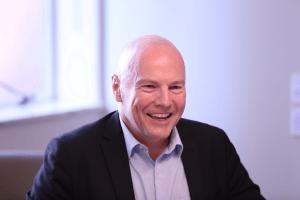
But Brighter’s Kendall said successful quant strategies depend on credible data, and that the relative subjectivity of SDG-alignment metrics are concerning.
“We looked at third-party data and sometimes got strange results,” he said.
“How do you know those classifications are right?”
Rana agreed data can be a problem.
“Everything is so quantitative and driven, and there’s a lag in the data,” she said.
“Unless you’ve got someone who doesn’t just blindly use it – who applies implementation principles – the results can change entirely depending on the data provider.”
Your Future Your Super, but not always your choice
And even with sophisticated portfolio construction tools and techniques, there remain limits to how far funds can deviate from broad benchmarks. The continued need to manage tracking error, maintain benchmark alignment and present climate decisions as investment decisions means YFYS remains a major practical constraint.
Hong said Aware assesses teams against an “internal benchmark that is different from the official benchmark” so climate targets reflect “the board’s decision versus the investment team’s decision” and performance assessment is not distorted by climate constraints under YFYS.
Smith said climate-aligned quant portfolios can be kept at less than two per cent active risk while still achieving emissions reductions and SDG alignment – supporting the idea that quant can help avoid YFYS breaches while delivering sustainability outcomes – while Kendall said Brighter’s experience with tracking error showed how external shocks, especially political developments around energy and climate, can create rapid performance divergence that exposes funds to YFYS pressure.
Aware’s investment mandate is still to “maximise alpha”, Hong said, adding that climate considerations must be justified as either “a risk mitigator” or “potentially an alpha generation” source, which limits the extent to which funds can pursue climate goals if there is no clear investment rationale.
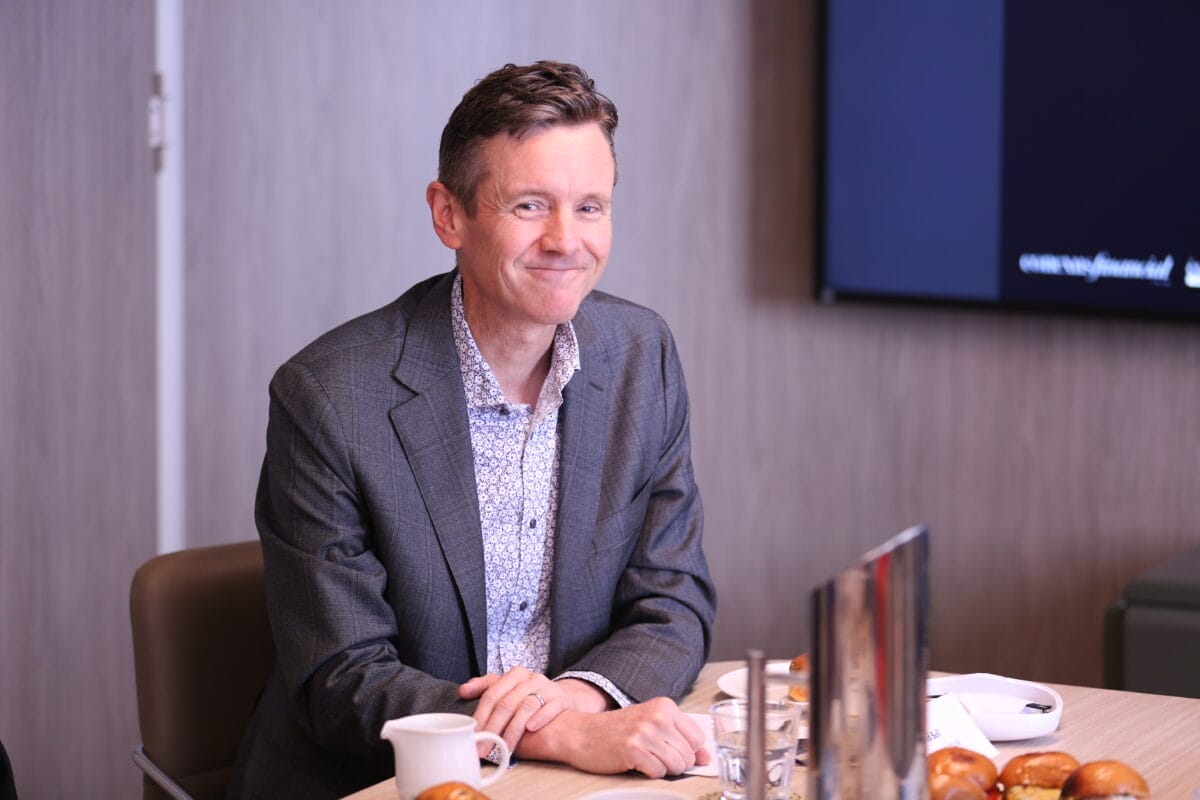
But executive director of The Conexus Institute*, Dr David Bell, said that even if the Your Future Your Super performance test were removed, peer group risk remains a consideration or funds and acts as a brake on them doing more, and while “you may get an uptick in activity, we don’t think it’s going to be like the dam wall crashing down”.
“You still have [inconsistent] buy-in across the whole investment team chain, within funds,” Bell said.
“Some funds are nearly getting to that degree now where the entire investment team has bonuses based on contributions to sustainability activities, but they’re not quite there. So there’s those types of things which really turn the dial as well.”
*The Conexus Institute is a not-for-profit think-tank philanthropically funded by Conexus Financial, publisher of Investment Magazine.










Leave a Comment
You must be logged in to post a comment.