


Heading into the Christmas and New Year break few, if any, asset owners had “US intervention in Venezuela” on their list of likely events in 2026. And the extradition of Venezuelan president Nicolás Maduro to the US illustrates the futility of trying to accurately predict specific events, let alone reckoning with their possible portfolio impacts.
And it’s why, as the investment chiefs of large super funds return to work for a new year, they remain focused on secular trends and resilience: positioning portfolios to weather any storm.
The key drivers of long-term performance inevitably include interest rates and inflation, but those factors are the same for all investors and create a backdrop against which value-additive opportunities are sought out.
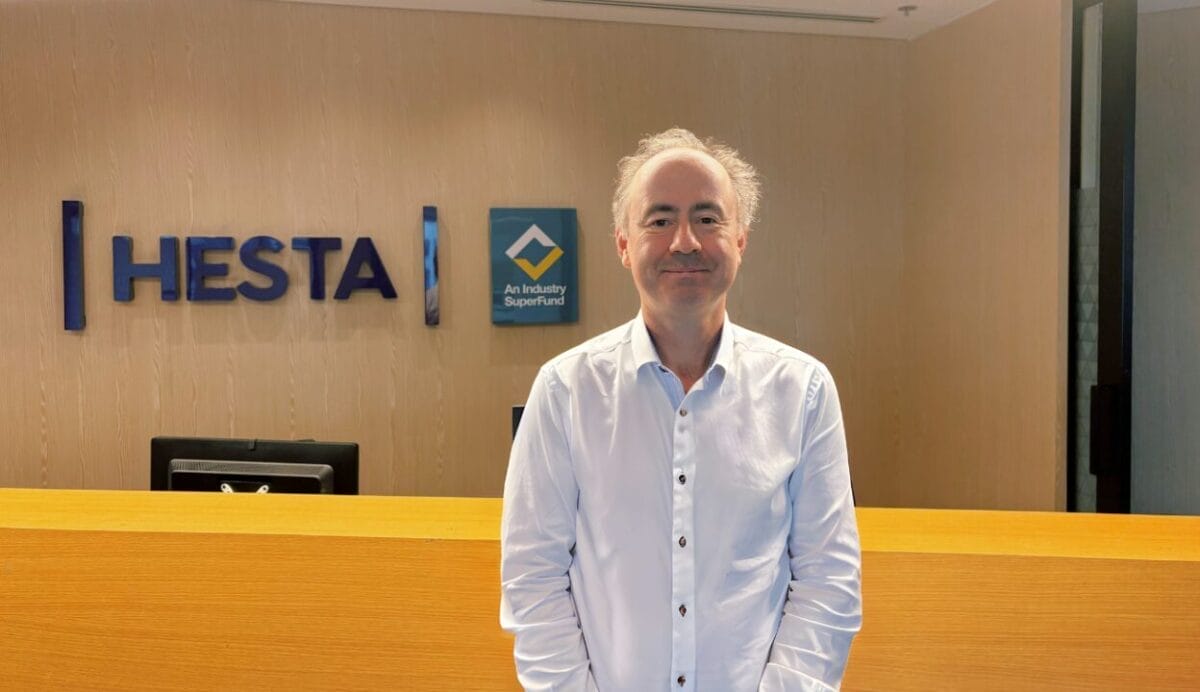
Simon Warner stepped into the chief investment officer role for the $200 billion Aware Super just before Christmas last year, having joined the fund in 2023 as head of portfolio management. In some of his first public comments since taking up the role, he tells Investment Magazine that “beyond the usual focus on rates and inflation, the one big thing I’m watching is the economic model underpinning AI and its impact on investment returns”.
“We’re seeing extraordinary demand for AI computing, with data centres and infrastructure being built and used at pace. But as funding shifts from retained earnings to more complex financing, the sustainability of this growth – and where true value is captured – becomes a critical watchpoint.”
For Warner, the key will be to ensure Aware’s portfolios are diversified across the AI value chain, “investing not just in leading equities but also in the infrastructure and energy platforms that support this transformation”.
“When it comes to equities, I’d also add that we’re not seeing a 1999-style bubble of ‘dark capacity’,” he says, which was when companies attracted massive investment and built capacity they could not sell, and hence were unable to generate the revenue to support a return on the investment.
“Today’s capacity is being used. Instead, the more realistic risk is timing mismatch: business cases built on ambitious payback periods that slip, creating valuation pressure even without outright overbuild.”
Core issues
Warner says the core issues he’ll be watching through 2026 include whether capex growth remains robust; monetisation broadens beyond early adopters; and funding structures stay anchored in resilient counterparties.
“Clear answers on those will be pivotal for returns across equities, infrastructure, and credit in 2026,” he says.
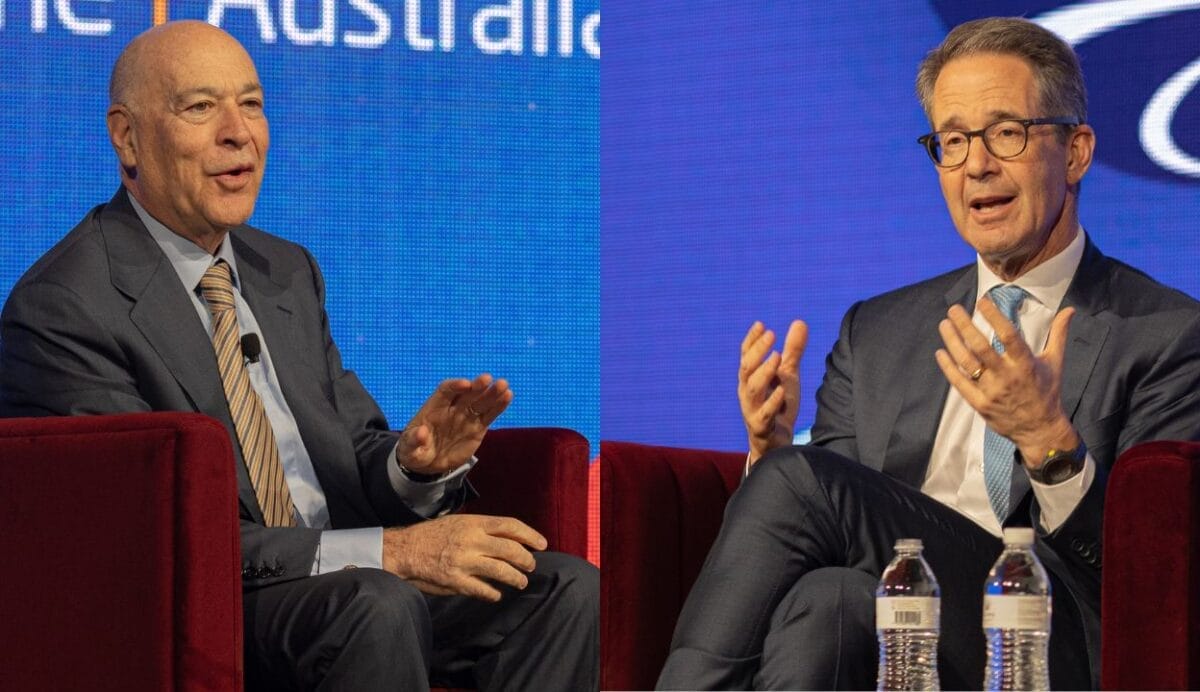
Andrew Fisher, general manager of total portfolio management and resilience at Australian Retirement Trust, says one of the most important divers of returns through 2026 will be what he describes as divergence, especially between the US and the rest of the world. Markets are entering a period when US monetary policy may move in a different direction to other economies, and this will test how much independence countries such as Australia really have.
The implications are still uncertain, but currency markets are likely to be where that divergence shows up most clearly. The US dollar still has room to weaken, and that momentum will be difficult to resist.
Fisher says “you have probably got to get back to the 70s, when there was [last] genuinely divergent policy”. That presents a challenge for investors who weren’t alive then and don’t have any relevant experience to fall back on, and illustrates a need for humility, and for portfolios to be designed to endure uncertainty rather than be built to capitalise on heroic assumptions about market performance.
Fisher says that whatever the year ahead brings, one thing should remain constant: the importance of staying grounded. Most investment professionals aren’t much smarter or better than their peers.
“I think there’s possibly just a level of pragmatic humility in the fact that all the people in markets are really smart,” he says. “Taking huge active bets would imply you think you have some level of skill that is probably unjustified.”
Grab-bag of surprises
So ensuring portfolio resilience in 2026 will be less about predicting specific outcomes and more about structuring portfolios to cope with an environment defined by divergence on the one hand, a narrower group of “winners” on the other and the usual grab-bag of economic and geopolitical surprises.
Fisher says geopolitics will remain a source of volatility, but by its nature it is not something portfolios can be positioned for well in advance. Markets tend to overreact to news, and the opportunity comes from being prepared to respond rather than trying to predict events.
AMP chief investment officer Anna Shelley says that, beyond inflation and interest rates, “one of the biggest things we are watching into 2026 is the interaction between politics, technology and markets, and how that shapes risk and opportunity for long-term investors”.
Investors should remember that markets are often more resilient than expected, particularly when policy settings, corporate investment and innovation are moving in the same direction.
“Our job for our members is not to predict a single outcome, but to position portfolios so members can benefit from upside while remaining diversified if conditions change,” Shelley says.
Hype and hard capital
AI continues to attract AMP’s attention and that clearly “there is hype in AI, but there’s also hard capital, real earnings potential and long runways still ahead”.
Investment into AI infrastructure, software and applications remains substantial and is increasingly strategic, with implications well beyond the technology sector itself.
“Rather than making binary calls, we are focused on selective exposure, diversification and understanding where long-term cash flows are most likely to emerge, while being mindful of concentration risk,” Shelley says.
“We are also watching political dynamics closely, particularly in the US, because they can influence trade policy, regulation and fiscal settings. Mid-terms create noise, but they also create a powerful incentive to support growth. Our approach for our members is deliberately measured: we don’t invest based on political noise, but we do consider how policy incentives may affect markets, sectors and sentiment over time.”
Beyond the US, there are compelling longer-term opportunities that remain underappreciated.
“Japan has quietly become one of the more compelling developed-market stories – better governance, stronger balance sheets and momentum that’s hard to ignore. “Valuations remain reasonable relative to other developed markets, and we see this as a reminder that diversification across regions and styles can meaningfully enhance outcomes for members.”
AMP’s focus is on managing risk and maximising returns through the cycle. For Shelley, that means remaining diversified, avoiding overconfidence in any single theme and being prepared to adjust as new information emerges.
“Members trust us with their retirement savings, and that responsibility demands patience, discipline and a long-term perspective, especially in periods where headlines can feel louder than fundamentals.”
‘The one big thing’
Outside interest rates and inflation “the one big thing” UniSuper chief investment officer John Pearce says he’ll be focused on is “the AI-driven capex supercycle” – whether it leads to clear, widespread and unambiguous productivity improvements to justify the scale of investment to date, and the emergence of clear winners.
But for now, a lot of question marks remain over the potential in AI and AI-adjacent opportunities, Pearce says.
And as the payoff from investment in AI hyperscalers becomes more uncertain, Pearce says he’ll be watching to see if they commit to the same level of investment as in recent years, and also whether there comes a point when “debt markets reprice, or stop funding, data centre buildout”.
“Will power availability and grid constraints become the limiting factor for hyperscaler and AI infrastructure growth?” Pearce says.
The patience of private capital will also be under Pearce’s microscope, and whether “the likes of OpenAI can continue to justify current valuations”.
Most investors – regardless of whether they track an index or pick stocks – have a significant exposure to chipmaker NVIDIA, and it remains to be seen how depreciation schedules and useful life assumptions for GPUs evolve as performance leaps accelerate. There’s also a non-zero probability of a challenger emerging that could “threaten NVIDIA’s near-monopoly on best-in-class chips”.
The search for winners
“At a time when the tech revolution looked like running out of steam along comes AI,” Pearce says. “It unequivocally represents the next inflection point and there is now widespread acceptance that we could be in the midst of the biggest innovation since the launch of the internet, and possibly in our lifetimes.
“However, from an investment perspective it is far less clear as to where the money is going to be made. If success is measured in real money then the only big winner to date has been NVIDIA. In our search for tomorrow’s big winners, many questions remain unanswered. In 12 months’ time I suspect many of these questions will remain unanswered.”
These have so far remained somewhat elusive, and while they’ve been comprehensively talked up, they can also be magnets for wishful thinking and misplaced hype. ART’s Fisher says the still-inflating artificial intelligence balloon will be another major return driver, but with a shift in emphasis and urgency.
Early investment in the nascent technology was funded largely by equity and cashflow. The increased incidence of debt funding changes both the return equation and the expectations.
“You’re borrowing against future earnings and what that means is your sensitivity to future earnings starts to escalate,” Fisher says.
“The clock’s ticking for those gains to come through, so the urgency around the need to deliver productivity gain starts to escalate. Even if AI is eventually going to deliver the gains, if they don’t come fast enough it could be problematic for markets. The thematic to watch there is, are you seeing the benefits of all that investment flowing through? Because if they don’t start to come through a bit faster now, there could be problems.”







Leave a Comment
You must be logged in to post a comment.