


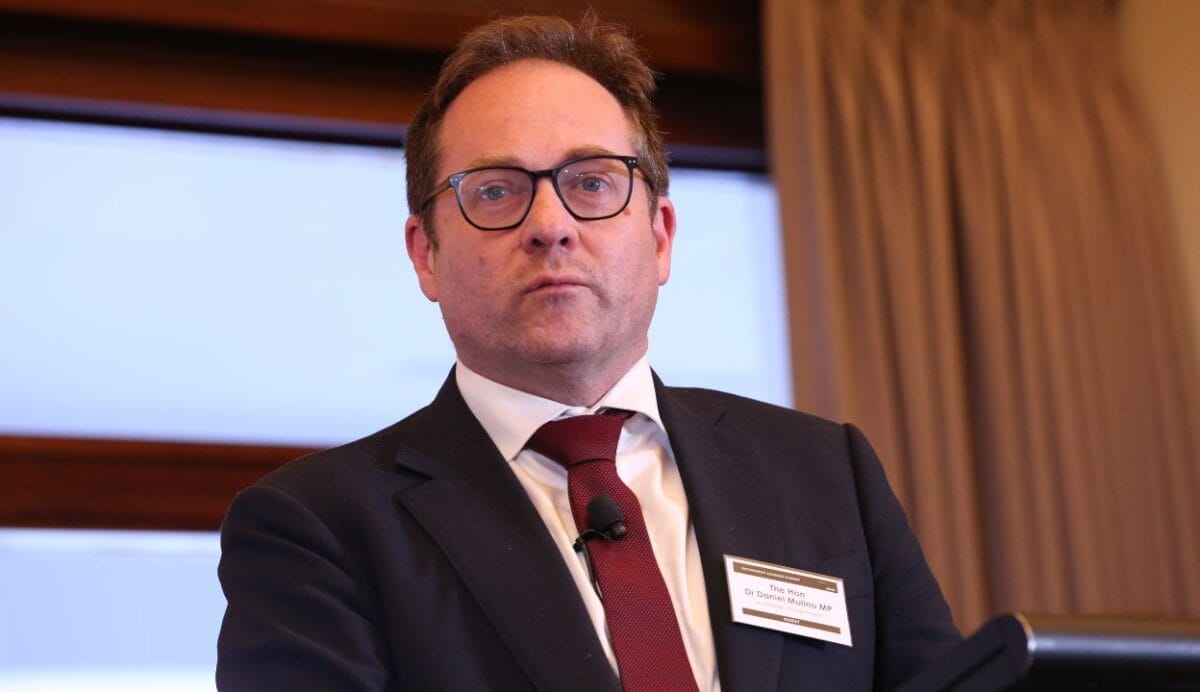
Minister for Financial Services Daniel Mulino has reassured the advice and pension industries that legislating advice reform remains “a high priority” for the Albanese government, but said that it needs to have better synergy with consumer protection policies which have taken precedence on its agenda after the collapse of Shield and First Guardian master funds.
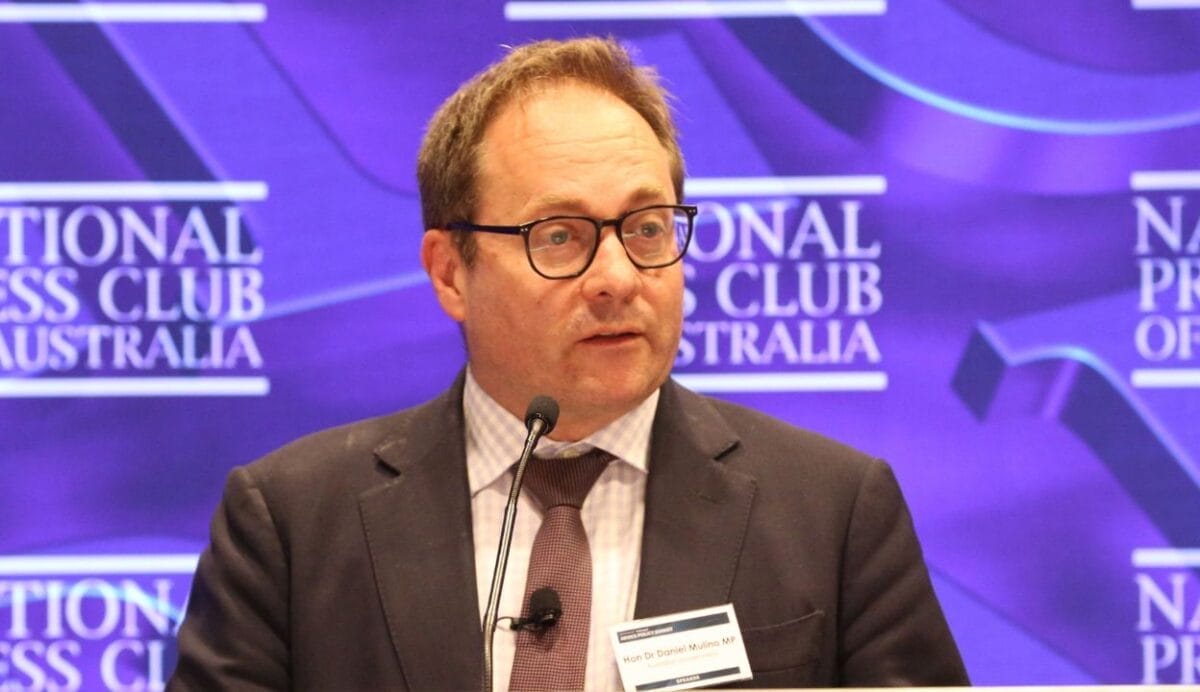
At the Advice Policy Summit, hosted by Investment Magazine sister publication Professional Planner in Canberra on Monday, Mulino acknowledged the growing frustration over the slow-moving progress of the Delivering Better Financial Outcomes draft legislation, suggesting that the delay related to limited drafting resources and the legislation’s complexity.
“This is not something I’m just going to kick into the long grass or just defer indefinitely,” he told the summit, attended by senior licensee, super fund and industry association executives.
“We are prioritising this whole set of issues around the consumer protection, which includes MISs, which will include lead generators platforms, but we will weave DBFO into that.”
The explanation came after Mulino previously refused to commit to completing the DBFO legislation in 2026, which was subsequently labelled “disappointing” by super funds and insurers.
At the Investment Magazine Chair Forum this month Mulino also warned that proposals to create a new class of adviser is unlikely to survive the fallout of Shield and First Guardian master funds.
“I totally get the frustration with how long this has been in the pipeline,” Mulino said.
“When you get to the point of drafting instructions, you make a whole bunch of choices around different elements of actions. This one [DBFO] had a lot of them. I’m just being upfront that I think they needed a bit of a relook at [in the context of more consumer protection].”
The Treasury also released its 19-point voluntary guidance on best practice principles for super funds in building retirement income solutions today.
Rethinking CSLR
Another piece of upcoming policy work is a discussion paper on the Compensation Scheme of Last Resort and consumer protection which Treasury will release in March. It will address the questions of which sectors should be funding the levies and parameters around the “but for” test.
Mulino made clear that the CSLR will be crucial for helping victims who aren’t covered by the two private sector compensation deals (with Macquarie Investment Management and Netwealth) recoup their losses in the Shield and First Guardian blow-up.
The CSLR has previously confirmed the FY26 levy for financial advice will be $47.3 million over the $20 million subsector cap, and that a special levy will be required to cover the additional funding.
There will be 23 “retail-facing” subsectors contributing to the special levy. Licensees that provide personal advice on relevant financial products to retail clients will pay the most (22 per cent of the total levy), followed by credit providers (15.3 per cent), responsible entities (13.7 per cent), superannuation trustees (12.9 per cent) and all other sub-sectors (under 10 per cent each).
Mulino said the debate around the CSLR is double-layered – one layer is which sectors should pay, and the second layer is who within the sector should pay.
Regarding the first question, “most people’s position is everybody but me. But the second best solution is if me, everybody,” Mulino said.
On the second question, Mulino acknowledged that, more often than not, it’s not businesses which conducted the wrongdoings but businesses who have abided by the rules that are left picking up the pieces in a scandal like Shield and First Guardian master funds.
“Look, there’s no straightforward answer to that. That’s just for me, part of the imperfect nature of the Compensation Scheme of Last Resort,” he said.
“The special levy was already quite significant late last year. It will get bigger.
“But when you do it [the compensation] ex post, one of the two principles that ultimately come into play are, firstly, in order that it’s not unsustainable, it [the cost] has to be spread as widely as possible.
“But then at the same time, you want to, to some degree, at least have risk reflected in there. We feel that the criteria that we used in December for the first special levy reflected that balance.”





Leave a Comment
You must be logged in to post a comment.