
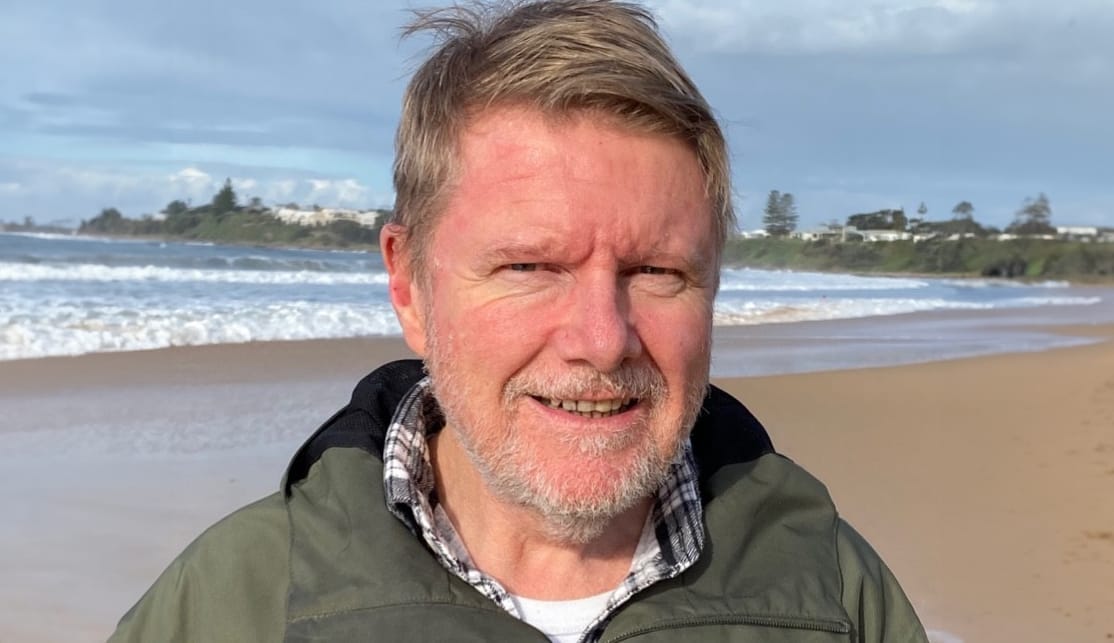
Mark Sainsbury, the first CIO of First State Super, passed away in January following a short illness. He was 67.
“He made a profound contribution to the superannuation industry and, most importantly, to the financial wellbeing of thousands of NSW public servants,” former First State CEO Michael Dwyer tells Investment Magazine.
“Mark was a savvy and disciplined investor whose influence helped shape what was then First State Super, now known as Aware Super, into one of Australia’s leading funds.
Born in 1958, Sainsbury grew up in Blacktown as the youngest of seven children; his parents were market gardeners and mechanics, and he was part of the first generation of his family to attend and graduate university. Sainsbury married his wife Tina in April 1981. They were together for 45 years. Together, they had three children and four grandchildren.
He spent the first three years of his career in the Australian Public Service, first in Treasury and then at the Department of Prime Minister & Cabinet, before moving to the NSW state government and superannuation investment and investment-advisory roles. He worked at State Super from 1989 to 1996, helping to design its member choice investment product at a time when member-directed investment was still uncommon.
Mark Lazberger, former chief executive of Colonial First State Global Asset Management, remembers Sainsbury as “a true friend” who he met in the early days of starting up State Street Global Advisors in Australia. State Super was a client, and Sainsbury was known for grilling visiting portfolio managers. Lazberger tells Investment Magazine that Sainsbury “didn’t tolerate fools”.
“He would do it in a professional way, but he would definitely put people through their paces,” Lazberger says. “And he didn’t do it because he saw it as sport; he did it because he felt he had a responsibility to the sponsor of the fund – which was the state government – and then when he moved into First State Super he felt he had a responsibility to the members of that fund.”
“There were times myself when I thought it was going to be a tough one. But you always knew where you stood with Mark. This focus he had was a reflection of the importance he placed on values, and being a professional, and doing the right thing… Mark was not a grey character. Anyone who met with Mark will remember that they met with Mark Sainsbury.”
Lazberger thinks of Sainsbury as belonging to a particular generation of investor linked to the phase of superannuation’s industry where funds were beginning to become more sophisticated.
“It was only the mid-1980s when the first steps were being made by the superannuation funds – which, in almost every instance, were defined benefit plans – to diversify outside of Australia. State Authority Super Board was if not the first one of the very early pools of assets to take that step.
“It was a different time, and the pools were smaller. The whole world of investment management, which is intimately linked to these asset pools, was also a lot smaller. That time – the 80s, 90s and even into the 2000s to a degree – the world of investment management was almost an artist colony. It wasn’t at the scale where it is today.”
Lazberger says that every time he sat down with Sainsbury, he “came away with something [he] hadn’t thought of before”.
“At times it seemed he could see around corners in a way I’ve never been able to do. I will also say that Mark was a creature of the market; he understood its ebbs and flows, and used that in the way he thought about investing. He was a sensible investor but he understood the dynamics of markets and how they can change. He had a good read on the psychology of markets, and if you look at his track record that comes out.”
From 1996 to 2005 Sainsbury held the CIO roles at the Local Government Superannuation Scheme and Energy Industries Superannuation Scheme, before taking on the top investment job at the then $6.5 billion First State Super. He was soon joined by portfolio manager David Vella, who was to be the third person on the investment team, in addition to Sainsbury’s EA.
“What struck me immediately was the intellectual bar Mark set. You didn’t walk into his office without having thought through what you were going to say,” Vella tells Investment Magazine.
“Not because he was unkind, but because he respected rigour, and he expected it in return. Managers came unstuck in meetings with Mark usually because they were leaning on spin rather than substance. Mark simply asked straight questions. If you had done the work and could answer them honestly, most meetings were entirely straightforward. It was the exceptions that built his reputation.
“Working under him was one of the most formative experiences of my career. He was tough, but always for the right reasons, and we shared a lot of good times and laughs.”
Mark Levinson, who was then managing director of Goldman Sachs, remembers Sainsbury – who had first been his client at State Super, and had become a friend – as being unwilling to take on the bank as a counterparty because of the role it played in the Global Financial Crisis.
“He said ‘I trust you but I don’t trust them’. I continued to talk with him – it didn’t matter, because we were friends… he was one of the most ethical and principled people in this game. Sainsbury was the first person I can remember, 20 years back, when big super funds had $3 billion, saying ‘I can’t do that – I have to think of the member’.”
During his tenure at First State, the fund would more than quintuple its FUM, including through its 2011 merger with Health Super. He retired in 2013 following the completion of that merger and transition of the investment function.
In a 2013 profile with Investment Magazine to mark his retirement, Sainsbury said the merger made him “pretty happy” and said that super funds would need to be flexible and evolve to meet market circumstances.
“The concept of extreme movements in investment markets has been there ever since I’ve been working. I’ve been here since the ‘87 crash and then seen virtually every crash since,” Sainsbury said.
“There are a couple of investment decisions where we’ve done specific tactical asset allocation adjustments of the portfolios that I’m particularly pleased with because they were successful responses to the market circumstances.
“There are others, where you turn around and as a result of your strategic asset allocation of your portfolio, it works pretty well for you.”
Dwyer remembers Sainsbury as a “man of formidable intellect, sharp investment insight and unmistakable presence”.
“While he could at times be challenging to work with, that intensity was driven by conviction and a deep sense of responsibility. He had a generous heart and was an unwavering champion of frontline workers — the nurses, teachers, police officers, firefighters and all those everyday professionals who deliver essential services to the people of New South Wales.
“Mark believed deeply in serving those who serve our community. For that commitment, and for the legacy he leaves behind, we are in his debt.”

Mark Sainsbury

24/02/2026
Aware Super, First State Super, State Super
Obituary
Superannuation and financial advice industry leaders were among the hundreds of mourners at the funeral of Greg Bright in Sydney’s eastern suburbs on Thursday. Leng Ohlsson, one of countless journalists and employees mentored by Bright, reflects on a man who cared about people first and foremost – even willing to occasionally prioritise friendship over the story.





Leave a Comment
You must be logged in to post a comment.