
Every asset owner knows that good investment talent – the kind that can resist short-termism and stick to their guns through tough markets – can be hard to come by. In Melbourne, a city crowded with heavyweight asset owners, the battle for that talent can be especially fierce, Kate Galvin, chief executive of the $100 billion Victorian Funds Management Corporation (VFMC), tells Investment Magazine.
“In Melbourne, we’ve got trillions of dollars being deployed globally,” Galvin says. “The Future Fund is based here, most of the big eight super funds are based here, and you’ve got IFM. So one of the challenges is the attraction and retention of investment management talent. Melbourne is a big city but there’s just not that many investment professionals.”
Galvin knows that plenty of those asset owners are purpose driven in much the same way that VFMC is, but she believes that investing for the state of Victoria is a powerful incentive for those who live there. Then there’s the fact that the environment for investors at VFMC is quite different to that of a super fund.
“There are pressures, regulatory and otherwise, that are different in super funds. At VFMC, we’re highly governed, we’re a state entity, but we’re not APRA/ASIC regulated,” Galvin says.
“We are true long-term investors. We have a 20-year investment horizon and that’s what we look at. That doesn’t mean our one-year returns aren’t really important, but we are absolutely a long-term investor and that’s what our stakeholders and the government want and need us to be.”
Galvin started her career as a lawyer and worked as in-house counsel at JBWere prior to its merger with Goldman Sachs, where she went on to hold a number of senior roles before JBWere was later sold to NAB. At NAB she held management and executive roles across private banking and its health strategy. But she missed markets and investing and went for the CEO job at VFMC; she was interviewed, appointed and commenced during Melbourne’s long Covid-19 lockdown.
“It was a pretty wild environment in which to start a CEO role,” Galvin says.
But it was also one that would later inform VFMC’s approach to how its team should work.
“My team did an amazing job through lockdowns without us insisting they be in the office,” Galvin says. “All work here is flexible. I think people need social connection, and my direction is that everyone be in the office three days a week, but we are really committed to how we work flexibly and setting up for a future of work that is very different from the way I worked at Goldman Sachs, where I was at the desk at 7:30 every morning.”
Despite being in financial services for more than 20 years, Galvin had “a lot to learn” about asset owners. But that helped her to recognise that a CEO cannot – and should not – try and solve every problem themselves.
“The hard thing about it was that lawyers are trying to be experts in things, and one of the most important things about being a good CEO is to recognize that you don’t have to be an expert in everything, but you have to be able to pick the problems and pick the right people to deal with them,” Galvin says. “The learning curve was challenging.
“But you keep learning. The problems that come to the CEO aren’t the problems that are easy to fix. You have a lot of challenging decisions and conversations. It’s an incredible job, because I still learn things every day… You don’t have to be perfect at it. The whole point of it is not to be perfect, and that you are incredibly privileged to have a job where you learn new things every day.”
VFMC, unlike some of its state sovereign peers, is not open to external money – a strategy that Galvin examined when she took on the CEO role.
“When you set the strategy there were some choices that you’re looking at making strategically, and one of them is ‘do you take external monies?’. My view would be that you only do that if you’ve got a real competitive advantage. QIC’s expertise in property gives them a competitive advantage in that space – from time to time we invest with QIC. And with the FUM we’re at, which is around $100 billion, why would you do it?
“It would be a distraction. We’ve already directly invest a third of our funds. It’s a different growth projections, it’s a very different kind of strategic play. And to build that up is a five-to-10-year proposition. I’m an evolution not a revolution CEO. That doesn’t mean it’s not something we wouldn’t revisit in the future, but why would you start a funds management business when it’s pretty challenging to be an external fund manager?”
VFMC manages Australian equities and some of its international equity allocation in house, as well as fixed income and cash and its dynamic asset allocation program.
The “biggest strategic question for capital allocators” is what they bring in-house and what they hand to external managers, Galvin says.
“We made a conscious decision to ask where we have the skills, where we could continue to lean in, and we think that around a third [of the portfolio] internally managed is where we’re at. That doesn’t mean that if we have a good idea and think we can execute that better than doing it externally that we wouldn’t, but we think we’re probably where we need to be.”

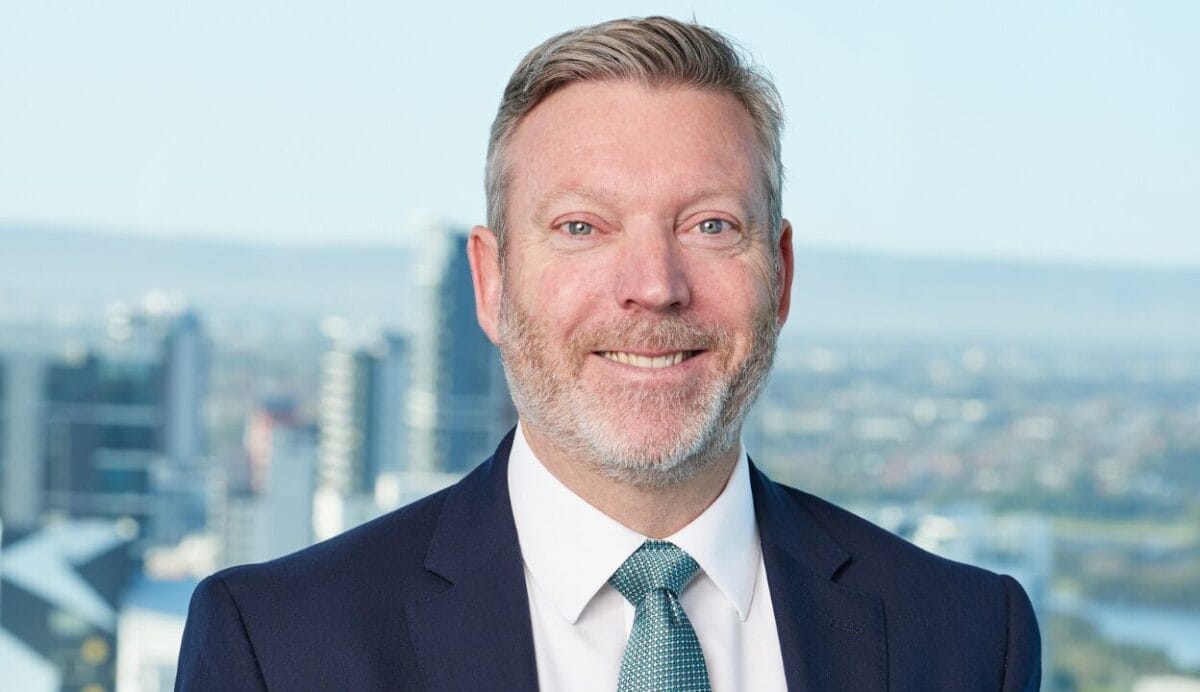
Kate Galvin

26/02/2026


Leadership & profiles

The principles of high-performance leadership – whether in business or sport – remain remarkably consistent and include the ability to maintain clarity, integrity, and conviction under immense pressure. Former Australian test cricketer Usman Khawaja told the Fiduciary Investors Symposium, held by Investment Magazine sister publication Top1000Funds.com, that the only time you really lose is when you stop trying.





Leave a Comment
You must be logged in to post a comment.