


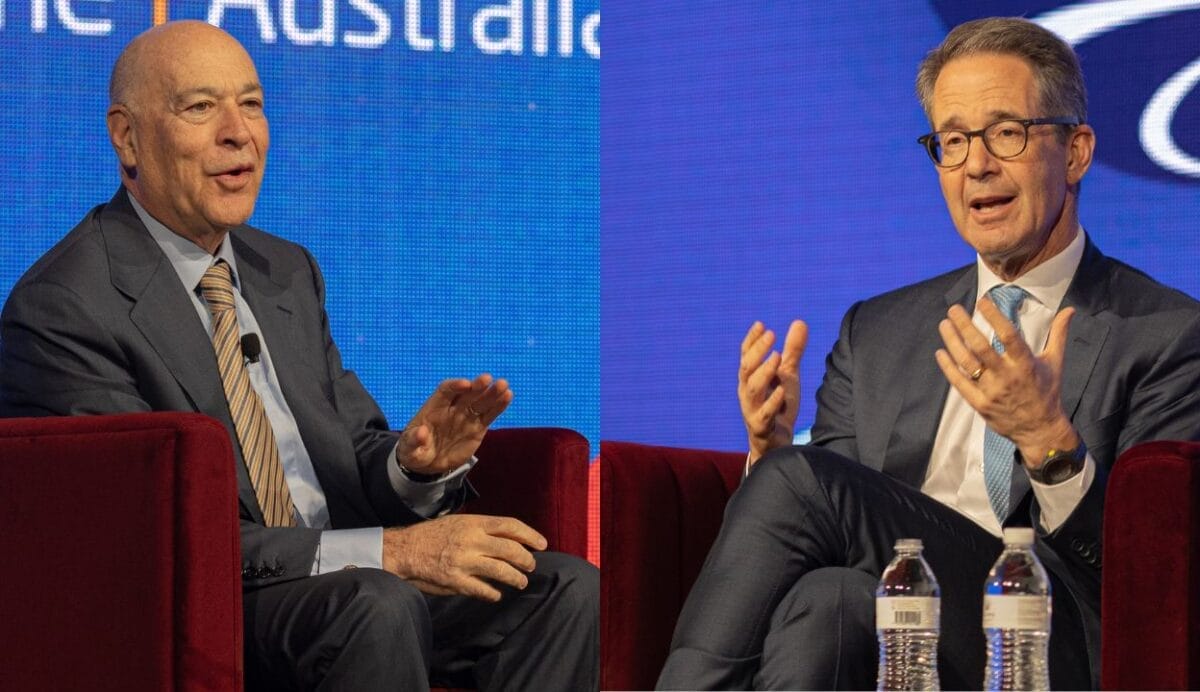
The outgoing chief investment officer of AustralianSuper Mark Delaney said one of the biggest regrets he will have as he leaves the $410 billion fund is not going overweight on the AI and digital thematic in public markets sooner, as the nation’s most powerful allocator reflects on the investment case of the technology sector.
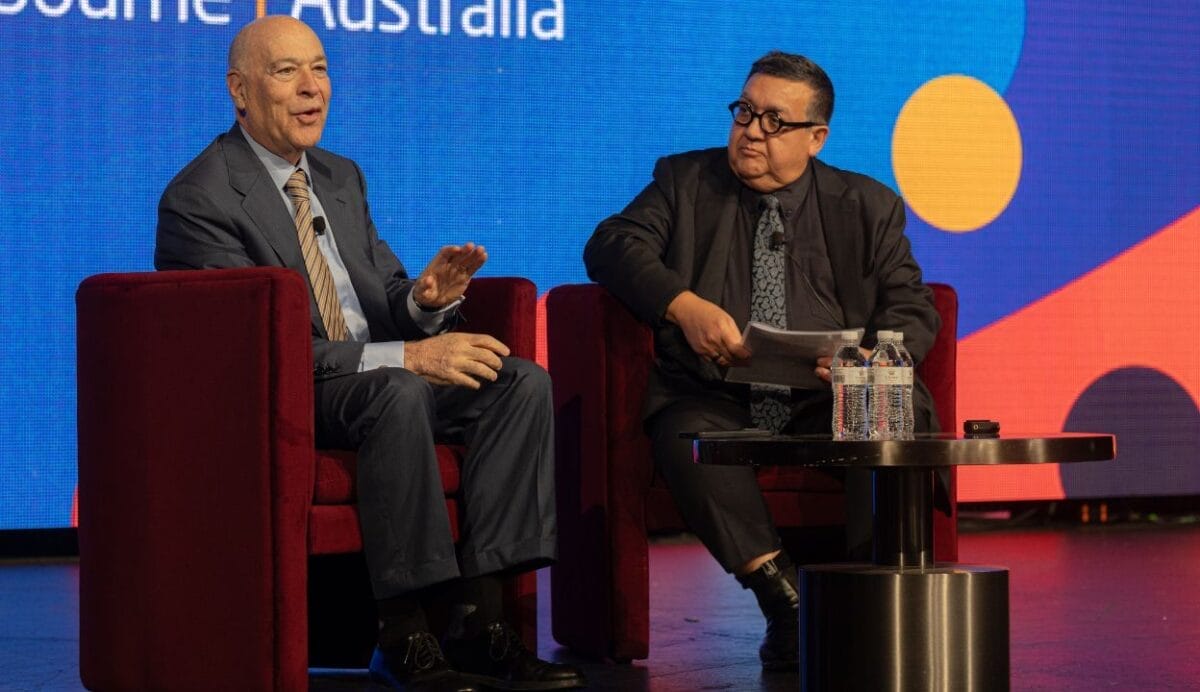
At the Australian Superannuation Investment Summit in New York on 13 March, Delany said AI will “retune” how the world economy operates and he wished that the fund had tapped into the trend earlier.
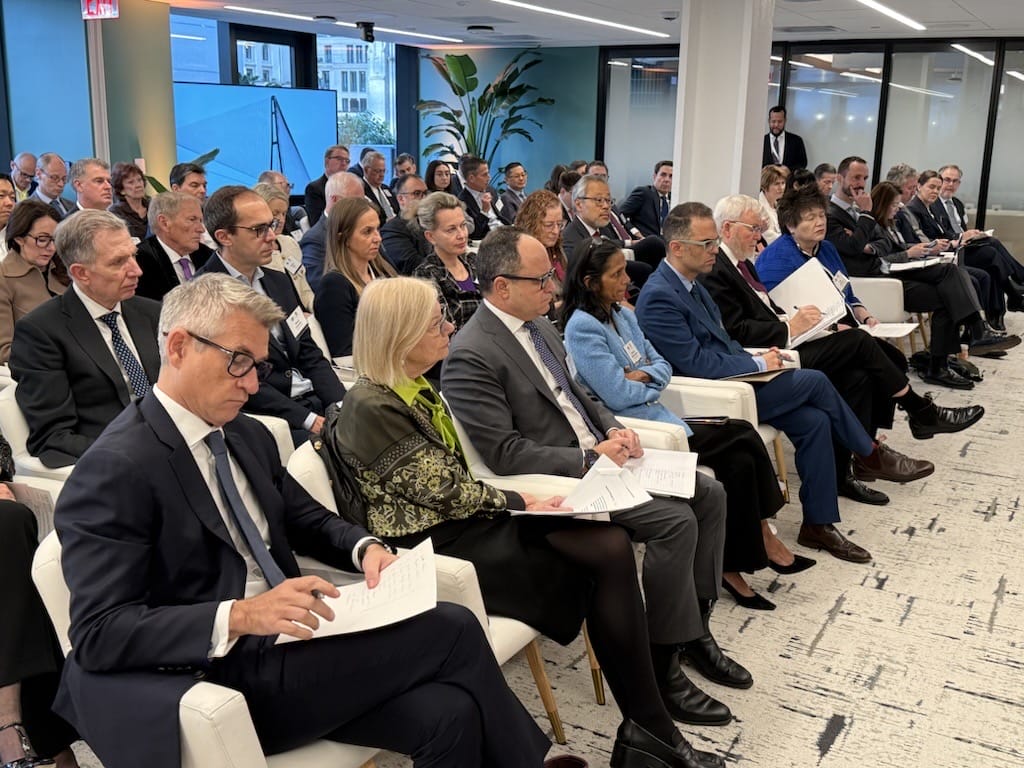
Colin Tate AM, founder and managing director at Conexus Financial, publisher of Investment Magazine, represented the publication at the summit, alongside national leaders including Australian Ambassador to the US Kevin Rudd, NSW Treasurer Daniel Mookhey, former federal treasurer Josh Frydenberg and the CEOs, CIOs and chairs of retail and industry super funds.
“A lot of public market investing is what people call cap-weighted, which basically… reflects the size of the companies in that market, and the size of the companies really determine pretty much how much money gets allocated to those companies,” he said, on a panel alongside ART CEO Kathy Vincent, CFS Super CEO Kelly Power and IFM chair Cath Bowtell.
“Very few people ran a thematic approach to investing rather than the capitalisation approach in public markets. If you did run a thematic approach in 2022 and said, I’m going to overweight digital and AI, you would have made a lot more money than we did.
“You leave with frustrations and that’s one of the frustrations I’m leaving with – it’s we could have done that better.”
The relentless rise of technology stocks is the latest megatrend during Delaney’s 25-year career with AustralianSuper, first as CEO of the fund’s predecessor Superannuation Trust of Australia then as AustralianSuper’s investment chief – a post from which he will step down in June.
AustralianSuper’s performance suffered when it was underweight US mega-cap companies in the first half of the 2024 financial year, which led to an 8.5 per cent annual return when some peer funds secured double-digit returns driven by the tech rally.
The Magnificent Seven make up close to 40 per cent of the S&P 500 index, which makes concentration risk a real threat to portfolios, but Delaney conceded that one question he constantly asks himself is “is that too much or not enough?”
“And I can’t answer it, it changes day by day,” he said.
“In investing you’re buying future cash flows. You want to buy future businesses and not lock your capital up in old businesses. So the instinct is, it’s [40 per cent] is probably not enough… [the AI thematic] does spread more broadly to the rest of the portfolio, but it’s nowhere near enough.
“These big industrial transformations aren’t a straight line. It’d be really easy for investors if it was.
“They all start with a bang, they have a fizzle, and then they have a pop, I suppose. And you want to make sure that you are deploying capital at the right time and in the right way.”
In a glimpse into his investment philosophy, Delaney distils investing to the action of “making judgements about the future under uncertainty”. While investors naturally seek to reduce uncertainty to better manage risk, he said digital and AI assets that appear more predictable may not necessarily be more attractive.
“The more certain the cash flows are, the less upside there is now, so if you have more certainty about what the investment looks like, i.e. less risk, there’s less upside,” Delaney said.
“That’s just the integral part of investments where you have to basically try and identify what the future is before everybody else does or assume that the future is going to be like the past. But you make one of those two assumptions and everybody does the same game, so then inherently, that’s risky.
“For investments, you have to live with the risk and actually encourage them to take the risk, otherwise you won’t get the returns. It’s different in other parts of the business, like member service.”
The nation’s second-largest super fund, Australian Retirement Trust, has about $4 billion exposure to AI and chief executive Kathy Vincent is similarly bullish on the thematic. She said the fund wants to ensure its capital in the area goes to investing in “modern technology and partners that actually have AI innovation as part of their core and their mindset”.
“I couldn’t help this week but to reflect on the AI revolution here in the US. Yes, it’s talked about in Australia, but it’s really here in the US,” she said.
“AI, from our perspective, is very much in the domain around ensuring that we hold our own and work towards what we do best and leverage strategic partners [to invest in good companies].”







Leave a Comment
You must be logged in to post a comment.