


There is no crisis in private credit and concerns about the asset class result from a mismatch between its liquidity and the expectations of retail investors, according to executives from a number of private market asset managers.
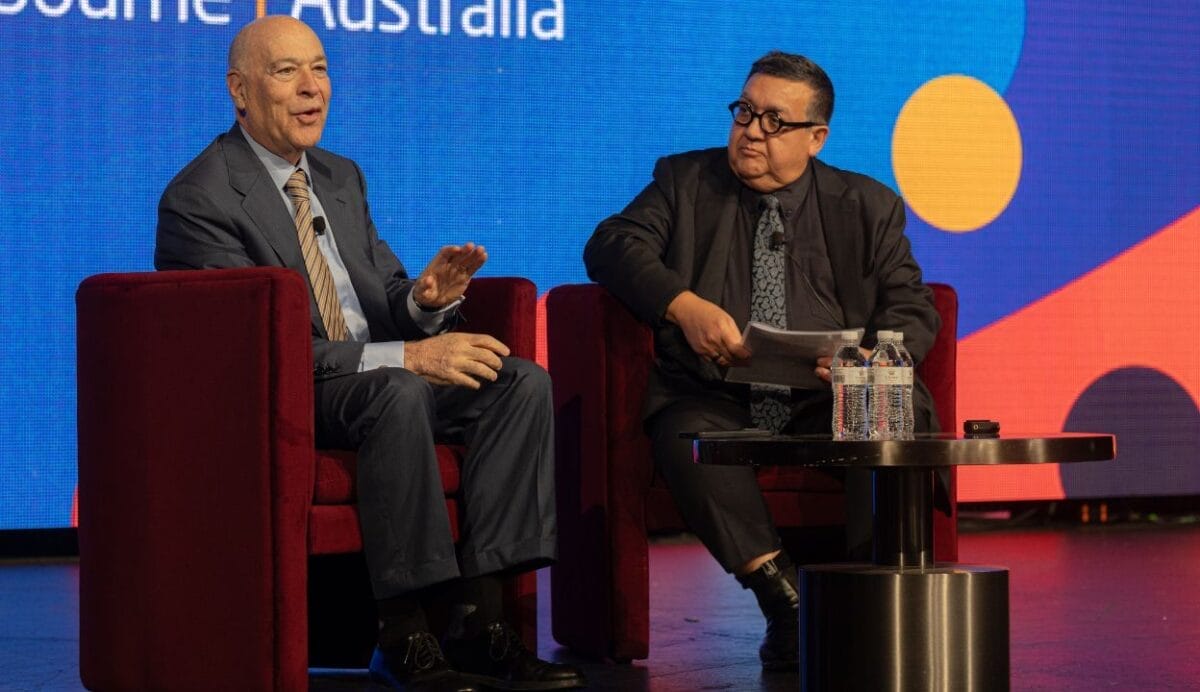
Doug Ostrover, co-chief executive of Blue Owl, told the Australia Pacific Financial Innovation Symposium (APFIS) in Melbourne on Thursday that concerns about liquidity have only been voiced by the wealth channel rather than institutional investors.
“We thought we could manage five per cent liquidity because about a quarter of the portfolio rolls off every year, we would manage it with extra cash and some lines of credit,” Ostrover said.
“What’s happened is as the asset class has grown, as an industry we could have done a better job of making individual investors truly understand there will be times where redemptions are low and you can move in and out all of your capital. But there will be times like today where you’re only going to get a fraction out.”
BlackRock co-founder and president Robert Kapito told APFIS that “there is not a private credit crisis”.
“Some people have said ‘AI software companies are out of business’ – that’s not true, there are some companies that are out of business,” Kapito said, adding that default rates in private credit have remained in the 3 per cent to 4 per cent rate.
The so-called SaaS-pocalypse – therecent sell-off in Software as a Service companies – has led to a run of redemption attempts from private credit investors, reportedly from the retail sector. This year, several private credit managers including Blue Owl, Ares Management and Apollo Global Management have frozen redemptions in some of their funds.
The disruption to the sector comes at a time when Australia’s corporate regulator is reviewing retail distribution of private credit. The review comes off the back of a discussion paper released by ASIC last year that sought industry feedback on regulatory best practice of private market asset classes.
ASIC has since placed temporary stop orders on a few private credit products, including from La Trobe Financial, over concerns the target market determinations suggested an “inappropriate level of portfolio allocation”, according to the regulator.
Hostplus CIO Sam Sicilia told Investment Magazine that the issues plaguing private credit today are an “artifact” of it being offered to retail investors.
“The lesson here is that retail investors should understand that in illiquid assets you can not have 24/7 liquidity,” Sicilia said.
“And you say ‘why were those products offered to them?’ and the reality is those products always said we gate the fund if 5 per cent or more of the money flows today.”
Sicilia said that funds are entitled to gate those redemptions.
“I don’t want to treat private credit as an ATM machine where they can take liquidity out 24/7,” Sicilia said. “If you need liquidity, private credit isn’t for you.”
But asked whether part of the issue was the industry not communicating product features correctly, Sicilia said the issue was the assumptions being made on the buy side.
“If I said to somebody we’ve increased liquidity, where in that did you read 24/7, 100 per cent of my fund is highly liquid as if it was listed in the top 100 shares on the stock exchange?”
monthly loss in five years. Kenneth Caplan, co-chief investment officer of Blackstone, acknowledged to APFIS that while there have been “questions” about the quality of private credit, they were being overhyped in the media.
“[Private credit] is another place where there is a big disconnect between the headlines and the news cycle and what we see in the portfolios,” Caplan said.
“A lot of focus now is on concern over software companies but also a real focus on redemptions and semi-liquid vehicles, and we’d like to say focus on what’s happening in the portfolios and the performance. If you look at our portfolio, still very low levels of defaults.”
Software was definitely the biggest uncertainty for Blue Owl, which Ostrover said is about 8 per cent of the firm’s assets.
“We focus on very large mission critical companies,” Ostrover said.
“If you were to look at our portfolio today, the single best-performing sub-asset class would be software. We’re still seeing close to 20 per cent growth.”









Leave a Comment
You must be logged in to post a comment.