


Australian superannuation fund capital is regarded as both reliable and free of political interference, making it attractive to foreign governments to work with to invest in critical infrastructure and other assets.
With fund assets forecast to reach as much as $7 trillion by 2030, they are now an integral part of Australian soft diplomacy, posing the challenge to their boards and management of how to harness that influence in the best interests of fund members.
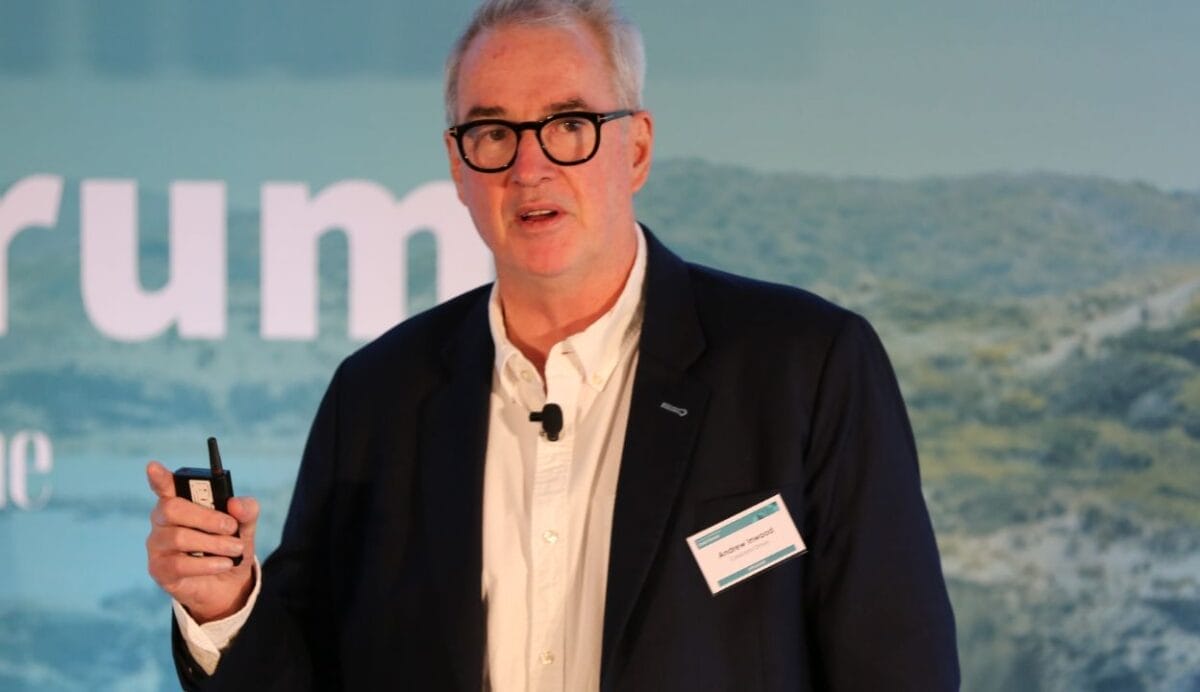
IFM Investors’ global head of external relations, David Whiteley, told the Investment Magazine Chair Forum in February that the superannuation system is “not only important to the personal financial security of working Australians, but to Australia’s economic and national security as a nation”.
“The superannuation system has increasingly become a cornerstone of modern economic diplomacy – giving millions of Australians a seat at the table of discussions with governments and markets around the world – and it’s critical we safeguard the system so it can continue to play this important role in members’ interest,” Whiteley said.
A growing number of nations are facing barriers to raising the capital they need to invest in critical infrastructure and other assets, being unable to, for example, significantly raise taxes on individuals.
“We’re seeing increasing trade and investment flows between like-minded nations,” Whiteley said.
This trend has been accelerating since the Global Financial Crisis.
“In all of this Australia is, to [quote Canadian Prime Minister] Mark Carney, one of these middle powers, and seen as reliable.”
Whiteley said that as funds outgrow domestic capital markets, “anywhere between 60 per cent and 70 per cent” of superannuation fund assets need to be invested offshore, and that is “highly attractive to governments, highly attractive to corporates”.
“Australia’s industry funds are scouring the world for the best opportunities for members, shoring up Australia’s influence on the world stage with like-minded allies which in turn benefits members,” said Whiteley.
Whiteley said he believed competition would emerge across different jurisdictions to attract this capital.
“Jurisdictions around the world are alive to the opportunity presented by Australia’s growing pool of superannuation capital, but too often, their policy settings don’t lend themselves to pension capital deployment. We need to collectively be putting our best foot forward to work with governments to unlock opportunities for pension capital investment.”
Whiteley said that competition for super fund capital is welcome, and could generate investment opportunities that are in the best financial interests of members.
“The one thing I can assure you, in any conversation I’ve heard any super fund executive or trustee have with any government official, almost the first thing we say is we will only be investing when it’s in a member’s best interest, that we have fiduciary obligations, and that conversation builds trust as well, because they understand that we will always be loyal to the people whose money we’re investing, and therefore we are a reliable counterparty.”
‘Not foreign actors’
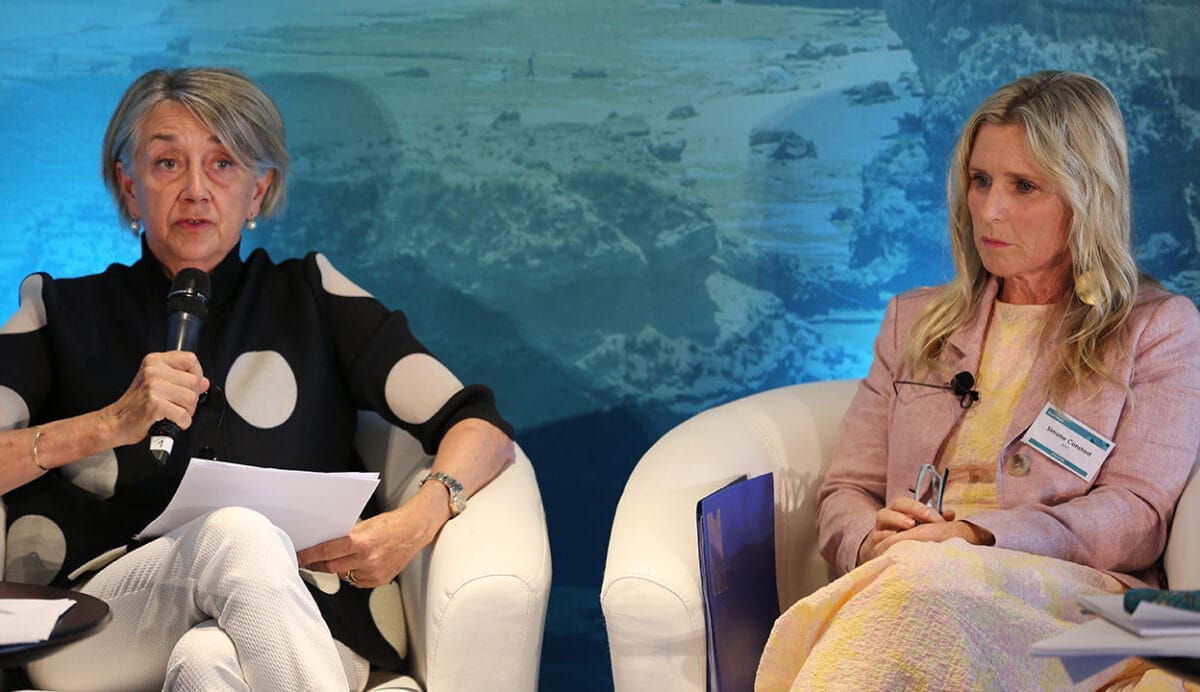
CareSuper chair Linda Scott said the fund’s investment decisions do not rest fundamentally on its view of any nation-state.
“Our investment decisions rest on the fundamentals of investing, diversification, looking at industries, you know, good old-fashioned investment principles, like earnings, these kinds of fundamental investment theses that you’d expect us to be looking at,” she said.
Scott said CareSuper welcomes investment opportunities that might be presented in any geography, and it is well-placed to capitalise.
“Superannuation is really one of those historic policy initiatives that is an incredible success and will, I think, continue to be in the future,” she said.
“What does that mean for governments? I welcome the fact that there are domestic and global opportunities for CareSuper members to invest in that they couldn’t otherwise access as individuals.”
Scott said there are varied views about “the question of [whether] this is an epoch of regime change”.
“I’ve certainly heard investors articulate that our role is to invest over the long term, and so this is a historical blip. For what it’s worth, CareSuper doesn’t take that view. CareSuper takes the view that this is a period of very significant change, and that actively investing, looking actively at the underpinning trends, is really useful to underpin our investment decisions.”
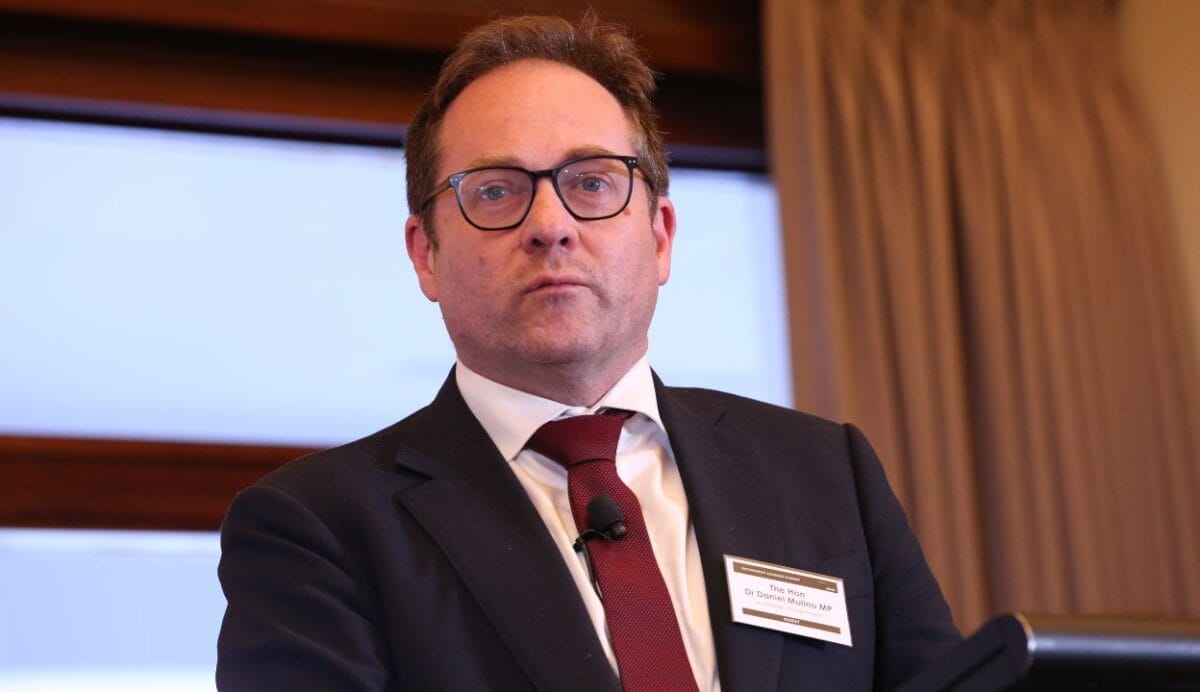
Risk assessment assumes even greater importance in a world that is markedly more volatile and poised for significant change, but Rest chair James Merlino said super funds must remember that they’re fiduciaries for their members, “we’re not foreign actors”.
“It’s not our job to express a political view or do something in a political manner. Our job is to do the risk assessment and look at the risk and the opportunity of investing in the United States or elsewhere,” Merlino said.
“You’ve got to put aside your personal view and look at the cold, hard facts of the situation. The reality is that geopolitics usually [causes] short-term volatility in the markets. We’re a patient investor, we’re investing over the long term and so one of the things that we do at Rest, and everyone else in this room would do, is scenario planning.
“The importance of that geopolitical, geographic risk assessment, [that] constant reviewing of scenarios, is critically important in terms of the decisions we make.”
Return to mercantilism challenging for investors
MLC Super chair Danielle Press said we’re seeing a repricing of risk, which raises the concern that “the investments are probably fine, but will the returns actually hold in 10 years’ time that have been promised today? My gut feel is that they won’t.”
Press said a return to mercantilism is challenging from an investor’s point of view.
“To quote the Greek philosophers, the great will do what they can, the weak will endure what they must. That’s a little scary, I think, as an investor, but I do think we need to be there, because the question is, where else do you put your capital?
“It’s about diversification [and] the other piece of diversification is around time horizon, so making sure, if liquidity does dry up, that you’ve actually got the ability to hold, that you’ve got the time-vintage diversification, as well as just all of the other pieces that we’ve talked about.”
Press said trustees need to encourage the funds they lead to take risks, but must price that risk accurately, and fully understand it.
“So, I think there are great opportunities,” she said.
“And I do think that, weirdly, the breaking of some of these global norms is actually going to create some great opportunities for us.
“But we do need to make sure we’re thinking about them in a way that is long-term sensible, and really thinking about what is the worst-case here. Because I think the worst case is actually probably worse than we think it might be.”
Whiteley said it is likely we are standing on the cusp of a secular change in “how global politics work and the way the world works”.
“If that is the case, then how super funds invest and other pension funds invest will change, and the skills we need will change.
“A lot of this will come around engagement with governments and, as the geopolitical landscape continues to shift, defence infrastructure investment could become all the more critical.
“The question of who owns what will become more important than ever. Investing in our region will become critical, and working with governments to do so in a manner which delivers the appropriate risk-adjusted returns back to members.”
Merlino said there’s clear evidence that funds already are learning how to flex their political muscles to protect members’ best financial interests. A case in point was overturning a contentious tax issue in the US President Donald Trump’s so-called Big Beautiful Bill.
“In the original drafting of that legislation [there was] up to a 50 per cent tax on investors, and the tax in the first four years could have erased $3.5 billion from superannuation funds’ members’ returns,” Merlino said.
“Funds worked with DFAT, worked with the government, the minister’s office; ASFA did as well. The government engaged with the G7 [and] engaged with the OECD. So it’s a good example of really using the strength of our capital pool. We’ll each have our own investment philosophies and priorities, investment themes and what we want to invest in, but I think that initial punch-through and portraying the capital pool from Australia [was] like Mark Carney’s talking about.
“He’s getting up on stage talking about the ‘middle powers’, and he’s using the Canadian pension fund as one of the national strengths of Canada. We can do what David [Whiteley] has challenged us to do, and we’ve already, behind the scenes, been doing a lot of this work.”
It’s also vital that funds can directly engage constructively with foreign governments and regulators.
“Having a pretty crack government relations public policy team in your fund is a must-have. It used to be a nice-to-have, [now] it’s actually critically important,” Merlino said.
“If there’s too much pressure from a national government in terms of [demanding] you should invest in [this asset] in this way… we rely on the expertise and the connections that those teams can make. Having that team within a fund is pretty important.”





Leave a Comment
You must be logged in to post a comment.