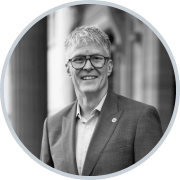
Graham Strong’s career has been shaped by a deep commitment to humanitarian work rooted in his early life experiences. Born in Uganda during the regime of Idi Amin, his family fled the country and settled in South Africa, where his parents — both missionaries — established schools and responded to emergencies including conflicts in Mozambique.
After completing his studies, Strong’s first role with World Vision was in Bethlehem, where he facilitated dialogue between Israeli and Palestinian students to foster understanding amid conflict.
Over the following 27 years, Strong held numerous roles within World Vision. Beginning in Indonesia following the fall of President Suharto, he provided humanitarian assistance in conflict zones outside Jakarta, an experience that led him to recognise the critical need to integrate emergency response with long-term development programming.
In 2003 Strong moved to post-war Afghanistan as operations director, establishing World Vision’s presence in a country with no prior operational footprint. He focused on building local capabilities — notably involving women in the workforce — and building World Vision’s reputation as a credible humanitarian organisation.
In 2006 he became country director for Pakistan, leading the response to an earthquake that resulted in the loss of 88,000 lives and chairing the Pakistan Humanitarian Forum to advocate for humanitarian space amid deep-seated conflict.
From 2010 to 2013 Strong served as national director for Armenia and the Russian Federation, shifting from high-trauma regions to a middle-income context and encouraging long-term planning and integrated funding strategies. He returned to Mozambique as national director in 2013, initiating a significant transformation focused on community needs, downsizing the national office and pushing capabilities to the field.
In 2018 Strong moved to Australia as chief field impact officer for World Vision Australia, managing a substantial budget and a team across 37 countries and establishing an Impact Management System to demonstrate organisational effectiveness. In 2020 he stepped into the role of acting chief executive during the COVID-19 pandemic, leading the organisation through the crisis while maintaining focus on the most vulnerable populations — a period that resulted in a notable increase in income and the successful implementation of numerous aid projects.
Strong holds a Bachelor of Arts (Hons) in history and international relations.



