
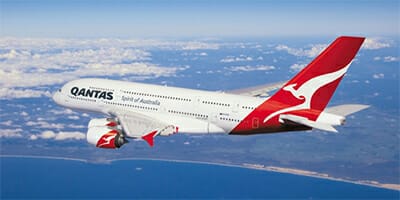

The $6-billion Qantas Superannuation Plan has hired Chris Grogan, the former acting-general manager of investments at WorkCover Authority of New South Wales, to reduce the costs of investing.
Grogan and Matt Wacher, who joined the fund in February from Russell Investments, are responsible for limiting foreign exchange and tax losses and improving the fund’s risk management and investment strategies, according to an e-mailed statement from Qantas.
“Implementation efficiency and risk management are at the heart of our fully outsourced investment model,” Andrew Spence, Qantas Super chief investment officer, says. “It is important for our organisation to have the right people with the right skills to monitor and manage increasing investment complexity.”
Qantas Super, the Mascot-based fund for employees of Australia’s national air carrier, saved $1.5 million through a foreign-exchange program introduced in July 2011, the statement says. The program, run by Russell Implementation Services, manages the currency transactions of Qantas Super’s global equity and alternative investments. It assesses bids from a secret panel of banks rather than dealing with one.
Grogan managed the $12-billion investment portfolio of WorkCover NSW, the statutory body for workers compensation, after former general manager of investments Jerome Lander left to join Russell Investments in June 2011. Wacher was regional director of indexes at Russell Investments.
Qantas’ five-person investment team consists of Spence, Grogan, Wacher, head of investment operations Peter Savage and analyst Rita Kwan.







Leave a Comment
You must be logged in to post a comment.