

The Retirements Benefits Fund (RBF) has invested $100 million in the GAM Absolute Return Bond Defensive Fund.
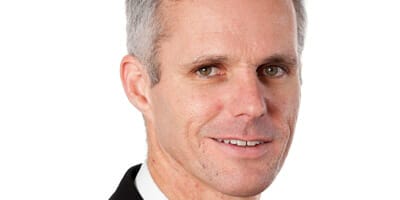
The $5 billion Tasmanian public sector fund told Investment Magazine they have been giving a lot of attention to the absolute returns space. Dr Ian Lundy, chief investment officer at RBF, said it’s not an easy space to invest in with more complex strategies and higher fees being just two of the many drawbacks, but there are strong opportunities.
“In the current environment of historically low forecast it’s a difficult environment in which to invest, as nothing looks cheap, particularly as fixed interest has an asymmetric risk/return trade-off. You will get small modest returns and a small chance of capital pickup with fixed income and there’s a chance you could lose a lot,” he said.
In a press release the fund said it was looking for strategies with higher alpha potential while giving downside protection against a major market correction and/or rising interest rates. They believe GAM’s bond fund meets these criteria enhancing the risk/return profile of their diversified portfolios.
RBF, winner of the Small Fund of the Year at the recent Conexus Financial Superannuation Awards, has placed the GAM investment in its absolute return investment pool, which is used to construct its diversified member options: RBF Growth, RBF Balanced, RBF Moderate, and lifecycle option, RBF MyPath®.
The Zurich-based GAM, which has US$127 billion in FUM, is an independent, pure-play asset manager offering active investment solutions and products. GAM’s unconstrained bond strategy is a “go-anywhere” bond fund which claims, via the use of derivatives, to protect the portfolio and still generate returns during downturns. The strategy is managed by the unconstrained global fixed income and currency investors, Tim Haywood, Daniel Sheard and Jack Flaherty.









Leave a Comment
You must be logged in to post a comment.