
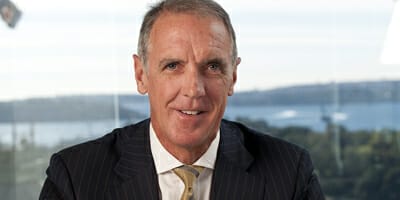

Stephen Knight, chief executive of TCorp, has announced his resignation and will look to step down from his role within the next three months.
The move comes two months after Knight completed the merger of the investment teams and operations for the State Super, Safety, Return to Work and Support and TCorp funds to create an organisation managing $70 billion in assets.
He has been chief executive of TCorp for exactly 10 years.
“It’s time to pass the baton on,” he said. “I have long had a target that after 10 years it should be the right time for an organisation to change CEOs.”
He described the role a new chief executive would face.
“There is now a significant job of taking the fund to a new level, so it is right that someone else runs that. It is a good time for someone to approach that with a fresh perspective.”
A big part of the role will be to raise debt for the NSW government’s ambitious spending plans on infrastructure and to lease ‘poles and wires’ – the electricity distribution for New South Wales.
Knight would not comment on whether there was an internal candidate for the role, stating that this would be up to the board.
In a message to colleagues announcing his resignation, Knight wrote that he had spent 35 years in the finance industry, including 19 years at TCorp.
“I feel truly privileged to have been given the opportunity to lead TCorp over the past decade, and I’m very proud of what the team at TCorp has achieved,” he wrote. “I have enjoyed tremendous support from TCorp’s stakeholders in government, TCorp’s Board, our fantastic staff, our clients, and our partners in the financial markets.”















Leave a Comment
You must be logged in to post a comment.