


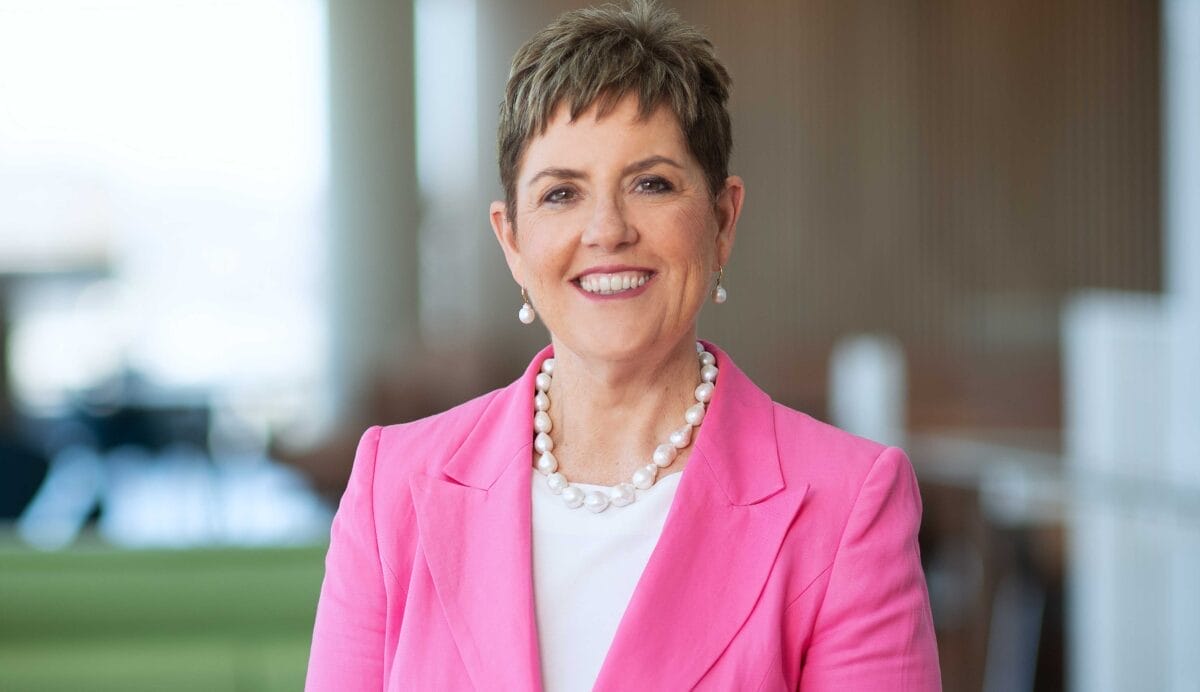
HESTA CEO Debby Blakey says the fund’s transition to new administrator Grow Inc. was vital to the fund “maintaining its competitive edge” while acknowledging that the seven-week limited service period (LSP) the transition required was difficult for members.
“It’s been a very large undertaking, but it was part of a proactive strategy to build a foundation for our members into the future – a foundation for sustained innovation and a foundation so that we can deliver for members and our long-term growth,” Blakey told Investment Magazine in her first public comments since the transition.
The LSP, where members were effectively locked out of their accounts from April to June while their data was transitioned from MUFG to Grow, was the subject of significant public and media scrutiny, including by this publication. But while Blakey acknowledged the LSP was “difficult”, she said that the fund “navigated [it] as best we could”.
“We explored all options. We would rather have had a much shorter LSP. But over the six months prior to the transition, as our options became clearer, the risks associated with them also became clearer. We were of the view that this was the best approach, which unfortunately did mean a longer time with limited services.”
“It didn’t take us seven weeks to transition the data. That happened fairly quickly, but we then had to test it, do all these reconciliations, make sure that everything was functioning as expected, start processing certain transactions in certain order to really test the system, only then could we exit that LSP.
“There were lots of options on the table, and some of them gave us a shorter LSP, but from a risk approach we felt this was the best option.”
And Blakey is also quick to point out that, through the LSP, the fund made more than 155,000 payments totalling $1.5 billion to members, received and processed over $1 billion of employer contributions and actioned all member switches.
“[But] having some members who experienced difficulty through this transition was very difficult. It’s not good. It doesn’t sit well, knowing that there was a group that was disappointed… and we apologise to members who have had any kind of difficulty.”
Blakey said that HESTA tried to warn its members in the lead-up to the LSP without “bombarding them” with information, sending nearly a million emails and 90,000 letters to its members as well as posting banners on its website, portal and app. But many members reported that they were unaware that the LSP was coming until they were suddenly unable to access their account.
“Members don’t engage with their super fund every week, but when they do need something from their super fund, they need it at that point,” Blakey said.
“I think it was difficult to communicate ahead of time and give them the confidence, but we also acknowledge that some members probably hadn’t opened the letters, probably hadn’t been online, probably hadn’t noticed the banner. So we’re continuing to evolve that and give thought to how we communicate with members as we come through this period and as we innovate into the future with the [new] services.”
Blakey says that the transition to Grow and administration uplift is a long-term program and that she won’t define its success in its first three months, especially when it was in train for nearly six years. She compares it to the decision to begin internalising investments when the fund still sat in the $30 to $40 billion range in order to prepare it for a $100 billion future.
“This is a similar approach, looking ahead and saying that, as a fund with in excess of a million members – and we’ve added 10,000 members just through this transition period, April to June – we need to look ahead and make bold decisions so that we can support members into the future.”
The transition to Grow comes with MUFG, HESTA’s previous administrator, under pressure to turn its performance around following high-profile failings at funds like AustralianSuper and Cbus, and ASIC finding that the appropriate corrective action for death benefit claim delays at AustralianSuper would have included terminating its agreement with the administrator.
Administration is heating up, with funds like Australian Ethical, NGS Super and Vanguard also moving to Grow, and SS&C gaining significant ground via a tie-up with wealth giant Insignia Financial, as funds look to enhance their services ahead of a massive surge of members retiring.
“I don’t think admin should be as hard as it sometimes seems, and that’s what sits behind our decision to transition to Grow,” Blakey said. “Having advanced technology to support good admin should be fairly straightforward.
“In the Australian landscape it has been complex; I do think our superannuation system design is fairly complex – the rules, the compliance obligations, the insurance and where it’s switched on or off; sometimes I think people think it’s as simple as a bank account and should be as simple to manage. It certainly isn’t.
“There is a lot of real complexity in our system, and hopefully this is an opportunity to simplify that.”








Leave a Comment
You must be logged in to post a comment.