


Leadership takes many forms. Sometimes it’s high profile and voluble; other times it’s quieter, but no less effective for being conducted out of the public eye. In whichever form it’s exercised, leadership is not easy. After all, leadership means having the courage to make difficult decisions, especially when they are unpopular.
That willingness to make tough decisions in difficult circumstances characterises the separate and distinctive careers of both former Western Australia Premier Mark McGowan AC and the neurosurgeon Dr Charlie Teo.
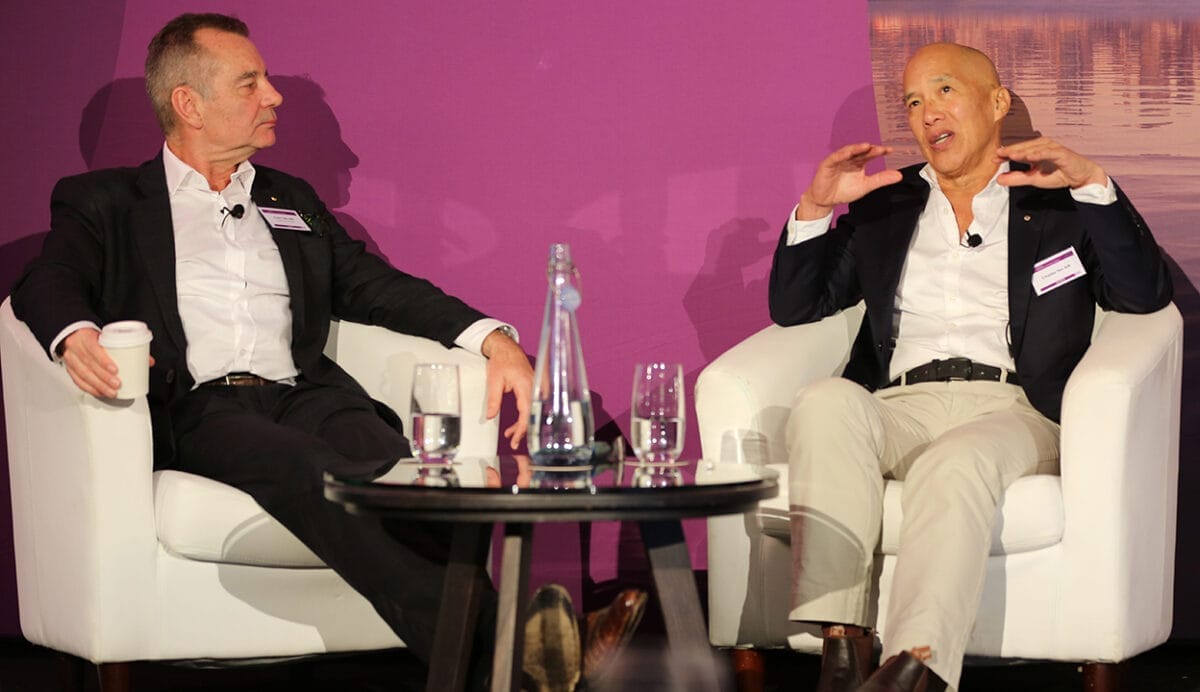
Both will be featured in conversation with Conexus Financial founder and managing director Colin Tate AM at the Investment Magazine Insurance in Super Summit (IISS) on 22 July about what they perceive leadership to be, and how it translates into action where the outcome can be high-risk and highly uncertain.
McGowan and Teo will provide insights relevant to leadership in the superannuation industry, where decisions can have long-term and far-reaching consequences for members, and which also have the power to be life-changing, especially when it comes to delivering insurance benefits in the event of an accident, illness or death.
McGowan’s career started in the Royal Australian Navy, where he served as a naval officer and became a lieutenant. He entered politics in 1994 and his leadership of the state during the COVID-19 pandemic was characterised by decisive action, clear communication and a commitment to public safety in the face of significant public criticism when he effectively shut the state off from the outside world.
McGowan’s decision to implement some of the strictest border controls in the world during the pandemic drew both applause and condemnation. He prioritised public health over economic reopening, and his government’s strategy saw Western Australia record among the lowest COVID-19 mortality rates globally in the first two years of the crisis.
“We had virtually no lockdowns,” he told the Investment Magazine Fiduciary Investors Symposium in Victoria last year.
“My kids missed six days of school. We had a booming economy. All of our export industries stayed open. We poured money into the Commonwealth to help fund the whole Covid response. We did all that, but we had to keep the virus out, which meant [closing] borders; and we had to get everyone vaccinated, which meant mandates.”
Eventually the grind of everyday politics got to him, revealing another trait of effective leaders: knowing when to quit.
“Every day, you have to get up and face the conflicted issue of the day, and all the criticism and all the rest that goes with it,” McGowan said. .
“And you just thought, ‘Oh, god, I don’t want to do this’. Whereas earlier in my career, I’d loved it. That’s all I wanted to do. I liked notoriety and prominence. By the end… I didn’t want to have to deal with it anymore. So, you know, when you get to that point, you know that it’s time to do something else.”
Teo’s career likewise features a willingness to make difficult decisions under extreme pressure, and to face the consequences. His decisions to perform high-risk surgeries, often against the prevailing medical consensus and sometimes to the concern of his peers and colleagues, arose from an unshakeable belief in giving patients a chance at life, however slim it might be.
And it isn’t always successful. As a result Teo has been subjected to a number of restrictions on his ability to practice in Australia as a neurosurgeon, following complaints from the families of patients who did not survive surgery, or who claimed they were not fully informed of the risks involved.
“The outcome was with me and no one else can take the blame,” Teo has said, and has also said that the “only crime is that I’ve given patients autonomy and I’ve taken on cases that everyone else says I shouldn’t take on”.
Elsewhere, he has said that “the bottom line is the doctor has to care for his patient. You have to have that overwhelming sense of welfare for your patient”.
Teo has been a polarising figure publicly and within his profession. His willingness to perform surgeries that his colleagues will not has made him a hero to some, but an easy target for others, and highlights the pitfalls of leading by conviction rather than by the less controversial route of consensus.
Lessons for super
With nearly $4 trillion under management and a significant and growing influence on markets and the economy, superannuation rightfully attracts intense public and regulatory scrutiny. The social licence of superannuation will only remain intact if it serves its members honestly, fairly and efficiently in all aspects of what it does, from investment returns to retirement solutions and the delivery of insurance.
The industry needs bold and courageous leadership that does not flinch from this scrutiny and is willing to make the decisions that are best for members, and not only because the trustees of funds have a legal obligation to do so – there’s a moral and ethical dimension to leadership that transcends black-letter law.
Like McGowan and Teo, the current and future generations of super industry leaders must be willing to resist short-termism, and to eschew a mentality that sometimes prioritises career risk ahead of the best interests of members.
The Insurance in Super Summit will hear that leadership, as embodied by McGowan and Teo, means being willing to stand out, stand firm and stand up. The superannuation industry, facing increasing complexity, regulatory and public scrutiny, the challenges of an ageing population and shifting member expectations, needs leaders who embody the very same traits.





Leave a Comment
You must be logged in to post a comment.