


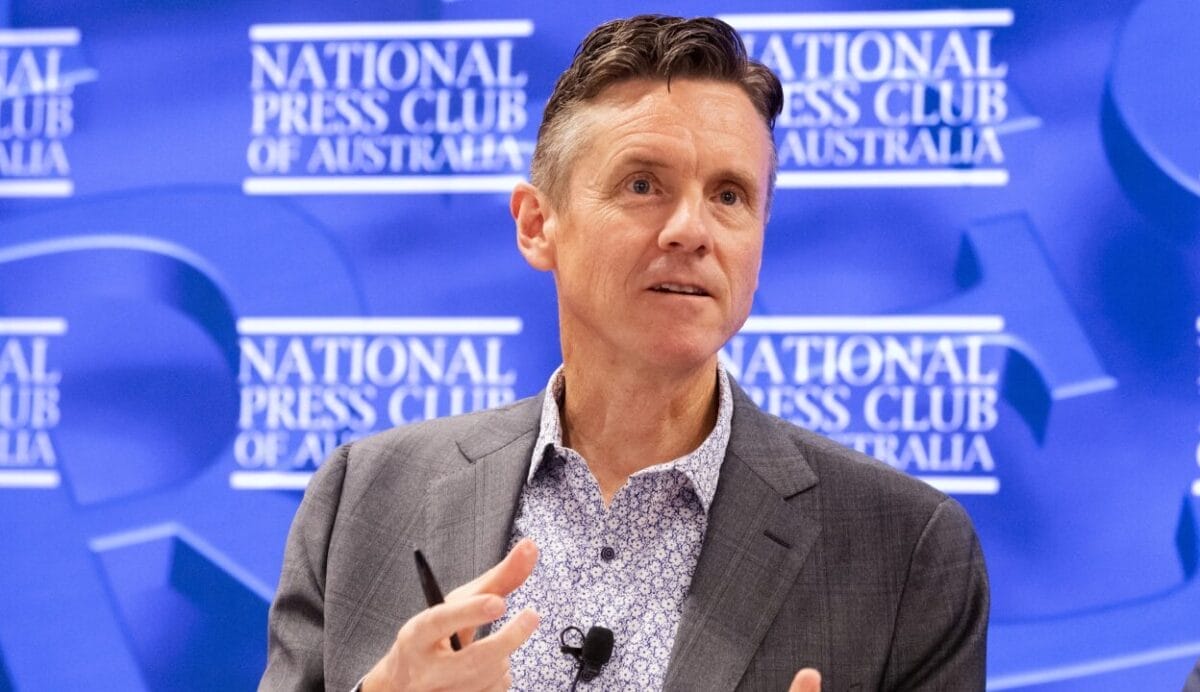
For Mark Delaney, CIO of the $413 billion AustralianSuper, the consolidation that produced AustralianSuper and its megafund peers was a foregone conclusion from nearly the moment he joined the superannuation industry.
“What I couldn’t get over was how many funds there were,” Delaney told the CFA Society Australia Investment Conference in Sydney last Thursday.
“There were literally thousands and thousands, and they all looked the same and they did the same thing. They all went to all the same service providers, and the only thing they did was get the service provider to print a different coloured banner on top of their documents.”
Delaney went on to say that the gradual disappearance of those thousands of funds was a natural consequence of Australia’s unique market, which tends to encourage consolidation and monopolisation in everything from banking to logistics due to its smaller customer base spread over a larger geography (though the competitive dynamics that emerged as a result of regulation no doubt played a role too).
“I think concentration is what competition generates in Australia. The more competition we’ve had in super, the more concentrated the industry has become. And that tells you that’s probably the most efficient solution.”
But while the current profit-to-member superannuation landscape of a handful of very large players reflects the aftermath of one bout of intense competition, another is about to begin.
As a March report by the Conexus Institute found, retail platforms are beginning to outpace profit-to-member funds, with HUB24 overtaking AustralianSuper as the leading fund in terms of competitive inflows – $6.2 billion to $5.1 billion – in FY24. AustralianSuper’s position is still strong, but that position has deteriorated significantly over the last two years, the report said, with the fund taking in $15.4 billion in FY22, declining to $9 billion in FY23.
The report noted that the profit-to-member funds have been spending big on marketing to defend their positions – an ironic echo of Delaney’s complaint that funds merely paid for a different coloured banner rather than investing into differentiated services. That may actually have kept switching activity down, but could be resulting in poor system-level outcomes – i.e. through failure to invest in retirement, high-quality member services and adviser relationships, which have enhanced the competitive proposition of the retail platforms.
The Conexus Institute report pre-dates revelations about the Shield and First Guardian master funds, which might result, for platform providers, in the kind of enhanced regulatory scrutiny that could temporarily crimp the significant growth they’ve seen over the last few years. But advised flows still have to go somewhere, and if the profit-to-member funds want to win, they’ll have to enhance their proposition (or, to paraphrase Delaney, stop looking the same and doing the same thing).









Leave a Comment
You must be logged in to post a comment.