
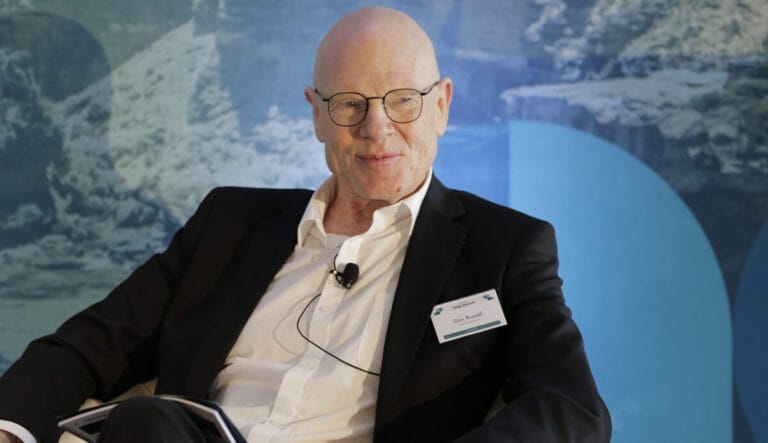

The Retirement Income Covenant (RIC) has been in place for more than three years, but last week the chair of the country’s largest fund was reported as saying there is still only “a growing recognition” that funds need to do more to support members in retirement.
This is not to single out AustralianSuper or its chair, Don Russell, who made the comments. It attracts attention because of its scale. Russell is to be commended for belling this cat, and AustralianSuper is not alone in the pace of its response.
The transition required of super funds from accumulation machines to engines of retirement income was predictable. After 30 years spent accumulating savings, it was obvious what members would need from their funds next.
Even so, the government had to create the RIC to drag some elements of the industry kicking and screaming into doing the thing that ultimately matters most to members.
Anyone who’s observed an industry undergoing fundamental change will recognise how this has all played out. How an entire industry adapts to a new paradigm is a lot like how Ernest Hemingway described how one goes bankrupt: slowly at first, then suddenly.
At the start, the government can see what’s coming (usually tipped off by angry voters) and it starts to tell an industry that it needs to change. The industry objects loudly at first – it’s too complicated, or whatever – and says it will do better; but still, nothing changes.
This goes on for a bit and then the government runs out of patience and introduces legislation. After a period of denial it dawns on the industry that this is real, but change is still slow. Eventually – and this bit can take years – it actually starts to happen. Then it gathers proper momentum. Eventually, everyone realises this is not so bad after all and wonders why it took so long.
Professional Planner, a sister publication to Retirement Magazine, covered the financial advice industry’s slow and painful transition from a sales-driven activity fuelled by commissions and propped up by conflicts of interest into something that today more closely resembles a profession.
It followed almost exactly the same path to the one described above and it’s arguably not at the end of its journey yet, even though its first legislative reckoning came in the early 2010s.
Homogeneity versus heterogeneity
In some ways, accumulation is the relatively easy part. The most important thing any fund can do in accumulation is just not stuff it up. That’s quite a responsibility on its own, and that’s magnified when it comes to helping members make the most of their retirement. It’s often said that accumulation is homogenous but decumulation is heterogenous – every member’s path through retirement will be different.
And that’s a responsibility that weighs on the individuals who lead the funds.
Preliminary research findings by The Conexus Institute, presented at Chair Forum suggests that skillsets in areas related to retirement, notably financial advice, technology, member engagement and actuarial are underrepresented on super fund boards.
Rest Super chair James Merlino told Retirement Magazine’s sister publication Investment Magazine in an interview last month that the most important characteristic trustees must have is “clarity of purpose” and that includes a focus on retirement outcomes and having the right skills at the board table to manage it.
“The big thing, more most broadly, is we’re switching to retirement phase and decumulation – a longer burn for Rest, given our members and our demographics – but that’s a big change that’s happening in that industry,” he says.
“That’s the role of the whole of the board, and for and for the chair to manage. Do we have the right skills mix across the table?
“We’ve got a pretty rigorous approach that it is at least annual, do you know what’s your capability and skills? Are there any gaps, and what are you going to do about it?
“You’re constantly doing that… and particularly as you get to that retirement phase and decumulation, what are the skills that you need to really deliver that to the best of your ability?”
Former APRA deputy chair Helen Rowell told Investment Magazine that she has a little more understanding of why things happen slowly inside big funds since she joined the board of Australian Retirement Trust and was appointed chair.
“You can be making small changes that aren’t necessarily visible externally, just in the way you’re changing the advice and the guidance you’re providing to your members through digital and face-to-face and other channels and all of those things,” she said.
“It’s not necessarily a big-bang thing, but it’s actually really, really important for the members.”
Chair of Aware Super, Christine McLoughlin, told Investment Magazine that “providing the best retirement solutions for our members requires a particular focus on issues like longevity risk, sequencing risk, product design and advice delivery”.
“And we need to be focused on the retiring population as well as the younger population who are at the start of their superannuation journey. This goes to strategy and does not in itself require different skills from a chair – just curiosityand agility. We will always need to adapt.”
Up to the point of retirement a member has been something of a nameless face in the frozen ranks of members, receiving more or less the same thing as every other member, or maybe varying it a little if they make an active investment choice, or contribute a little bit more.
The hard bit, and the bit that arguably matters most, is helping members convert their accumulated savings into the most income they can while making it last as long as possible. That’s a real challenge. Some funds seem to only now be waking up to the fact that they need to do more. That would be unacceptable in any case, but more than three years ago the government actually told all funds what they need to do.
Every year that passes that a fund does not have the optimal retirement solution for its members is another year that adds to members that funds could have helped more. It’s good that there’s a growing realisation that more needs to be done, but right now in many cases it’s a joke without a punchline, just a punch in the guts to those members still waiting for their funds to wake up and get their act together.








Leave a Comment
You must be logged in to post a comment.