


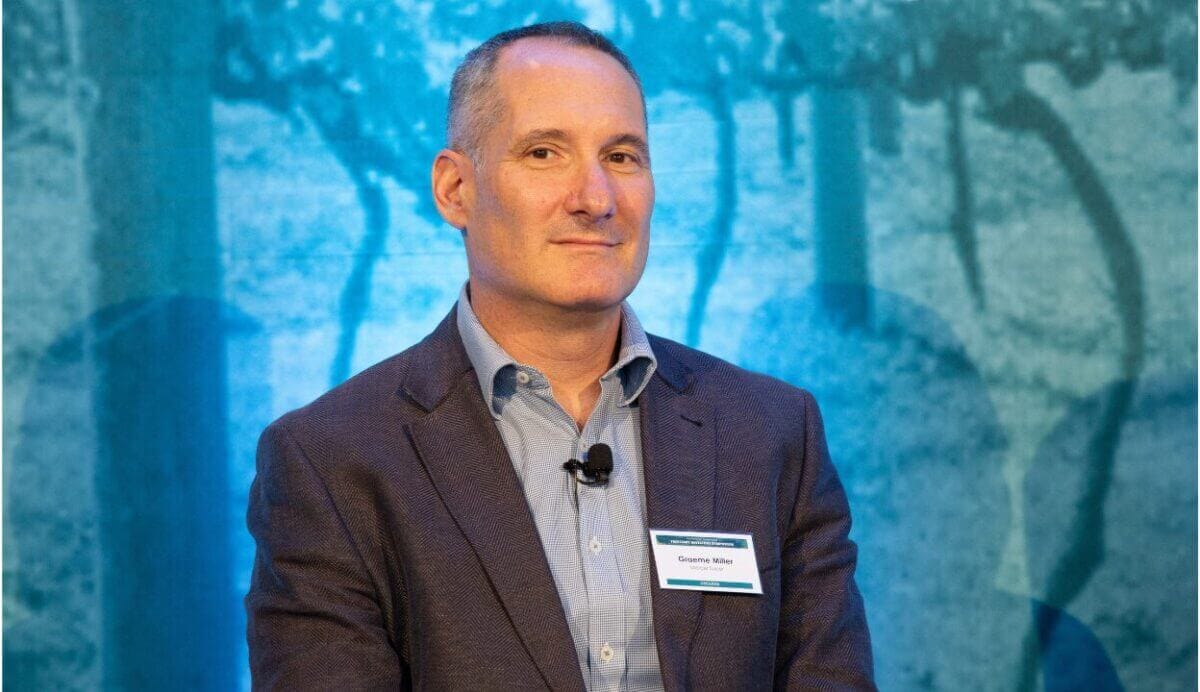
While other asset owners grow increasingly cautious on the United States – even as regulation, peer comparison and FOMO keep them from moving away from it – Mercer Super chief investment officer Graeme Miller thinks that those worried about concentration risk are missing a bigger picture.
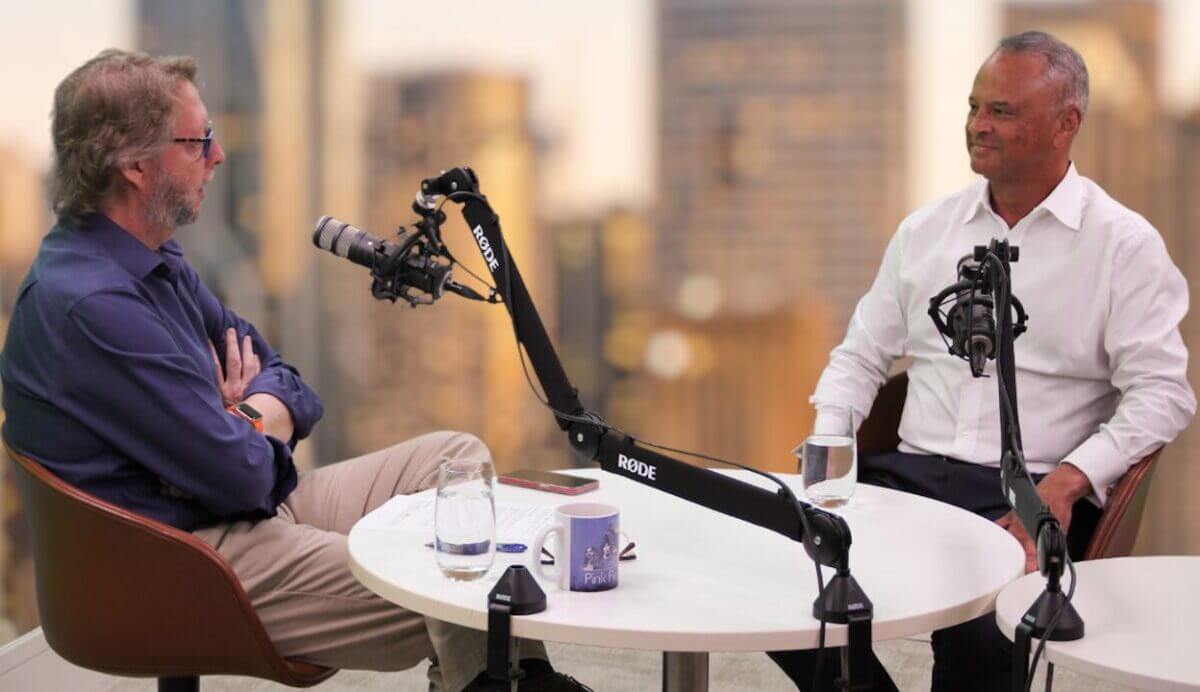
“Apple, Google, Amazon – the list goes on – none of these are really US companies if we look at them through the lens of where they source their revenues and the extent to which they are reliant on the health of the US versus that of the global economy,” Miller told the Investment Magazine CIO Series podcast. “Some of this rhetoric when people talk about concentration to the United States misses that fundamental point.
“Apple happens to be listed in the United States… but that doesn’t necessarily mean that by owning Apple all I’m getting is exposure to the United States. Nothing, in fact, could be further from the truth.”
Still, a more diversified portfolio is a better one, and Miller is more likely to allocate outside the US where possible – even if he thinks it’s a great investment destination, and home to incredibly innovative companies.
“It’s indisputable that the US has got the deepest, most efficient capital markets in the world. If you look over the last several decades, the United States has been the incubator for by far the world’s most successful companies.”
Even so, the recent strength of China’s market, and new measures to open it up to further outside investment, has a number of Australian asset owners rethinking their relatively low exposures to the world’s second largest economy. But while Miller thinks that China will continue to grow much more strongly than many other countries around the world, he isn’t convinced that the benefits of that growth will necessarily accrue to the offshore equity owners of its companies.
“That isn’t a reason not to invest in China at all, but I think it does impose a natural constraint on the extent to which investors such as ourselves are likely to invest in China,” Miller said.
“The legal system, the culture, act as inhibitors to earning the sort of outsized returns that we’ve earned over many decades in Western economies, the US in particular… It’s not a market-based economy, and they would be the first to put that forward as a badge of honour.
“It’s just a difference – it’s a much more managed economy, and in a more managed economy we don’t see the same fruits of entrepreneurship flow to the entrepreneurs and to the providers of their capital.”
But there is another shift underway in Australia’s asset owner landscape: the shift towards the total portfolio approach (TPA). But Miller is unsure about whether TPA is truly a “novel concept”.
“For me, the fundamental principle, when you’re building retirement savings portfolios for members, is the aggregate outcome that you deliver – that the aggregate risks of the portfolio matter a lot more than the individual risks, that it’s important to understand how different parts of the portfolio interact with one another, that it’s important that different parts of the portfolio compete with one another for capital.
“All of those are what I understand TPA to be, and all of those are things that, to a large extent, I’ve done throughout my career.”
Still, Miller said that the formalisation of the concept and the movement of many asset owners towards it is important to overcome some of the flaws that have emerged in their organisational structures as they’ve grown in terms of both assets under management and headcount.
“What it probably tells you is something about the ways in which a large number of institutional investors have evolved, and the culture within those organisations, and perhaps also the kinds of reward and incentive structures that have been established,” Miller said.
“If you’ve got an equity portfolio manager, and that portfolio manager is incentivised and rewarded only on the basis of the amount of alpha that individual can add relative to a benchmark without any context in terms of how that alpha contributes to the real mission of the fund – and you have a bunch of people doing the same thing in different asset classes – you can see how silos evolve.”
“Perhaps TPA is a response to that, but it’s never been the way I’ve seen the world; I’ve always seen the world through the lens of, what matters at the end of the day to our members is the actual aggregate returns that we deliver to them.”








Leave a Comment
You must be logged in to post a comment.