


APRA deputy chair Margaret Cole has warned that super funds need to prepare for a radically different threat environment and that controversial changes to director tenure limits are aimed at future-proofing a “precious system” against mounting cyber and AI risks.
“There’s a lot of pressure in the system, and I think it shows that yesterday’s problems won’t be the same as tomorrow’s problems,” said Cole, who is set to conclude her tenure on 1 July, told Investment Magazine in an exclusive exit interview.
Cole, who has appointed a Member of the Order of Australia earlier this year despite having relocated from the UK just six years ago, said APRA’s proposed changes to board director tenure were partly aimed at ensuring funds could meet the escalating risks facing the super system.
“What you’re trying to do is uplift the capacity of trustees and trustee boards to operate at a different level in the future – hence one of the areas that we have put a lot of emphasis on in the last period is the whole issue of governance and our governance standards and the right mix of people on boards.”
Cole expressed surprise that APRA’s proposals, which would impose a hard 12-year limit for non-executive directors at the entities it regulates, had been “controversial” and received “quite a lot of pushback”.
“I struggle to understand why that has been the case. We know that super funds, when they are overseeing their investments and their portfolio companies, require boards to work to a certain standard, and tenure limits are typically one of the things they like to see, because it’s good to be able to refresh,” Cole said.
“We’ve done a huge amount of consultation… I believe these are very sensible reforms, they’re well-grounded in what is appropriate modern practice, and we now have further consultation on the actual granular detail. But APRA is quite firm in thinking these reforms are appropriate for this next stage.”
Geopolitical volatility, and the emergence of so-called frontier AI – the most advanced, cutting-edge models available, which, while powerful tools, can pose significant threats to cybersecurity – has only heightened the need for organisations like super funds to tighten their governance and processes.
“We worry about capacity and capability in the organisations that we regulate, and we worry about the pressure it puts into the system, the bandwidth of leaders to be tackling an emerging set of risks and not just one at a time,” Cole said.
“We have been stressing the need to do scenario planning, where you don’t just test a traditional risk anymore but you look at multiple risks piling up on each other. We all know you’re probably not going to ever face into that scenario you’ve designed, but the process of planning for it is going to be hugely important, and those are things that we are encouraging our entities to do.”
Cole, calling superannuation a “precious system”, said that retirement and the shift from accumulation decumulation is now “the true test of it”.
“We know that progress on developing that good retirement system has been slower than anyone would have liked, and the retirement income covenant work APRA and ASIC have done has pushed that forward, but that is going to be the true test for the future – how it works, how operable and user-friendly it is for members, how that money, that precious asset is protected at a time where there are a number of threats.”
‘Strong values’ needed for successor
She declined to comment on the delay to appoint her successor, who has so far not been announced by APRA or the Albanese government.
But in written correspondence to the authority overseeing Order of Australia appointments, seen by Investment Magazine, Cole offered some attributes that her successor should possess.
“A senior regulator must have strong values of personal integrity and courage, to act without fear or favour in matters of great complexity and critical purpose,” she wrote. “Such values were instilled in me by my parents who brought me up in a working class home in the north west of England, committed to ensuring that I had an education and opportunity without knowing where this journey will take me.”
Investment Magazine previously reported allegations that Treasurer Jim Chalmers was lobbied by representatives of industry super funds, including AustralianSuper chief executive Paul Schroder, on their preferred candidate to replace Cole – charges AustralianSuper and the Super Members Council deny.
Spokespeople for the treasurer did not respond to requests for comment.
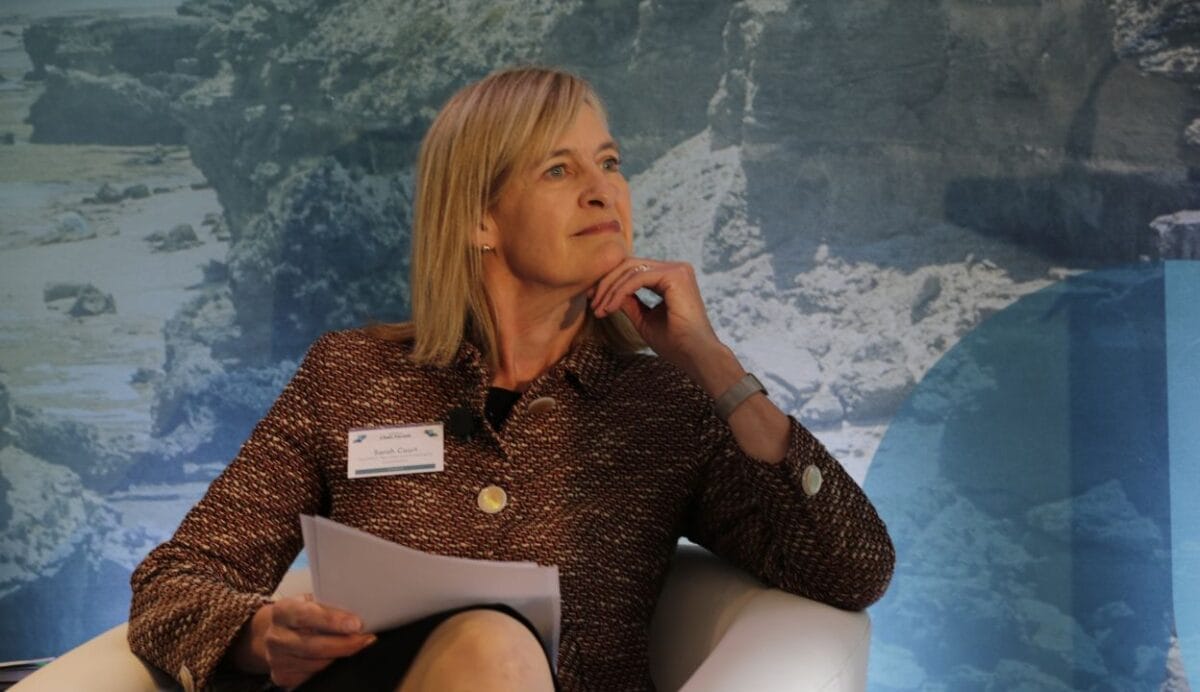
The interview followed a roundtable hosted by Investment Magazine publisher Conexus Financial in partnership with The Conexus Institute* and attended by industry leaders, at which Cole made an official farewell statement reflecting on her tenure.
“I leave things I started not finished. I aimed to be bold and resolute in pursuing APRA’s mission in super. I have, I hope, done justice to my task – but others will judge.”
Cole highlighted both the introduction of the best financial interests duty and the application of the Your Future Your Super performance test as important reforms that took place under her watch, saying of the former that she is sure that “trustees now give much greater consideration to the benefits to members before spending [their] money”, and of the latter that, while it had its detractors, it has enabled greater transparency.
“The test is a world and market leader. Others, for example the UK, are keen to watch and learn from us,” Cole said. “Other countries would like to introduce a test, acknowledging that it’s a difficult and complex thing, and marvel at Australia’s foresight in doing so.”
“What shape the test takes in the future is a matter for government. The treasury’s consultation on potential changes to the test completed last week. We understand many different perspectives have been put forward. We must now wait and see what the government decides to do. It has committed to keeping some form of the test and to focussing on unintended consequences and improvements.”
*The Conexus Institute is a not-for-profit think-tank philanthropically funded by Conexus Financial, publisher of Investment Magazine.








Leave a Comment
You must be logged in to post a comment.