


While Minister for Financial Services Daniel Mulino was considering whether to revive the new class of adviser proposal contained in the long-delayed – and some believed dead – Delivering Better Financial Outcomes reforms, the world shifted, and his thinking shifted with it to a clear focus on consumer protection.
The collapse of the Shield and First Guardian managed investment schemes, and its impact on $1 billion of retirement savings of around 12,000 people, prompted Mulino to significantly rein in the scope of the new class of adviser (NCA) proposal.
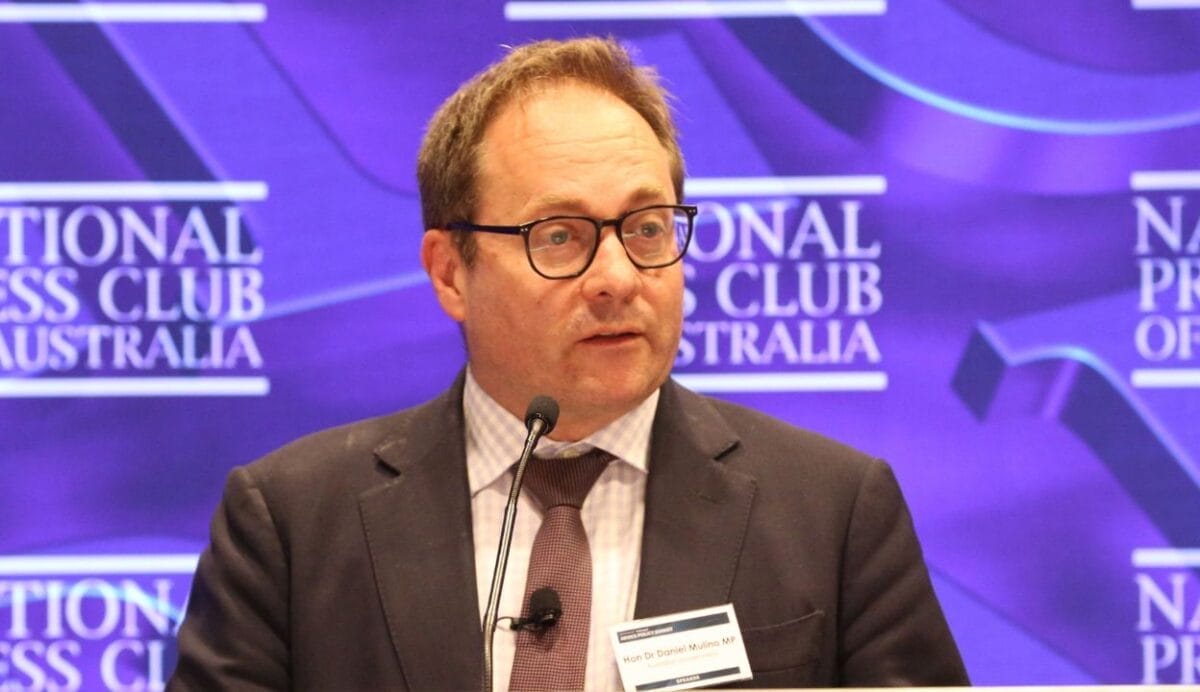
Last week in an address to the National Press Club, he revealed that, with consumer protections in mind, only super funds and insurers under the purview of the Australian Prudential Regulation Authority would be permitted to employ the new class of adviser.
Mulino’s predecessor in the financial services portfolio, Stephen Jones, spent much of his time pondering whether to confine the new class of adviser to superannuation trustees but ultimately landed publicly on a broader model that also took in life insurers, banks and advice licensees. A key part of the rationale then was to treat the NCA designation as a first step to increasing the number of fully qualified, professional advisers to address a critical advice supply shortage.
At the 2026 Conexus Retirement Leaders Summit, following his NPC address, Mulino agreed that the revised scope represented a change of government policy.
“It is different,” he said. “I remain convinced by the underlying public policy rationale, but I think it’s fair to say that… the First Guardian/Shield world was a different one, where suddenly I was crafting a whole bunch of provisions that were focused on more consumer protection.”
Limiting the first tranche of the new class of adviser to prudentially regulated entities provides the public policy benefit but at much lower consumer risk, he said.
“I think a sensible way of doing that, in light of the fact that there are a number of risks in the broader financial services ecosystem, is to at first do that with APRA-regulated super and life, and with appropriate guardrails there.
Mulino insisted that there is no political calculation in the government’s decision to exclude banks and advice licensees from the scope of the NCA proposals.
“This one was really more the policy frame, and it is more the prudential frame,” he said.
He said the policy rationale had always been skewed towards super and insurers rather than banks talking to their customers about financial products.
The government has suggested a three-year review of the NCA which would allow it to assess “what are the kinds of practices we see, what are the risks we see, do we see any misbehaviour”, and to judge whether the scope should be widened later.
“There is a question around whether advice licensees should be able to offer that,” he said. “After the review period, I think we’ll have a better sense.”
Three elements settled
The new class of adviser is one of three DBFO elements Mulino said the government has now settled. The others are intrafund advice, including the treatment of member nudges; and a targeted change that strips the catch-all provision out of the Best Interests Duty safe harbour. So, while licensees and advice firms may not be allowed to employ NCAs, it will be made easier for them to provide simpler, episodic advice.
“There had been thoughts of removing the safe harbour and moving to a more outcomes-oriented approach,” Mulino said.
“This, to me, particularly in light of some of the developments that we’ve seen over recent years, is a way of achieving some of the flexibility that I think will be beneficial but doing it in a way where we’re retaining those benefits of the safe harbour.”
Mulino said the government has yet to work out “what specific things an NCA will be able to answer… what kinds of topics? Is it products? and so forth”, and that there is “a lot of devil in the detail there”.
Whether NCAs can name financial products is probably the thorniest of those details and “remains a bit of an issue”. Mulino said it would not take long to settle but the government’s priority had been the big-picture decision on whether to proceed with DBFO at all and, if it did, who it should apply to.
He said advice given by an NCA would not be “fully compliant with all of the aspects of what we might imagine we’d want to see in a best interest duty when applied to full comprehensive advice”.
Mulino said he had wondered whether “guidance” was a better term than “new class of advice”, a nomenclature problem he said he shared with his predecessor.
“It is in a sense a new type of advice, which will have clearly stronger guardrails. There’ll be quite clear parameters around what somebody in that role will be able to talk about.
“For me, it was sensible to start with APRA-regulated organisations in offering this, in that my sense was that was where we could get the best balance between giving an opportunity for people to get some guidance, but in a in a safe environment from an organisation who would basically, I think, be able to then rectify that person’s situation if something was to go wrong with one of the people in that new class of adviser situation.”
‘Improving that person’s situation’
In the vast majority of cases a member’s conversation with an NCA would be “definitely improving that person’s situation if they, because they couldn’t get that answer, had [otherwise] gone off to some website or typed it into AI, or who knows what, or made themselves more vulnerable to some of the bad actors”.
Mulino said the obligation on trustees operating platforms to show they can stand behind the products they offer “will require a bit of careful stepping through.
The government will give APRA the power to set capital requirements for trustees that offer higher-risk options, so those trustees have the financial capacity to meet their compensation obligations.
Mulino said the measure was motivated by what happened after Shield and First Guardian, when Macquarie and Netwealth stepped up at different times and members got their capital back “pretty quickly”.
“It meant that parties with a direct involvement were the ones who were stumping up, and it wasn’t then having to go to the CSLR and be spread across the whole sector,” he said.
A trustee that breaches its duties, or is shown not to have lived up to its obligations, has to be able to compensate members and give them their capital back, Mulino said. That can be demonstrated in one of two ways: direct access to capital, or a related-party guarantee.
Mulino said the requirements will be risk-rated and not overly burdensome, and will dovetail with managed investment scheme reforms, under which more data will be collected to identify high-risk schemes. Treasury will continue to work with APRA to strengthen clarity around what the obligations are.
“We want to be pragmatic there. It has to be a real commitment,” he said.
The summit was left in no doubt that a clear legislative timetable cannot yet be provided. Mulino said he had consciously linked DBFO into the broader suite of consumer reforms because of the interconnections, “but then that begs the question: do we kind of end up with two tranches of legislation?”.
“It’s just not possible to answer that at this point.
“I just have to be upfront that it’s a portfolio with a lot going on, and it’s a government with a busy legislative agenda.”






Leave a Comment
You must be logged in to post a comment.