Guillaume Dupin: Derivative strategies and non-linear payoffs
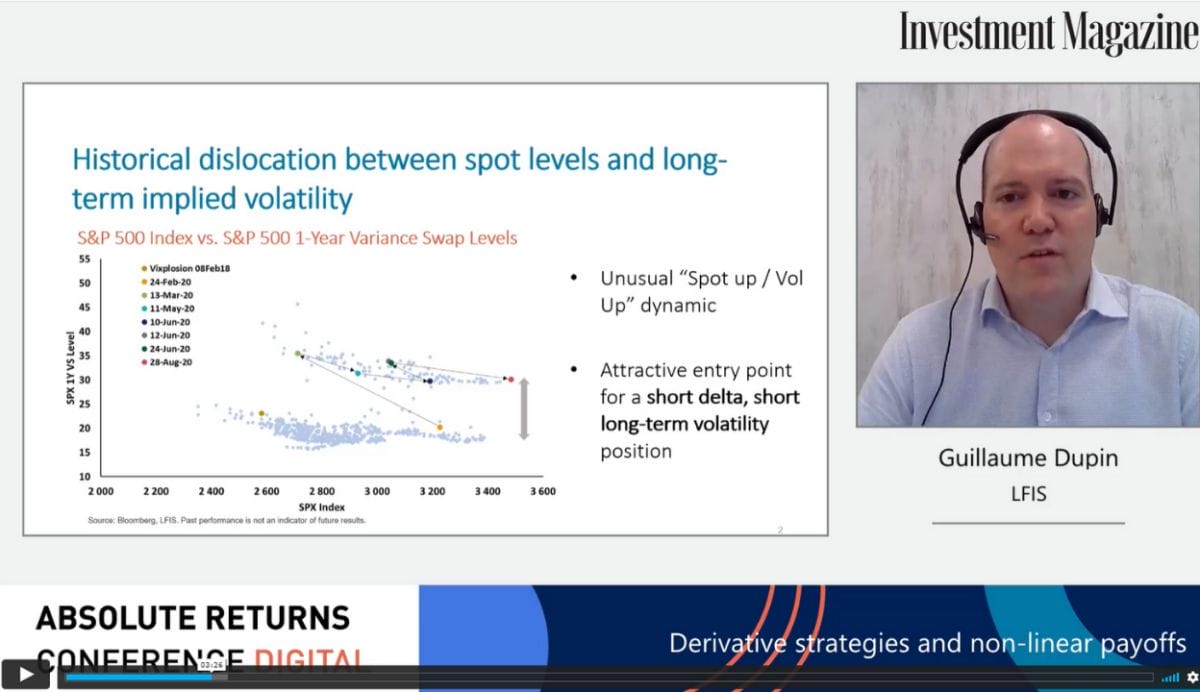
How can investors identify the markets, asset classes and instruments most impacted and capture and risk-manage the opportunities?
How can investors identify the markets, asset classes and instruments most impacted and capture and risk-manage the opportunities?

The period of subdued volatility followed by COVID-19 caught many systematic and discretionary managers off guard. What strategies outperformed and where is extra due diligence required?
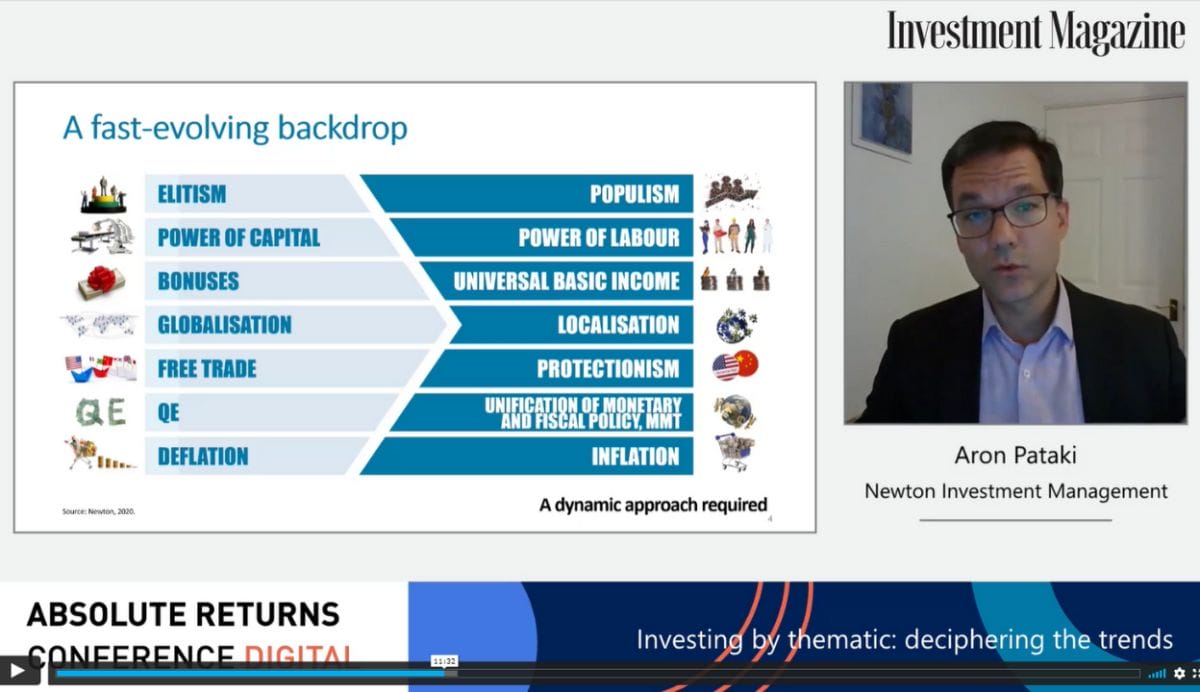
How should investors allocate during a time of converging signals of uncertainty that call into question the recovery of the global economy?

As investors review the previous 12 months what have been the underlying performance drivers, how should the dispersion in outcomes be interpreted and what the strategy forecasts suggest for 2021?
The role of an absolute returns’ portfolio is unique to each asset owner with each portfolio having a unique composition of idiosyncratic returns uncorrelated to traditional asset classes

Has global fiscal and monetary policy changed the expected market behaviour temporarily or structurally?

Where are the opportunities most likely to persist and how effective are these strategies in delivering uncorrelated returns while constraining downside risk?

Machine learning and AI can assist in understanding the evolutionary nature of markets but are there models dynamic enough to capture data-generating processes, allocate risk and position portfolios?

It is no longer fun to be a macro strategist, or is it?

What is this alchemy in the market that prices appear to reflect cognitive biases that normalcy in the economy will return so soon?

In this fragile market environment, what is the role of systematic and discretionary for macro investors?

Emerging evidence has helped funds refine their scenario planning to get a better feel for how investments will perform, according to Ian Patrick, who is considering a number of factors including lock down time frame changes and societal shifts in his forward economic and asset value assumptions.

The investment intelligence behind Australia’s largest asset owners and their teams
In-depth interviews with leaders, experts and visionaries in the institutional investment community
Updates on the latest industry policy developments and regulation
The challenges and innovations of custody, technology and operational due diligence




Investment Magazine provides in-depth, monthly analysis of trends and developments for all the businesses in which superannuation funds engage‚ including asset allocation, investment manager selection, custody and fund accounting, member administration, group insurance and compliance.
We acknowledge the Traditional Custodians of this land upon which Conexus Financial sits, the Cadigal of the Eora Nation. We recognise their continuing connection and unique cultural and spiritual relationships to the land, waters and community. We pay our deepest respects to them and their culture, and to Elders both past and present.
