Super funds can restore the financial system’s purpose
Super funds can be part of the solution to a financial industry which has become divorced from its underlying purpose.
Super funds can be part of the solution to a financial industry which has become divorced from its underlying purpose.

The Future Fund is focusing on building its internal capabilities to better handle increasing complexities in financial markets.

The needs of super funds have evolved, but custodians are yet to fully meet them, particularly in relation to data and analytics.

Investors need to better gauge the relationship between macroeconomic income inequality, intracompany wage and company performance.
AustralianSuper has moved to clear futures through a single provider as it seeks to improve operational efficiency. Despite massive growth, super funds have not been able to exploit their scale to improve efficiency. This is because of the traditional custody model, which suits fund managers, along with other parties “within the overall food chain”, according … Read more
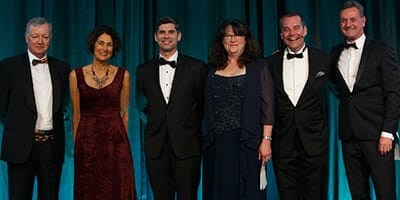
The shortlist for the chief investment officer of the year has been released in advance of the Conexus Financial Superannuation Awards at Palladium at Crown, Melbourne, on March 3, 2016. Long-term performance (5 years) formed the majority of the weighting, with leadership, contribution to industry, complexity of fund, managing an internal team, ability to run … Read more
Long term investors stand to gain from fear in markets as fundamentals remain sound report chief investment officers. A common take on the fear which has led to falls of up to 10.5 per cent in US equities and 8 per cent in Australian equities in January, is that investors – particularly retail investors – … Read more

Renewable energy infrastructure is an immature market and needs an accepted definition of equity risk, according to Jim Barry, global head of Blackrock Infrastructure Investment Group. This lack of a common language means investors need to be very clear on what risk exposure they are looking for and where they “play” in renewable energy. Speaking … Read more
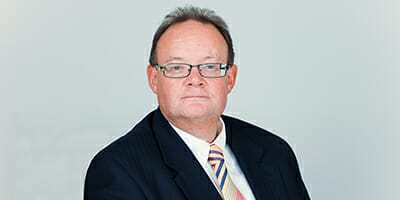
Rob Hogg, who has been the head of capital markets and asset allocation at Frontier for eight years, is to replace David Schneider at UniSuper. Hogg, who will join UniSuper on March 7, will have the title head of global strategies and quant methods. Schneider who headed UniSuper’s quant team while also providing actuarial skills … Read more
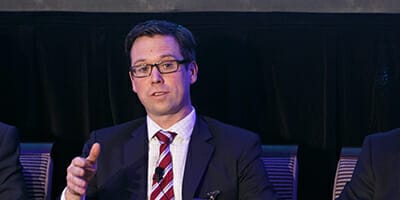
The Future Fund’s head of debt and alternatives believes the Chartered Alternative Investment Analyst Association (CAIA) provides an important educational baseline for investment managers wanting a broad portfolio view. David George, who also volunteers as the Australian chapter head of CAIA, said as the Future Fund takes a whole-portfolio view it was important for his … Read more

Chief investment officers have a big role to play in encouraging boards to think long-term as a fear of failure is promoting short-term thinking at ASX companies, a survey has found. Interviews carried out with 80 ASX company representatives including chairmen, non-executive directors and chief executives, by recruitment firm Blenheim Partners, and released in a … Read more

Cbus has co-invested in excess of $140 million with IFM Investors Global Infrastructure Fund into the Indiana Toll Road (ITR), as it tailors its allocations as part of an overall portfolio strategy. IFM acquired a 100 per cent equity interest in the toll road’s concessionaire and operator, ITR Concession Company, at an enterprise value of … Read more

The investment intelligence behind Australia’s largest asset owners and their teams
In-depth interviews with leaders, experts and visionaries in the institutional investment community
Updates on the latest industry policy developments and regulation
The challenges and innovations of custody, technology and operational due diligence




Investment Magazine provides in-depth, monthly analysis of trends and developments for all the businesses in which superannuation funds engage‚ including asset allocation, investment manager selection, custody and fund accounting, member administration, group insurance and compliance.
We acknowledge the Traditional Custodians of this land upon which Conexus Financial sits, the Cadigal of the Eora Nation. We recognise their continuing connection and unique cultural and spiritual relationships to the land, waters and community. We pay our deepest respects to them and their culture, and to Elders both past and present.
