

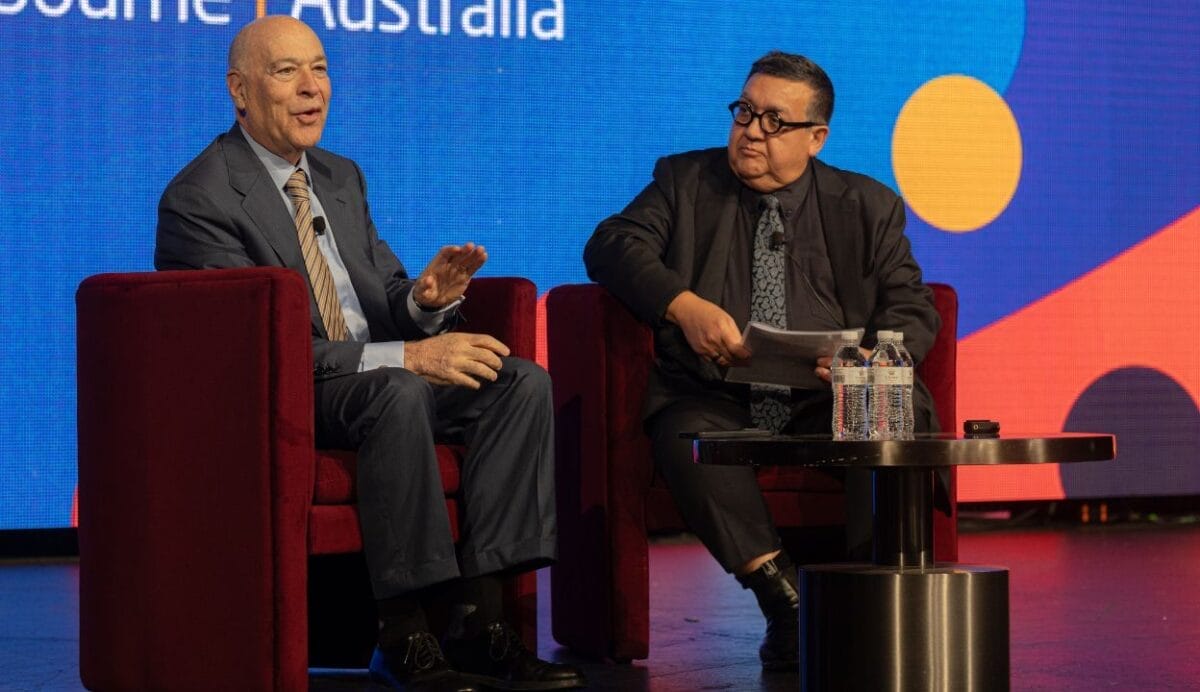
Ryan-Kane was in Australia last month to deliver big-picture presentations to clients at two dinners as part of the Watson Wyatt Ideas Exchange series. Even though his talk was very long term in its nature, the impact of the financial crisis was still clearly top of mind. “Why does it feel so strange?” he asks, echoing concerns of many investors that perhaps the world has not yet suffered sufficient pain for the dislocation caused by the crisis. Are the rebounding equity markets reflective of what’s really happening in the world? Ryan-Kane says that one of the perception problems is that a small part of the economy can perform in a dramatically different way to the vast bulk – which goes sideways most of the time, with most people doing the same thing they did yesterday – but that small percentage has a disproportionate impact on the economy.
The ups and downs in GDP are created by the huge volatility in very small parts of the economy. “The challenge for the fiduciary is that the people on whose behalf they are investing have a different ‘lifestyle volatility’ to the volatility of financial markets,” he says. Perhaps pension funds should invest more in real assets, such as farms, to better reflect the lives of their members, he suggests. And over time, are the funds acting as an investor or a saver? Their members, after all, go through the cycle of investor, saver and then dissaver. With more specific investment strategies and fewer equities, there will probably be a reduction in the amount of intermediation in the funds management industry. “You don’t need as many people in the chain for a more specific investment strategy,” Ryan-Kane says.
“Having the decision-making closer to the fiduciary or governance structure stands to reason.” He believes that conventional investment structures tend to serve managers rather than investors. There is likely to be more ‘clubbing’ by investors, which is evidenced by some of the state-based pension funds in Asia, or, more specifically, Chinese funds investing together in real estate. An interesting trend seems to be emerging as a reaction to the gating of some funds, such as mortgage funds and some hedge funds, to control the rate of redemptions during the crisis.
There was an early trend away from commingled vehicles, such as trusts, but providing segregated accounts for all investors has proved difficult and expensive for managers. So some funds have been looking to club together in traditional asset classes too, whereby they can invest alongside like-minded investors with similar time horizons. As the impact of the financial crisis seems to be (hopefully) fading, so too are early similarities drawn between current times and the Great Depression. A remaining similarity, however, is that after the Crash of 1929, Wall Street posted big gains in 1930 before resuming a longer slower slide.








Leave a Comment
You must be logged in to post a comment.