
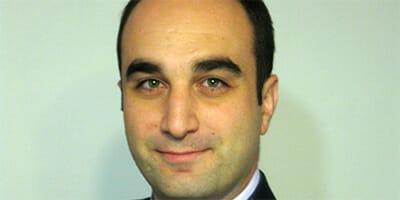

LUCRF Super, the $3.1-billion superannuation fund, has hired ex-FuturePlus investment analyst Daniel Grioli to help it adapt to volatile markets.
Grioli, who joined LUCRF’s nine-person investment team as a senior analyst in late June, will help the fund develop an investment strategy that is more responsive to changes in financial markets. He reports to head of investment strategy, Ben Samild.
“The post-financial crisis environment is a difficult one,” Greg Sword, chief executive officer of LUCRF, said in a telephone interview from the fund’s head office in Melbourne’s Docklands on Thursday July 12. “These days, you build your strategic approach upon what you think the environment is going to be and you have to be able to change it.”
Superannuation funds target returns that outpace the consumer-price index (CPI) over long time periods. LUCRF’s average net annual return in the 10 years to 2011 is 4.94 per cent, according to the fund’s website. The rate of CPI, which averages price changes among staple consumer goods and services, was 3.1 per cent in December 2011.
Grioli worked as an independent consultant for six months after leaving FuturePlus Financial Services, a Sydney-based investment office and administrator whose main client is the $3.3-billion Energy Industries Superannuation Scheme, in February.
He joined LUCRF, which formed in 1978 as the Labour Union Co-operative Retirement Fund, two months after it hired Duncan Graham, a former property investment manager at the $77-billion Future Fund, to oversee real estate investments.
Grioli regularly writes columns for Investment Magazine.












Leave a Comment
You must be logged in to post a comment.