

The unique governance structure of state government funds has led public sector fund Super SA to develop a new scheme in response to the Commonwealth’s Low Income Superannuation Payment (LISC).
Introduced last year, LISC helps low-income earners save for their retirement, by refunding the 15-per-cent tax deducted from concessional contributions (salary sacrifice and/or employer contributions) in a financial year.
Super SA’s schemes are constitutionally protected exempt schemes, in which tax is deferred until benefits are actually accessed. The new product, Super SA Select, will allow young workers, part-time and casual public sector employees to take advantage of the contribution. Until now, workers earning less than $37,000 per annum were prevented from claiming a 15-per-cent-tax contribution back, a benefit allowed under Super SA’s other tax exempt schemes.
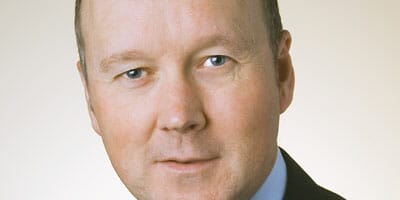
“Essentially the Commonwealth prevented access to it, on the basis that our tax is paid upon the member leaving the scheme. So how do you calculate how much they’re entitled to? If you’re not paying tax upfront, you can’t really get a rebate issued,” says Stephen Rowe, general manager of Super SA.
“In a practical sense, it means that members of the state government schemes [in] South Australia have a choice. They can remain in a tax-deferred superannuation arrangement – the main one is called Triple S – or they can opt into this Super SA Select, which will allow them to, if they’re earning less than $37,000, take advantage of the low-income earners contribution,” says Rowe.
In addition to creating a new product, Super SA also established a public corporation – Southern Select Super Corporation – to administer and act as a trustee for the product. Rowe says the vehicle may ultimately be a My Super-type product in future.
“It might be a precursor to that, but obviously that will involve decisions of cabinet and government, and it would potentially allow us to offer membership to people who leave the public service.”
Around 28,000 of 208,000 members of Super SA, which has just under $15.3 billion in assets, fall into the low-income earners category. The default investment strategy applied to the Triple S scheme will also apply to Super SA Select.
“It’s a typically diversified investment option, probably on the conservative side of the continuum compared to quite a few funds,” says Rowe.
Currently, only South Australia and Western Australia utilise this type of governance arrangement, and Rowe believes the exemption scheme is unlikely to change.









Leave a Comment
You must be logged in to post a comment.