
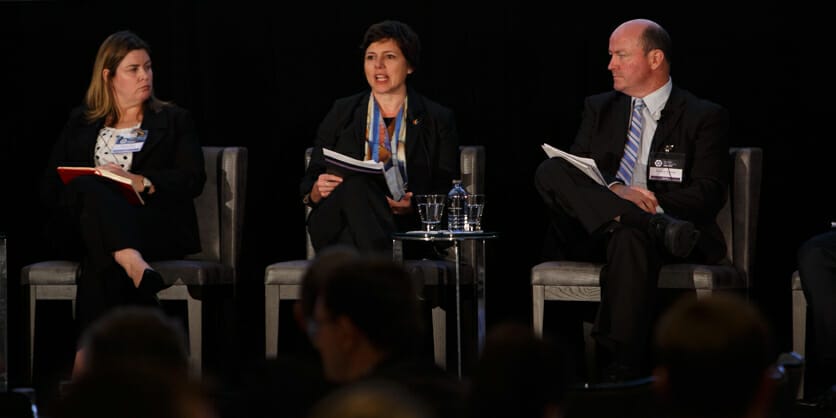

People suffering mental health issues are being let down by a lump sum system that provides little to no incentives or support to return to work, industry delegates heard at the Group Insurance Summit.
Michael Rooney, deputy chief executive Media Super, said there is a “clear problem” in having a product design that discourages people suffering total and permanent disablement (TPD) to go back to work.
“There’s such a big lump sum up front, and it’s a nice nest egg. We’ve talked instead about giving a small lump sum to claimants, then making a payment spread over five years, so they have that continuing payment if they try but fail to get back to work, but effectively ensuring that over the long term they would receive the same benefit.”
James Thomas, chief executive of AMIST Super, speaking on the same panel as Rooney, said superannuation funds have a responsibility to their members to become more actively engaged in early intervention.
“It’s very important the fund has a role, even from a straight economic point of view, if you can improve the health outlook for members and reduce the number of claims overall, it’s great for the members concerned, but also for the funds renegotiating their cover and premiums.”
Georgie Harman, chief executive Beyond Blue, said the best way to tackle the rising tide of mental health issues and suicide is in connecting people to peers and trained professionals to talk about their problems.
“Our mental health system is really failing people in some ways. In my time working in this area I’ve never met a person suffering from mental illness who didn’t want to work.”



















Leave a Comment
You must be logged in to post a comment.