


Australian asset owners have intensified their search for yield in direct lending as cash rates head toward zero or below.
“In the domestic market, private loans are trading with a relatively wide liquidity premium,” said Pete Robinson portfolio manager at Challenger. “Albeit this is largely a function of the fact that public market credit spreads remain tight.”
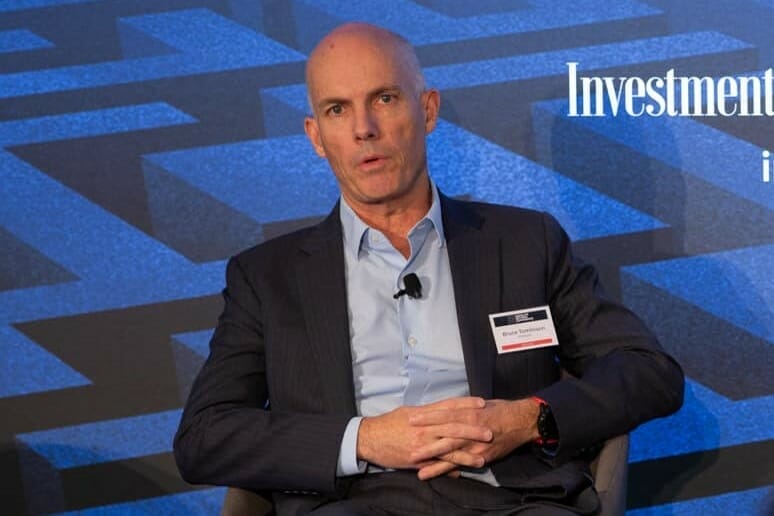
At the same time superannuation funds are bringing their investments in-house, particularly in private credit and debt, and the market has seen an explosion of credit managers and middle-market banks come on to the scene, further increasing competition for deals, panellists at the Investment Magazine’s Fixed Income and Credit Forum said.
“We tend to find the best deals where the primary motivation for transacting with us is something other than price,” said Robinson. “It could be speed to execution, flexibility in terms, size, structural complexity, etc.” In terms of relative value, Robinson prefers private debt over public and securitised over financials.
Robinson added that many lenders were dipping deeper into the capital structure to gain yield.
Of the internalised teams, he said “there are some that we think do a good job and others who do a less good job.”
The portfolio manager said the key observable difference is cost. “They {the internalised teams} are unquestionably cheaper than I am and that saving is certain. What I offer as an investment manager is an uncertain gain – my claim is that I can deliver a higher return with lower losses through the cycle than my competitors because of scale, strength of governance and the robustness of our investment process “
James Kirby, managing director at Deerpath Capital told delegates that he sees opportunities in the lower end of the middle market in the US where corporates have difficulty in raising funds. Speaking on how the next US downturn will play out he expects rates in our market will start to rise again, similar to the last recession.
The lower end of the middle market continues to grow as a per cent of the overall middle market by deal count. “It’s a very important market with around $30 billion of private equity deal activity each year,” he said. “We also think for a first lien lender, the protection in place in the US are superior compared to many other markets.”
Even so the panellist warned that competition in the sector was the biggest challenge for investors as funds chase the same pool of deals, resulting in higher leverage levels, lower pricing and no covenants.
“Investors need to be aware that while this has played out well during the current benign environment, it won’t once there is a downturn,” said Kirby. “Managers need to assume that investments made today will be in their portfolio during the next downturn and properly underwrite that risk.”
Brian Abdelhadi, portfolio manager for Allianz Global Investors also warned that investors need to understand the credit risks that sit there. “Investors have made mistakes in a low yield world: perhaps found themselves in the wrong asset class or in an asset class which didn’t behave as they expected.”
















Leave a Comment
You must be logged in to post a comment.