


This article was originally published in the print edition of Retirement Magazine Vol. 2
Treasury’s 2010 Super System Review concluded that greater co-operation between the Australian Securities and Investments Commission and the Australian Prudential Regulation Authority was “imperative” for superannuation to live up to the grand promise of its difficult birth.
The inquiry, led by former ASIC deputy chair Jeremy Cooper and ordered by the then-Rudd Labor government, recommended the two government agencies “work more closely together in discharging their superannuation mandates”, which were variously set out in legislation including the Australian Prudential Regulation Authority Act 1998 (APRA Act), Superannuation Industry (Supervision) Act 1993 (SIS Act) and Corporations Act 2001.
Under the “twin peaks” model, ASIC regulates the conduct of financial institutions and market participants, including superannuation funds, while APRA oversees the financial interests of superannuation beneficiaries.
Fifteen years after the review, Cooper reflects that he and his fellow panellists “danced around” the idea of a single, standalone regulator for the superannuation sector, but stopped short of formally recommending one.
The experts were always a little uneasy about Australia’s “funny system” whereby responsibility is shared between regulators – principally ASIC and APRA, but with some jurisdiction also from Treasury, financial intelligence agency AUSTRAC and the Australian Taxation Office.
Instead, the Cooper Review (as it became known) recommended the government consider ways to ensure the agencies collaborate. And it made clear that in order for the industry’s relatively unique – and, some stakeholders argued, problematic – dual regulatory model to work effectively, changes were needed.
Those changes were more or less forthcoming, Cooper tells Retirement Magazine – or, at least, enough of them to keep the concept of a single regulator at bay.
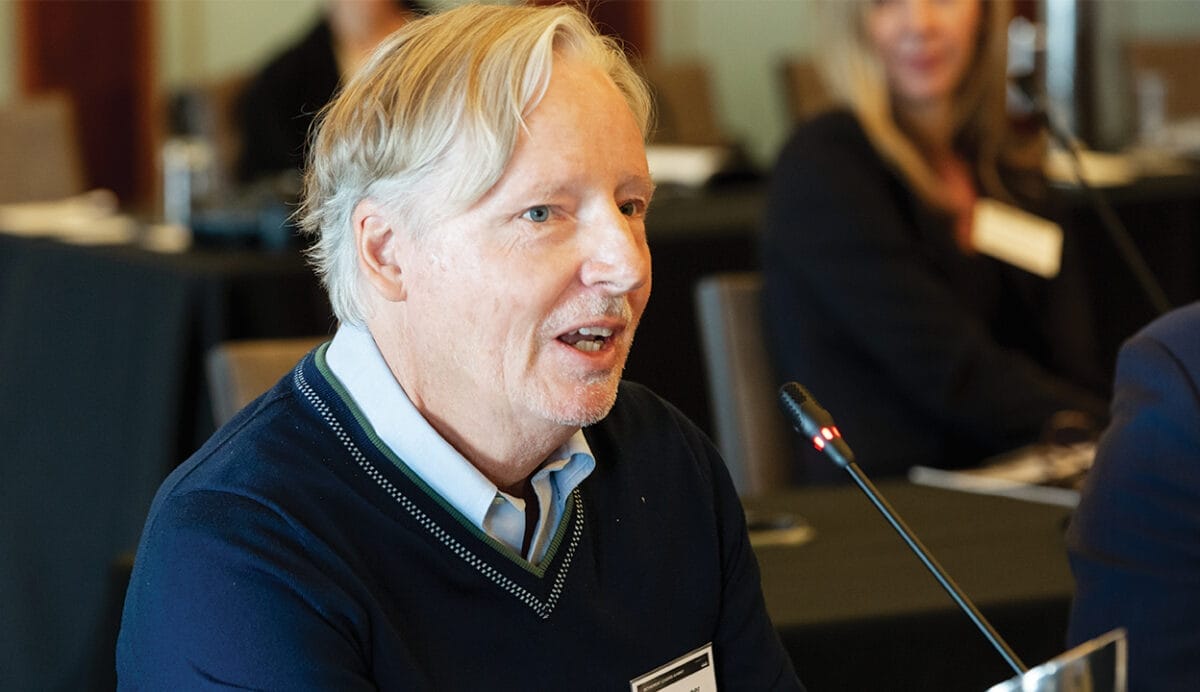
“I think that the current relationship we see on display between ASIC and APRA is pretty good for what are separate regulators with different mandates,” says Cooper, who is now chair of The Conexus Institute* advisory board, and corporate adviser on ESG issues for law firm MinterEllison, among other roles.
Robust and balanced
ASIC and APRA are often at pains to present themselves in lockstep in public engagements. They speak on the same panels, for the same length of time, and more often than not, have congruent messaging. Officials from the two regulators have even been known to carpool together to functions, in a demonstration not only of inter-agency co-operation but also public service prudency.
They point to a memorandum of understanding between ASIC and APRA and an annual statement of engagement that details work they have jointly undertaken. They also maintain a joint committee made up of APRA Members and ASIC Commissioners. Over the past five years, the two agencies have issued statements on joint letterhead on at least 11 occasions.
“While there is overlap in our work, particularly in addressing systemic misconduct, the twin peaks model of financial regulation recognises the distinct nature of these regulatory functions,” says an APRA spokesperson. “By dividing responsibility between prudential and conduct regulation, our regulatory system aims to achieve a robust and balanced approach to financial oversight.”
An ASIC spokesperson concurs: “ASIC and APRA work closely as joint regulators of Australia’s superannuation system. These mandates are complementary but distinct.”
The decumulation phase of super is one in which the Parliament has forced more collaboration between the two agencies, with the previous Morrison Coalition government granting them joint oversight of the Retirement Income Covenant.
For the first three years of the covenant’s existence, ASIC and APRA were singing from the same hymn sheet in warning the super sector broadly was making “insufficient progress” in meeting their obligations to develop and articulate retirement income strategies for their members.
Then, at the Conexus Retirement Leaders Summit in August this year, their public communications were again mirrored as they heaped praise on “leaders” that had begun to emerge belatedly in the retirement income market, while continuing to castigate “laggards”.
Telegraphing priorities
Many fund executives and experts canvassed privately for this feature noted that the sense of alignment between the agencies has been aided by the public presentations of APRA deputy chair Margaret Cole and ASIC Commissioner Simone Constant.
While technically on different rungs of the still-hierarchical Australian Public Service ladder, the two officials have been the superannuation industry-facing spokespeople for their respective agencies over much of the past two years, during which the RIC implementation has been a high priority, alongside rising allocations to private market investments.
Both are noted for their forthright – if somewhat fearsome – communication styles and for having at least some sympathy for the role of the private sector. Cole worked for PwC in London, and Constant for the Commonwealth Bank and a range of asset managers, before becoming career regulators.
“There is no doubt that both figures are passionate about the industry and about telegraphing the priorities of their respective organisations,” says Michael Vrisakis, a partner at Herbert Smith Freehills Kramer and regular adversary of the regulators in legal proceedings.
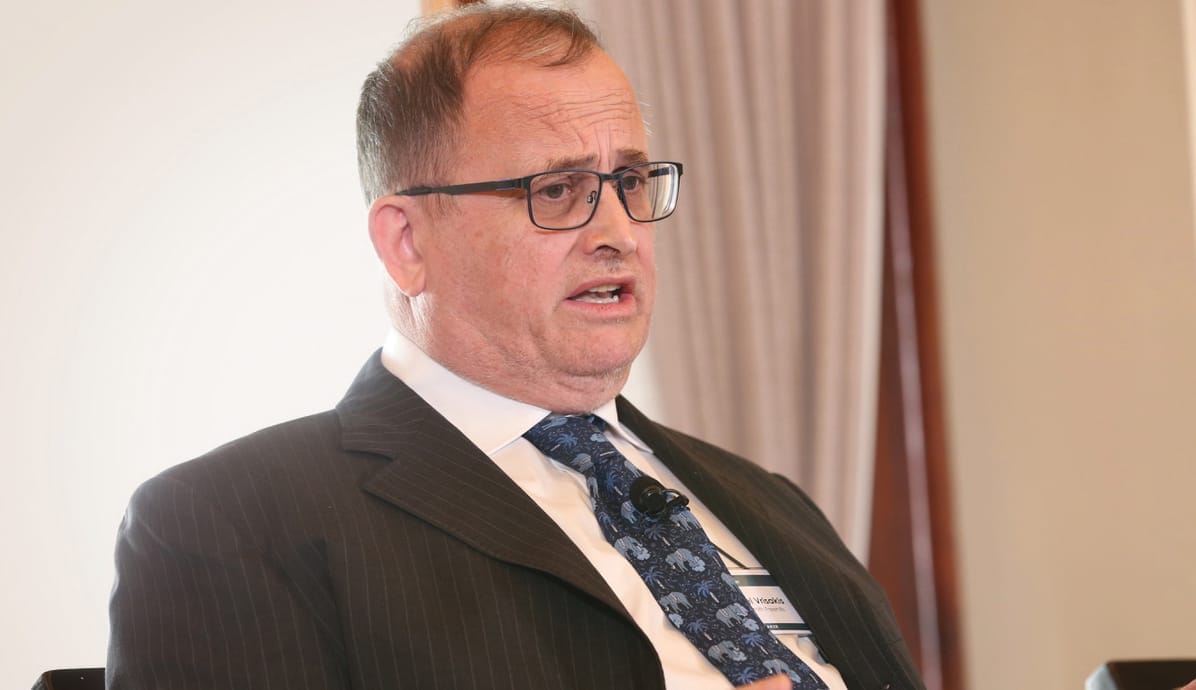
“The motivations are not just driven by passion and altruism but to my mind there is a high degree of pragmatism, as both wish to establish a base position around compliance with the relevant regulatory priorities such that relevant institutions are on notice that certain levels of compliance in certain areas of regulatory priority must be met within certain timeframes. The implementation of the [RIC] is one clear example.”
But the announcement of Cole’s decision not to seek reappointment once her term ends mid-next year places a question mark over these increasingly aligned communications, and whether her successor will be able to replicate the double act with ASIC.
Grey areas
And though there seems to be consensus that, both in public and private, ASIC and APRA have improved their co-operative efforts since the time of the Cooper Review, that is not to say the twin peaks model is working perfectly.
Dr Scott Donald, an associate professor in UNSW’s School of Private and Commercial Law, says “grey areas” of responsibility and accountability are near inevitable in a system involving multiple regulatory agencies. It is not always obvious whether a particular matter is prudential or conduct-related in nature.
“The elephant in the room is what it takes for those organisations to be co-ordinated, or at least coherent,” he says, noting that the aforementioned MOUs can give rise to inconsistencies. “What business and the not-for-profit funds don’t want to be doing is one thing for one regulator and something different for another.”
He says data gathering is one of the “really simple things” ASIC and APRA could be co-operating on more closely still. Last time Donald checked, there wasn’t the level of consistency in data reporting that there ought to be for an industry of super’s size and important. Funds should be reporting once, but reporting a lot; the organisations that are requesting that data should be “collating and collecting it and using it in clever ways”.
He cites the example of APRA’s failed litigation against financial services provider and super trustee IOOF (now part of Insignia Financial) following the Hayne royal commission.
“[APRA] couldn’t prove their case because they didn’t have the underlying data in a contemporaneous form. They had to ask IOOF to provide it to them. APRA and ASIC are doing different things and are going to have different priorities, but they need to be aware of what each other’s priorities are and work in a co-ordinated way to be effective.”
Behind closed doors, regulated entities complain that the twin peaks model can result in duplication and frustration.
“It’s an enormous amount of friction and confusion as to who’s doing what,” said the chief executive of a superannuation fund, speaking to Retirement Magazine on condition of anonymity.
“APRA is getting into product stuff – that’s ASIC’s role. ASIC is getting into prudential stuff – that’s APRA’s role. I’ve got no idea who’s doing what these days – and I don’t know [that] they do either.”
Institutional policy home
Cooper concurs with the premise that there are major drawbacks to the current model, whereby ASIC and APRA jointly regulate the sector but the broad-ranging Commonwealth Treasury is ultimately responsible for policy development.
He says super not having its own “institutional policy home” puts Australia out of step with global peers including the US, UK and China and may explain at least some of the perennial legislative tinkering, lobbying and consultation that seems to plague the sector.
“This isn’t a criticism of Treasury, it’s just that super would have to be a seventh- or eighth-order priority, and you can sort of feel that,” Cooper says.
But he says the task of establishing a “new super-duper regulator” or government department would be “a very big and tedious job” and eat up a lot of political capital that the sector probably lacks, judging by the slow pace of the Delivering Better Financial Outcomes superannuation advice reforms as just one example.
One more practical idea, floated by Cooper’s review but never implemented, would be to co-locate APRA and ASIC officials working on superannuation matters, although he admits that this may reflect an outdated approach to corporate workflows.
Another idea, offers Vrisakis, would be to encourage more of what he calls “foundational unity” – that is, effectively merging or more formally aligning some superannuation-relevant functions. This might mean transferring more enforcement activity from APRA to ASIC – the latter of which has more demonstrable experience in court litigation – or at least directly collaborating on joint enforcement activity.
However, it seems unlikely either regulator will want to voluntarily surrender any of its mandate. Indeed, ASIC sought greater oversight of super and ability to enforce the SIS Act. The request was granted by the Morrison government in 2021.
As the now $4.1 trillion sector grows in size and systemic importance, it becomes an increasingly critical player in Australian and global capital markets and therefore a more attractive target for regulators. Some more cynical observers suspect appeasing some corners of the national news media and federal Parliament that harbour resentment towards the growth of labour-aligned industry super funds may also be a motivating factor.
That rising scrutiny also means debate about a standalone regulator will continue to rear its head, especially in cycles in which the performance of APRA and ASIC are in question.
Whatever the structure, the task of regulating super is unlikely to become a less complex one.
“The challenge now is that super is quite big,” says Donald. “You’re now dealing with big organisations with big legal teams and big budgets. Regulators need to up their game in terms of making sure that their people and processes are up for that.
“[But] I do know that a lot of other jurisdictions look at what goes on in Australia with some admiration, because I think we do it better than most.”
* Australian Securities and The Conexus Institute is a not-for-profit think-tank philanthropically funded by Conexus Financial, publisher of Retirement Magazine.








Leave a Comment
You must be logged in to post a comment.