


A child born in Sydney today can expect to live well over 100 years. At the same time, advances in neuroscience, understanding of “brain health” and innovative therapies mean they’re likely to enjoy both good physical and mental health for a much greater proportion of that time than we do now.
These developments compound the already-complex issues facing the superannuation industry about how to support fund members to make better decisions during accumulation; and then, finding ways to make a member’s income last for their expected duration of retirement.
The Retirement Policy Outlook 2026 roundtable, hosted by Retirement Magazine in partnership with The Conexus Institute and Acenda Life, heard that the industry needs the government to reform legislation around financial advice in order to support members better, but there is also plenty more that can be done without that reform to improve retirement outcomes. And the need to act is only becoming more urgent.
“If you are born in eastern suburbs of Sydney now, the average life expectancy is projected to be 102. It could be even more – it could be 110, 115. We need to plan for that, and I suppose previous generations haven’t planned as well,” Professor Matthew Kiernan, chief executive of Neuroscience Research Australia, said.
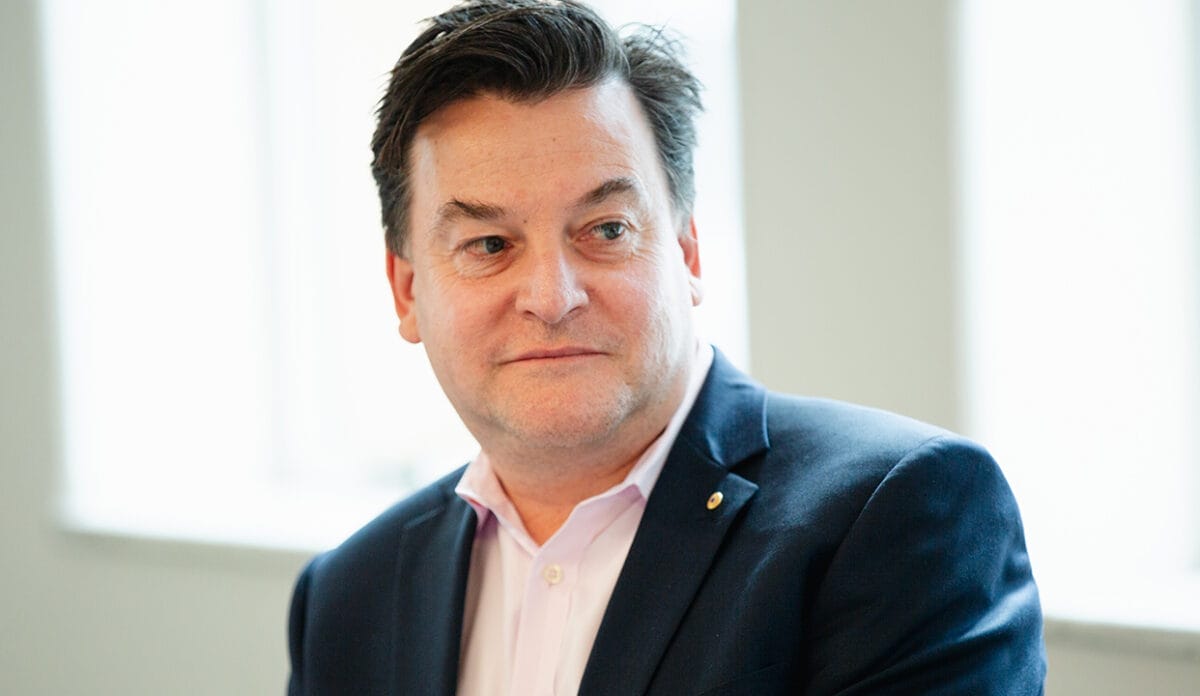
Kiernan said that as we live longer, the focus on brain health will only become sharper – after all, no one wants to live to be 110 with poor cognitive function for the last several decades of that, even if physical health remains good.
Kiernan said that after years of research neglect, “we are now starting to get a better understanding of brain function”.
“Maintaining brain function is the key and then treating these conditions that are now affecting a huge amount of people in Australia and internationally.”
Kiernan said this clearly had significant implications for managing longevity risk.
“We wish we had a crystal ball that could say who’s going to get what, and are we all going to be okay? And that’s where the field is going. We are now looking at protein changes in the blood that is going to be able to determine who is at risk and when you might develop [an illness].
“Also, [when] should we start treatment? Should we start a monoclonal antibody [therapy] so that you’ll never develop dementia? This has to be factored in, then, to your plans, because… we don’t know how far this is going to go. We don’t know what the top is at this stage. People are projecting now 130, 140 [years old].”
The burden of providing a basic income for all people in retirement has become too great for governments to bear, and across the world the onus has shifted to individuals supporting themselves. After decades of operating effective accumulation systems, nations with private-sector pension industries are now grappling with the next stage: operating effective retirement systems.
Solving the same problems
Sir Clive Cowdery, founder and chair of Resolution Life (the Acenda Group is a joint venture between Nippon Life and Resolution Life) said the development of the UK and Australian pension systems had diverged in significant ways but had each arrived at having to solve the same problem: how to deliver financial advice at scale to individuals as they retire, so they can make the most of what they’ve saved.
Part of the solution in Australia will be to reframe the purpose of superannuation from its original promise of providing lump sums to providing income. Cowdery said a critical difference between the UK and Australia is that pensions in the UK were never sold on the promise of a lump sum payment on retirement but were explicitly positioned as income-replacement mechanisms.

“You had to go and buy [a pension] because you were losing some future income [when you retired],” he said. “The question should be: What do you want to buy to replace it? Not, ‘give us some money and we’ll give you a million dollars of super or even $3 million of super or even, until last year, $4 million of super and we’re not going to tax you on all of it. That’s incredible.”
But income as the outcome shouldn’t be hard to sell: “A lump-sum arrangement does not compute in the human brain anywhere near as well in preparing people for retirement as being [asked] how much income you would like to save for,” Cowdery said.
And there is also the issue of how superannuation is “distributed”: in Australia, super emerged largely through occupational, employer-based arrangements into dedicated super funds, whereas in the UK the system is more individual, leaning heavily on the existing infrastructure of insurance companies and salespeople.
An advantage this bestowed on the UK system was that the entities selling pensions were “capitalised life insurers able to give a guarantee because they had a lot of regulated capital; and superannuation funds can’t give a guarantee”, Cowdery said.
“They are not capitalised entities. [They] don’t hold buffers of solvency capital, and for that reason, [members] could not be told at the point of sale that this pension is guaranteed.”

And that’s one of the issues super funds now need to solve, through a combination of product design – with access to capital to support longevity insurance – and figuring out how to deliver financial advice, guidance and information (including nudges) at scale.
The bottom line
But however it’s tackled, the bottom line from the regulator’s point of view is that member retirement outcomes must improve.
ASIC Commissioner Simone Constant told the roundtable that it’s past time for funds to be talking about how to meet their Retirement Income Covenant (RIC) obligations and that they must now show evidence that they are improving outcomes for members.
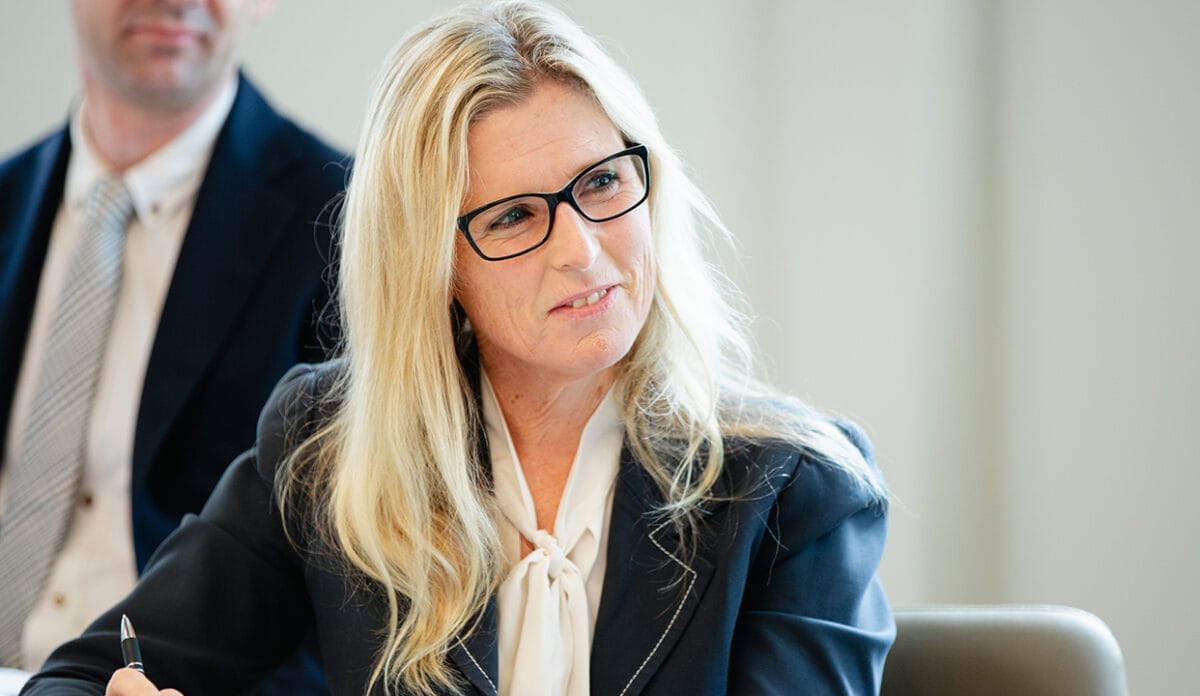
More than 500 people retire every day now, and “it’s time for regulators to have a more limited voice in the retirement conversation”.
“It’s time for industry to crack on and do. It does feel like if we are not at five minutes to midnight, we are really close to five minutes to midnight.
“It is time for discussions or conversations to move to actions and move to outcomes.”
Constant said there are still some significant aspects of the retirement landscape that cause the regulator concerns and its future surveillance and monitoring of funds are “going to go deep this year”.
“We might look at soft defaults and pathways, or we might look at some particular parts of products, including the income.
“And if you get back to what we want to see, of course we want to see a confident, informed participation in retirement.
“What we think that means is you’ve got to be identifying and understanding the members’ needs. Cohorts should drive into that help with the information and financial advice and product offerings.
“We’re all trying to walk the line between consumer protection, but there’s got to be… risk appetite [from funds] around giving people advice and executing and overseeing that strategy.”
The Delivering Better Financial Outcomes reforms are important to make advice more affordable and accessible, and to be able to nudge members in a personalised way. But Team Super chief retirement officer Sarah Forman said an income stream is not necessarily the best outcome for all members.
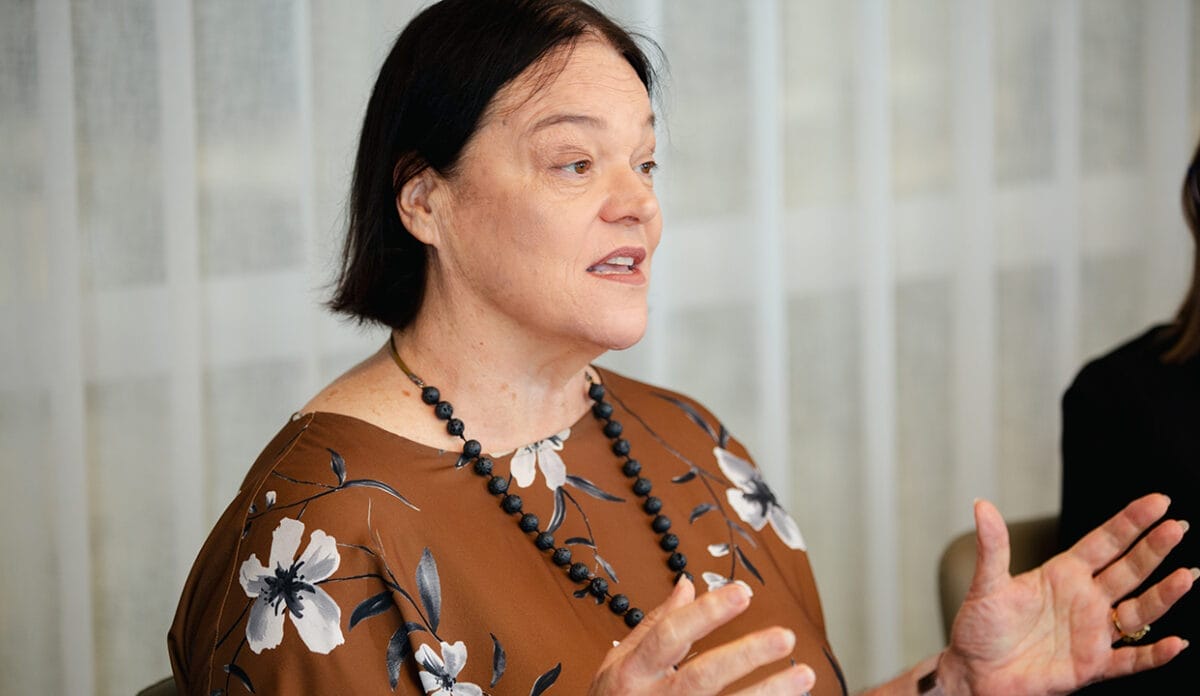
“The research we’ve seen is that the people that tend to use lump sums at retirement are the less affluent,” Forman said.
“The [next] big piece of work for us, out of our cohorting work, is what are the profiles and personas that you can then design the soft default or the default options for in retirement? You have to get those profiles right, because there’s a lot hidden in averages.”
Collective view of defaults
Forman said the industry, through its representative associations, is “currently trying to focus on [whether] we can get a collective view of how defaults should work… because while there’s disparate views and opinions, it’s really hard for anyone”.
Australian Retirement Trust principal of retirement solutions Brnic van Wyk said the fund is investing in the expansion of its advice offer and is a major proponent of the value of advice.
“But what we are calling for when you mention current laws is we want to complement that with what we call opt-in soft defaults,” he said.
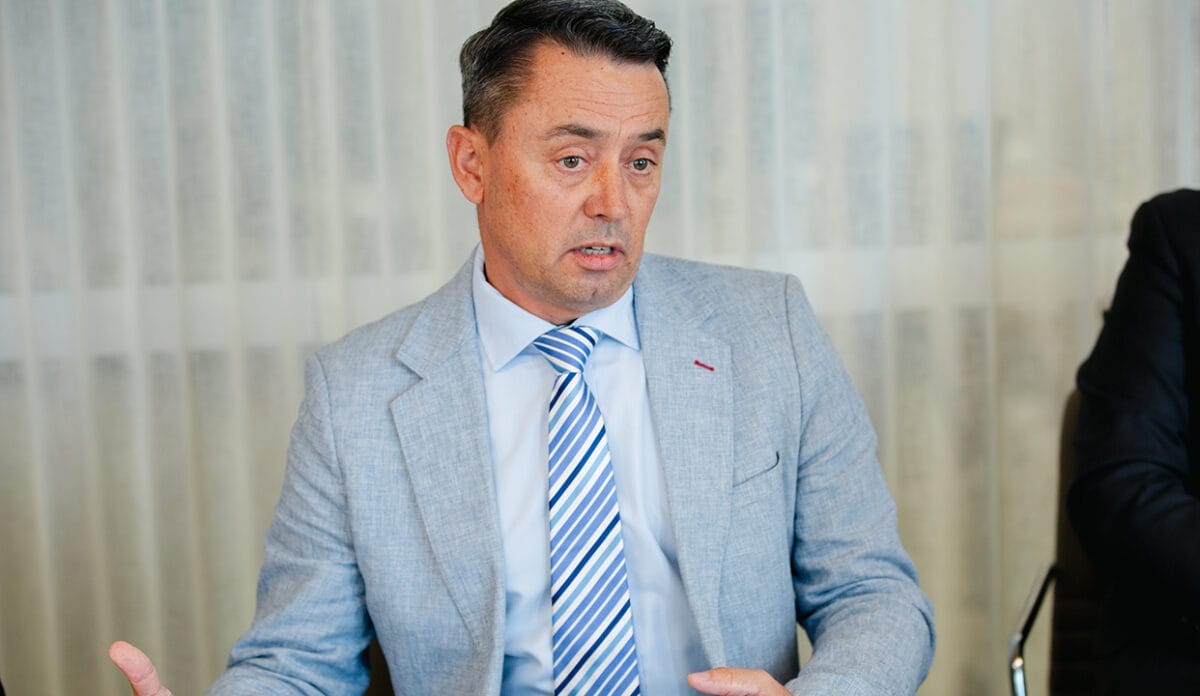
“For many of our members, I don’t think it’s necessarily a question of they want to have or don’t want to have advice, but they have very simple needs. At the moment, as an industry fund, we are unable to service those simple needs.
“We are not calling for hard defaults. We are not calling for trustees to act on behalf of people, but we do think as this increases consumer protection. It avoids people seeking unnecessary advice. So we will work with policymakers to drive that.”
The purpose of superannuation is to provide members with retirement income, and Insignia Financial executive director of strategy and innovation Andrew Howard told the roundtable that “there are reasons, not excuses, for why we [the industry] hasn’t attacked this challenge about retirement income for a number of years”.
Howard said it was incumbent on the leaders of the industry to create solutions, which would involve a combination of product and delivery of appropriate advice to members. A lot of that can already be done, under existing legislation and frameworks.
“Working through the Retirement Income Covenant, working through the formation of a Retirement Income Strategy and action plan, it’s all there,” Howard said. “Looking at the SIS Act and what it says about income streams, it’s all there.”
Harsh reality
Australia can’t rest on its accumulation laurels and must face the harsh reality that retirement outcomes for many members still are not great. The Grattan Institute’s housing and economic security program director Brendan Coates said that while we’ve solved the adequacy problem – “arguably more than we needed to” – and we’ve also solved the government balance-sheet problem by being “at the forefront of having a DC [defined contribution] system as opposed to a defined benefit system”, that’s just presented another problem.
“We’re now at the forefront globally of the next problem, which is how do you convert DC super balances into an income stream?” Coates said.
“The government should offer annuity solutions to give retirees confidence that they can buy longevity insurance, because they’re “one-shot games” – in other words, once a retiree commits capital, they can’t get it back.
“I struggle to see how a regulatory system can make sure those products are competitive,” Coates said. “There’s some players in the market I would trust, and others I’d be worried about, which is why we went down the… path that [the government] should offer that product. They shouldn’t be the only provider, but they should be providing an offer.
“And I can see no retirement income system in the world where you principally use advice to connect people with those products.”
The outgoing deputy chair of APRA, Margaret Cole, said she expected super funds would have had a greater risk appetite to produce solutions – including providing advice – for members.
“That may be a differentiator between retail and industry [funds]; I think there is,” she said.
“But I think industry just didn’t see the urgency of it, or the need to push in, or they were quite happy with all the good things they’ve done before.”

Cole said competition between retail and profit-to-member funds is starting to drive better outcomes and encouraging greater risk appetite among funds. But issues such as the collapse of the Shield and First Guardian managed investment schemes have become a convenient excuse to shy away from doing more.
“From a system perspective, that’s not the thing that should be blocking anything,” Cole said.
“You’ve got to find a way around that. And we know it’s held up the advice legislation, so that is sad, but I think the competitive pressures now will drive [action] and we know there are some, including very good ones on the industry side, who have been prepared to take some more risk appetite in the interests of moving this forward and doing a good job for their members.”
Greater transparency
Cole said APRA will continue to push for greater transparency, publish deeper data on the performance of retirement products, and continue to assess funds on their progress under the RIC.
“We do the Pulse [Check] surveys, we put more information out there, but it has taken four, maybe five years to get some movement here, and I do think it’s the competition side that will drive further attention to this,” she said.
Super Consumers Australia (SCA) deputy chief executive Katrina Ellis said retirement is simply too complex for members to negotiate unaided. Financial advice “has a place but it’s not a solution for everyone”, and focusing on advice reforms does nothing to help members who are disengaged.
For them, a better solution might be a form of retirement default, with appropriate guardrails.
“The majority of accumulation accounts are in MySuper. We need to meet people where they are,” Ellis said.
“We have these disengaged people, they’ve been in a default their entire 30 years [in super], and then all of a sudden we expect them to make all these decisions about income streams and all the terminology [of retirement], so we need to think about simplicity and product design, but policy settings to actually meet people where they are and simplify the system for that bulk of people who are disengaged.”
Ellis said SCA advocates performance testing of retirement products to give members “comfort that somebody is looking out to make sure that the products they’re in are safe”.
Opportunity missed
Policymakers missed a golden opportunity to address retirement issues right at the outset of the MySuper regime, said Jeremy Cooper, chair of The Conexus Institute* advisory board and author of the 2010 Super System Review. Now they’re playing catch-up.
“The original MySuper proposal was that it went right through retirement, and it had something that looked remarkably like the Covenant bolted on top of it. It simply said, when you go into the retirement phase, three new duties pop up: a duty to measure market risk, longevity risk and inflation [risk]. And somebody got in Treasury’s ear and when the draft legislation came out, not only did they not adopt that idea, there was a prohibition on MySuper products paying pensions.
“I thought, whoa, someone’s bolted that door pretty hard closed. And that goes right back to the cultural problem – who was that? And were they so against the default, basic super product going into the retirement phase that they sent people in to Treasury and said, ‘You’ve got to prohibit this’?”
Cooper said that while regulation of superannuation has made it “very, very safe”, it was necessary to create a “very onerous advice regime to try and protect consumers”.
“Advisers sit at the bottom of the food chain, and we keep imposing rules on them,” he said.
“If I had my chance to influence the current policymakers, I’d say basically we need to take the stringency for the advice rules in the super space down, basically just put the whole thing in the shredder. And if it’s advice about APRA-regulated products, just let it go.
“We’re not talking about self-managed super funds, we’re not talking about Shield and [First] Guardian. We’re talking about APRA-supervised, top funds – the dud funds have largely gone – and we just need to get over it.”
Rest Super general manager of public policy and advocacy, Enrico Burgio, said Rest’s member demographic – it skews towards younger, low-balance, female members – means “some of the conversations about annuities and other products may not be suitable for these members”.
He said low-income members are “often the ones that like the benefits of the flexibility of a lump sum”, and “for our members, their advice needs and other needs in retirement are often simple”.
Burgio said it is “essential” for the DBFO reforms to pass to support funds to improve member outcomes in retirement, including being able to personalise the nudges funds can provide.
But better data is also critical, including “some basic data-sharing arrangements with government”, especially Services Australia and the ATO.
“To get some basic data sharing will allow us a massive ability to uplift in terms of that personalisation of our approach to members, so data and advice are the bedrocks,” he said.
A national treasure
Acenda Group chief executive Chris de Bruin said the Australian superannuation system is “a national treasure, but to be clear, it does not serve everybody equally, and it is not fundamentally the basic safety net that people need. That still falls to government”.
“Ultimately, the fewer people that fall to government, the more the system has resilience and strength. As a provider of capital, we believe there’s a role for us in underpinning the industry and helping carry that burden, because the people who can carry their own burden should, and leave the [government to support] the people that can’t.”
De Bruin said groups such as Acenda Life are natural providers of capital to underpin retirement income guarantees, “as opposed to having people carry their own [longevity] risk”.
But the complications for people moving into retirement are not only financial. There are also issues around aged care and health and remaining active.
“That is why I think all the research says [retirees] lack confidence, because [they] don’t know where to get all this information,” de Bruin said.
“We can all do a little bit more in pulling together the resources that allow people to navigate in a slightly better way, not just the financial part, but all the other parts as well.
“There’s a consensus forming around what needs to be done. I think that’s a natural evolution. When that consensus forms, the next step is to move to action. We have a lot of debates about moving to action as participants in this industry, and I believe ultimately, we will be judged on how well we help Australians navigate into a healthy, productive and dignified retirement.”
David Bell, executive director of The Conexus Institute, said five main factors have underpinned the development of the superannuation system: the increase in the Superannuation Guarantee; broad coverage of the population; development of highly professional investment management capabilities; effective use of defaults in accumulation; and a focus on final account balance or lump-sum benefits.
“We have this great retirement accumulation system that’s inadvertently left us with arguably a poor starting point, or a constrained starting point, to get that retirement phase happening,” Bell said. The challenges include disengaged members, poor personalisation of services, legacy IT systems, and a lack of capital backing coupled with a zealousness to drive down costs.
Bell said these are challenges for policymakers to address. That’s why 10 items on a “to-do” list produced by the Institute to improve retirement outcomes for members were almost exclusively directed at policymakers, not regulators.
“It’s important to note that policy sets the foundations for a sector to move forward, and then regulations come in and complement that, and it’s difficult to regulate if all the policy pieces aren’t in place,” he said.
“So as much as I’d like to think we’re just in the final stages, the last little sprint, the finish line’s in sight once you’ve made it back into the stadium, we’re not there, unfortunately,” he said.“So there’s a real temperament game here that we all have to get right, to keep pushing, keep calling for more, but to keep acknowledging the challenges and achievements as well.”
*The Conexus Institute is a not-for-profit think-tank philanthropically funeded by Conexus Financial, the publisher of Retirement Magazine and Professional Planner







Leave a Comment
You must be logged in to post a comment.