


Published in partnership with Northern Trust.
For all its success, the super system faces a growing web of risks – some established, some emerging. Your Future Your Super-induced benchmark hugging, the shift from accumulation to decumulation and increasing geopolitical fragmentation all, to varying degrees, threaten the stability of Australia’s retirement savings. But perhaps the biggest risk to it is how members feel about the system to which they are compelled to give 12 per cent of their income.
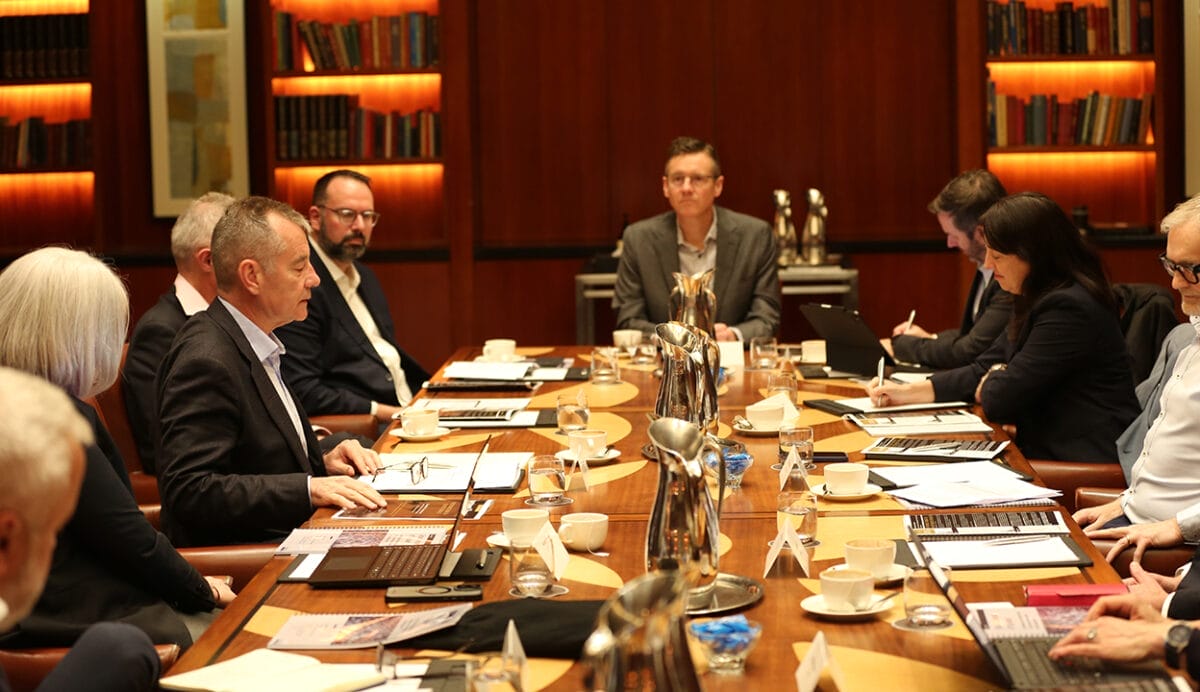
“In a foundational sense, confidence and trust in the system and in funds is quite pivotal,” Conexus Institute research fellow Geoff Warren told attendees of an Investment Magazine roundtable hosted in partnership with Northern Trust – the third and final in the year-long Systemic Risk in Super Series.
But that confidence and trust could be lost through a confluence of factors, Warren said – i.e. a scenario where inflation shifts upwards and persists at around five per cent, while interest rates also adjust higher. Economies would weaken, company earnings would come under pressure, and investors might try, en masse, to take their money out of private markets.
“If members suffer a period of, say, 10 years of really poor returns, they start to lose faith in super funds and the system at large, because they’re losing money when they’ve always made money in the long run. Funds get blamed for not protecting their savings, and that ‘stay the course’ mantra looks, in retrospect, like a misleading statement.”
Members might start switching out of APRA-regulated funds in large numbers, and they might also hold the government partly responsible, due to its role in compulsion.
“If you’re in a situation of higher unemployment, early access starts to look politically expedient. People need their money; why aren’t we going to give it to them? Why are we forcing you to invest in super when it isn’t delivering? Compulsory super could come into question as well,” Warren said.
“We don’t think it’s impossible – and if that happens, what would be the implications? What would drive a loss of confidence? We’ve also already seen confidence in super things weakened by operational problems and scams. That isn’t enough to [totally] undermine confidence in the system, but it wears it down.

“Confidence in the system is, I sense, a little bit more fragile today than it was a few years ago, particularly after the operational issues.”
Shield and First Guardian
But there are more threats to confidence in the super system than the scenario proposed by Warren. One of the biggest recent threats has been the collapse of the Shield and First Guardian master funds, which have so far affected more than 11,000 people and over $1 billion in retirement savings. To Scott Hartley, CEO of Insignia Financial, regulations governing consumer protections and trustee obligations were clear, but that some operators “didn’t apply themselves with the expertise and care and diligence” to ensure those regulations were executed properly.
“But it’s not just about platform governance; it’s about all superannuation governance. The rules for platforms are no different to super funds. SPS530 is the regulatory standard that says ‘this is how you’re supposed to govern investments whether you’re a platform or a super fund, it doesn’t matter’.”
Those rules aren’t broken, Hartley said, but they could potentially be improved – though trustees that don’t apply them correctly, resulting in losses, need to “step up and compensate clients”, as platform providers like Macquarie and Netwealth did.
“What would be helpful is if FAR applied to everybody operating in the platform sector the same way,” Hartley said. “At the moment, some platforms outsource their super trustee to a third party and for some of these, the application of the Financial Accountability Regime doesn’t flow down from the outsourced trustee to the executives running and operating those platforms, which is a clear weakness.
“If you’re operating under FAR it brings a different mindset to how you comply with regulations and manage risk.”
Hartley also questioned whether ASIC had enough resources to regulate advice and managed investment schemes (MISs), and said that the regulations governing the latter definitely “need to be strengthened”. But Gemma Kyle, chief risk officer at Rest, said that it was impossible to “set up an environment where there’s zero risk and zero harm”.
“Part of the challenge for ASIC is that it doesn’t have access to all the information that the industry has,” Kyle said. “There’s a bit of a division between the two. And I wonder if that arrangement needs to adapt as it has in the UK to allow for greater collaboration so that we can detect these things early. It would be foolish to think we can prevent it entirely. But we do need to be able to detect it earlier and step in earlier.”
Peter Chun, CEO of UniSuper, described the regulatory landscape as “two speed” – bigger players largely do the right thing and increase their resourcing in response to regulatory demands, while smaller players can sometimes “get away with it”, suggesting that ASIC might itself require more resourcing and that SMSFs might require more guardrails.
“[SMSFs] are outside the highly-regulated APRA guardrails,” Chun said.
“That choice system makes sense. I think in the policy foundation we’re talking about today – SMSFs are a legitimate category and sector. There are elements of it though that can expose the sector to these broader failings.
“In the CSLR scheme, a lot of the losses came about due to Shield and First Guardian. I think there should be some sense of ‘buyer beware’ and that you shouldn’t be able to claim on your losses.”
The problem for Helen Rowell, chair of Australian Retirement Trust and former deputy chair of APRA, is that some members who choose to enter a riskier space don’t actually know that they have.
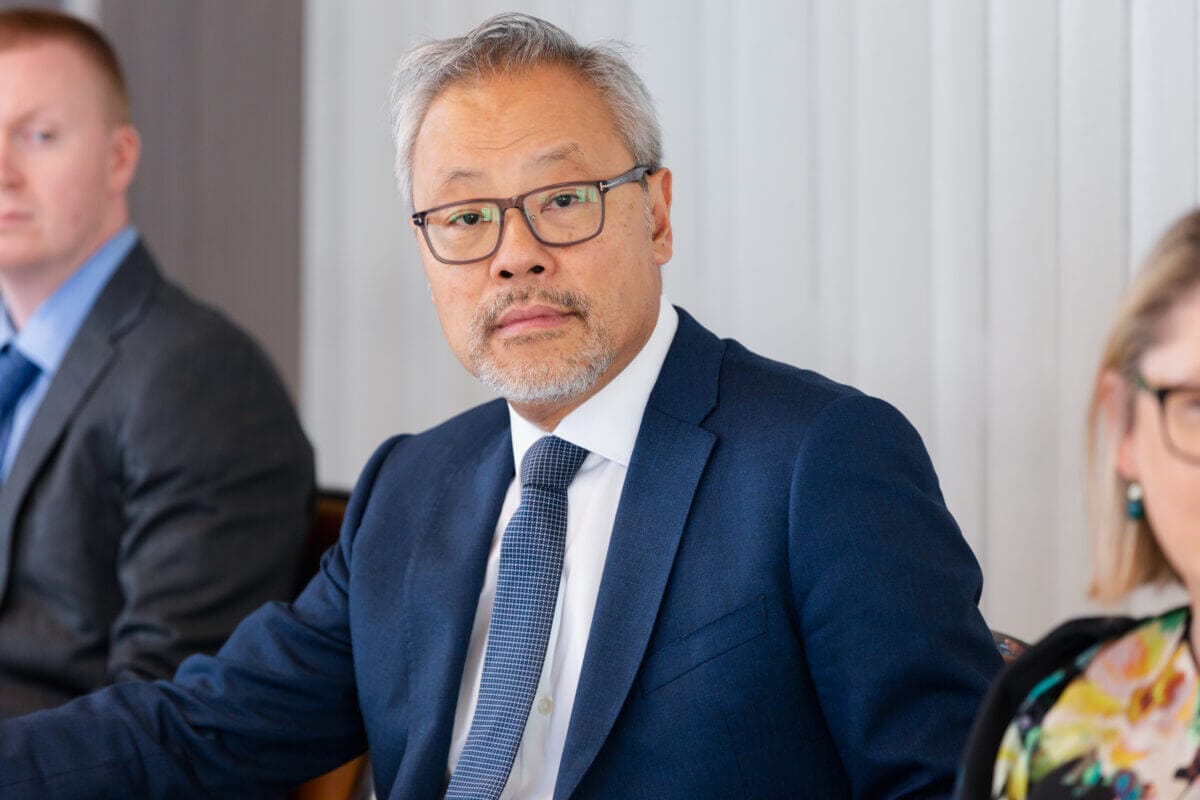
“There’s a prevention piece that is linked to the DBFO reforms which is allowing super funds to give advice to stop our members being encouraged to go into things outside of [APRA-regulated] super,” Rowell said. “If we can give them sensible guidance or education that isn’t full advice that might make them stop and think, that might be sensible and help people stop ending up in those schemes.”
Some of these problems are being amplified by AI and other digital technology, and are becoming even more pressing as funds become more and more involved in paying out money to members – which requires a significant shift in both the fund’s internal resourcing and its thinking. As Kyle pointed out, funds are quickly becoming payments houses and need to build to the level of financial crime protections that have been adopted by the banks.

The future of fraud
At high levels of the superannuation industry, scams and cybercrime are increasingly understood as areas where, like the banking system, there is no competitive advantage and where funds must collaborate to ensure good outcomes. That also requires skill uplift on the boards of many funds – which is tricky when you’re also trying to balance other concerns, Rowell said.
“All super boards should be thinking about the skills needed around the table, and also the priorities for investment. In the last 12 months we’ve appointed two people with tech and transformation experience and cyber experience to the board from the banking sector,” Rowell said.
“The challenge for board composition, particularly in the not-for-profit space, is balancing the exposure and getting the nominees brought forward to get those skills around the table. That’s always a challenge but it’s not impossible.
“I think that the other significant challenge is the investment point. Yes, we’ve got to invest in cyber and scam protection, but we’ve also got to invest in member services because ASIC and APRA are expecting an uplift in member services, and we have a member fee budget that only goes so far.”
And while members have a justified expectation that they will be able to access their money instantly, with a minimum of hassle, it might be in their best interests to introduce more friction into a process that will increasingly be targeted by criminals, said Melinda Howes, AMP group executive for superannuation and investments.
“We are now in the process of uplifting and doing further automation on our pension payments for our retirees. So we want to get to instant access to money, but we’re now having the live discussion with the trustee board about how much friction we put in the system,” Howes said.
“We can do instant payments and we can put a lot of friction in the system to balance it, because it’s all available when you’re retired. That’s where the money is going and where the fraud is going as well. What level of member service to do we give for instant access versus protection to slow it down and make sure there’s a chance of catching it.”
UniSuper has now also bolstered the ranks of its service staff with former banking personnel who have been able to intercept more sophisticated scams.
“I think we’re all doing what we can at an entity level – we invest, we build capability – but this is the area where you need system wide collaboration,” Chun said.
“You need to work with banks, you need to work with international financial institutions… I don’t think we need APRA guidance. I think the associations have a role around this; how can we bring all super funds into a way to share information and the latest thinking? The bad actors are getting better and as an industry, we must stay ahead of this.”
The digital assets shift
But there are other reasons members would want to take their money outside the APRA-regulated superannuation system. Cryptocurrencies and other non-traditional assets –including some that are highly speculative – are emerging as investments of choice for younger members who, unable to access them through the product menus of established superannuation funds, are taking their retirement savings elsewhere. And it’s not clear that guidance and advice would do much to stop them, Hartley said.
“I’m not sure that young people who are adamant they want to invest their superannuation in crypto are going to listen to the advice of a super fund, quite frankly… A lot of the outflows we see are a lot of young people with relatively low balances taking money out and setting up SMSFs and investing in crypto. A lot of industry funds are seeing the same thing. That is young people believing that the traditional capital markets are a joke and that crypto is where they need to be. And they take a very keen interest.”
According to Cbus chief risk officer Martha Georgiou, younger people have not grown up with the idea of what super is and why that’s important, and funds need to re-communicate that in the right way – one that is contemporary, and modern.
“[Super] was a very strong idea conceptually that we all bought into, as a nation, at a certain point in time. The further we are away from that time, and with newer people coming into the workforce and a very different macro backdrop to what it was when we first started, I think there will be a looser connection to this principle over time.”
It’s a point that Gerard Walsh, Northern Trust global head of client solutions, banking and markets, agreed with, saying that, in addition to the financial wealth of Australians, education should be the “legacy” the super system leaves.
“That’s the key thing missing across the entire pension industry,” Walsh said. “It works in silence in the background, when every time somebody digs a road out there, there should be a billboard beside it saying ‘Australian pension funds are investing in this infrastructure through this financial model’.
Down Down
Attendees were less convinced of the damage that a prolonged downturn would cause to confidence in the system, with Howes contrasting market volatility and uncertainty in the 2020s with the protracted crisis experienced in the aftermath of the global financial crisis.
“In 2007, the Australian share market lost 50 per cent and it didn’t come back until 2020. We’ve lived through a lower for longer era. It wasn’t quite as bad on international markets so members might not have experienced that. So we do need to look at that and ask what’s different now – members are probably more engaged, you’ve got more algorithmic trading, there are ways it will potentially come back faster.
“But we’ve lived through this already – so when considering this, we do need to look back at that period. And members didn’t do anything. They just stuck with it.”
UniSuper’s Chun also said that the fund “wasn’t obsessed” with worrying about sustained bear markets, though they did heighten the importance of providing advice and guidance to members who might be concerned.
“When you have volatile markets and go into a different rate environment, I think that’s where advice really matters. When you’ve had tailwinds you can do nothing – you can stay in the default fund. I think that when we are experiencing volatility, that’s when we really need advice to be more affordable and more accessible to more members… it’s not just about returns.
“Times like this really highlight the importance of advice reform, we need to ensure more Australians can access quality financial advice.
But there are other, more pernicious risks to the super system, including the populist push by governments at home and away for pension funds to invest more in their domestic economies – something Hartley called “one of the biggest risks” to confidence.
“I think enshrining the objective of super was important to protecting against this. I smile when I see government discussions about emerging asset classes and how we might measure them with a CPI+ objective.
“Really what they’re saying is, ‘how do we invest in stuff that we can’t guarantee is going to be in the best interests of members?’. If you have emerging asset classes and are prepared to take a lower return on them then you’re you prepared to trade-off the best interests of members. It is political; it’s not necessarily literacy of members. It comes down to the objective of super. It’s a simple rule.”
ART’s Rowell said that resisting efforts to use super for nation building was a “collective sector issue”, and that funds needed to stand by the best financial interests duty and defend it to the government until they are “blue in the face”
Meanwhile, Chun warned that any attempts to direct funds to invest more at home could accelerate outflows.
“We would erode trust in the system. Those members we’ve talked about that would go to SMSFs – if the government forces us to invest in things that are for nation-building rather than our members’ best interests, those young members will flock out.”



















Leave a Comment
You must be logged in to post a comment.