


The nation’s two largest super funds are at odds over potential changes to the Your Future, Your Super performance test, with AustralianSuper saying it supports further developments to the CPI + X benchmark that could be used to evaluate “emerging assets”.
In a submission to Treasury published on its website, the $410 billion fund said a well-designed CPI + X model “could improve system-level outcomes”, but that “emerging assets” need to be clearly defined and not create any implicit expectations that funds make certain investments.
It came after Australian Retirement Trust rejected the proposal altogether on the basis that it would “have the potential to increase system-wide risk”, in its submission to the Treasury seen by Investment Magazine.
AustralianSuper said emerging assets should be defined as investments with a J-curve return profile – a characteristic shared by venture capital, greenfield renewable energy projects and housing developments, which are all examples that can fit into the category as proposed by the Treasury.
These investments tend to see lower returns during the initial years of an investment but are expected to deliver stronger returns as they mature.
“Given benchmarks are set at the asset class level rather than for individual investments, this would likely require a modest X benchmark to accommodate both early-stage, low-return assets and those that are starting to mature,” AustralianSuper said.
“The end state is the core reason they can be attractive. But the early state is the reason some funds report that the current test weighs on their appetite to invest in them.
“These investments are benchmarked against mature versions of the same asset class during a period when they cannot reasonably be expected to keep pace.”
These investments now are evaluated against equities, infrastructure or property benchmarks, but their return profiles are different from mature investments in the same asset classes.
“If the policy objective is to reduce the disincentive to make these investments, the definition of emerging assets would need to anchor to the J-curve return profile,” AustralianSuper said.
But AustralianSuper said its support for further work on the model is hinged on the condition that super funds won’t be implicitly expected to make certain investments.
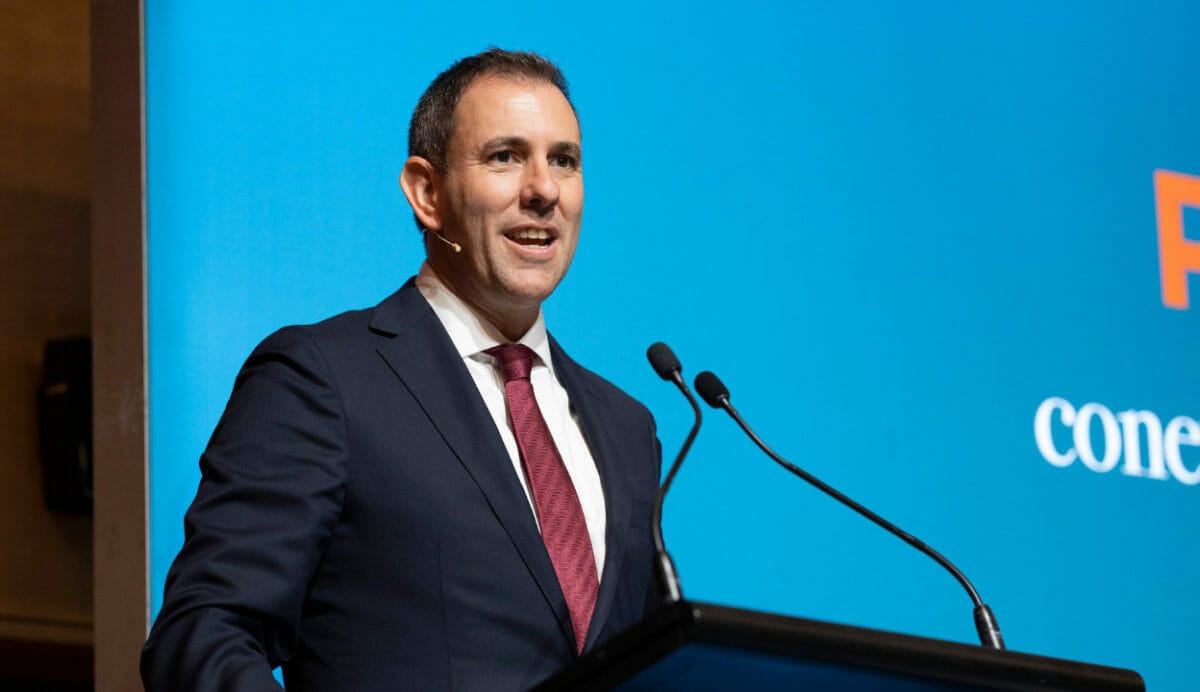
Treasurer Jim Chalmers and Victorian State Premier Jacinta Allan have both called on super funds to boost investments in so-called “productive” or “nation-building” projects, but funds have resisted pouring capital into assets that don’t fit their return objectives.
“Any perception that funds are investing in anything other than members’ best financial interests can erode public confidence in the system,” AustralianSuper said.
However, the view that adopting a simple reference portfolio would be a negative for the performance test is something AustralianSuper and ART are aligned on, with the former saying the approach would be “counterproductive”.
“We do not support this approach. It risks encouraging funds to converge toward the SRP (simple reference portfolio) and could discourage unlisted investments, given outcomes would become highly sensitive to short-term listed market performance,” it said.
It is also concerned about the simple reference portfolio potentially creating a systemic risk where a period of listed markets outperformance could be many super products failing the test at the same time.
“That outcome would not reflect systematically poor investment decision making or excessive fees. It would simply reflect an abnormal but not unprecedented market regime entering the lookback period.”
Additionally, AustralianSuper also proposed aligning the horizon of administration fee assessment with investment performance assessment, which is over 10 years. The former is currently evaluated over one year. It argued that the current set-up encourages short-term fee cuts or rebates “without delivering sustained improvement in either fees or investment performance”.
“Our analysis of APRA performance test data suggests this dynamic is significant. In 2024, nearly 20 per cent of platform trustee-directed products scored between minus 50 and minus 40 basis points — more than double the next most populated bracket. By 2025, the share of products scoring in that bracket had risen to 36 per cent — more than triple,” it said.
“A trustee that must rebate fees each year to stay alive is, in effect, delivering an ongoing fee reduction. But this is not the same as genuine, structural improvement in the value a product delivers. A ten-year lookback would better distinguish between the two.”
















Leave a Comment
You must be logged in to post a comment.